Felt-tip pen on paper
Not on view
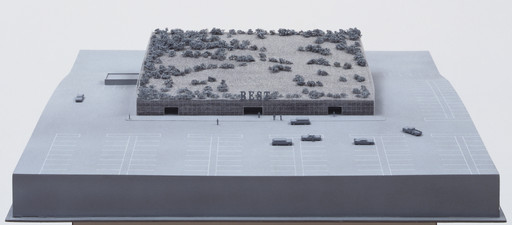
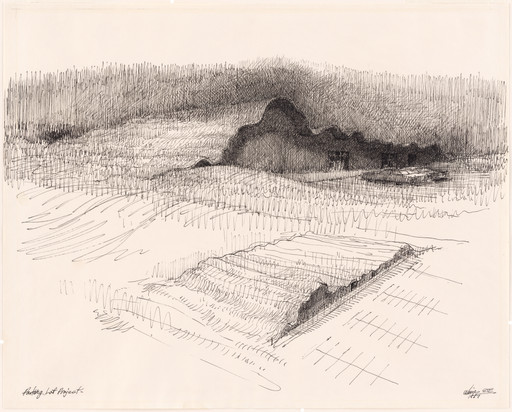
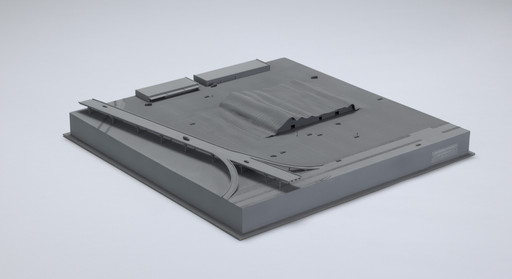
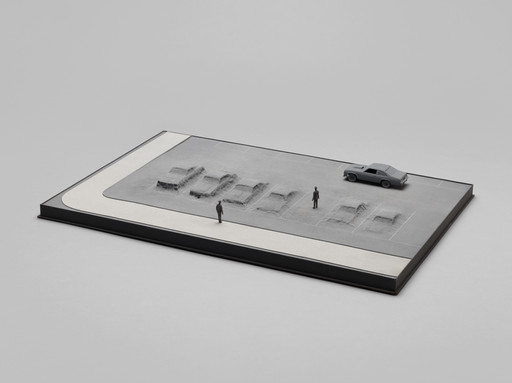
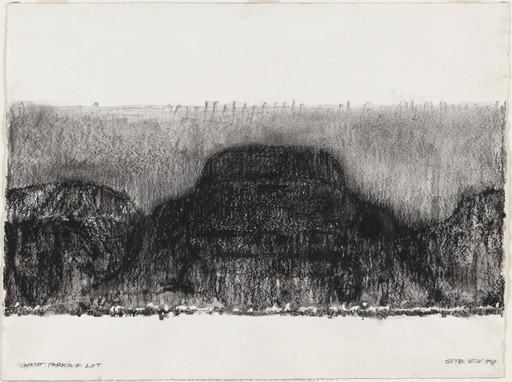
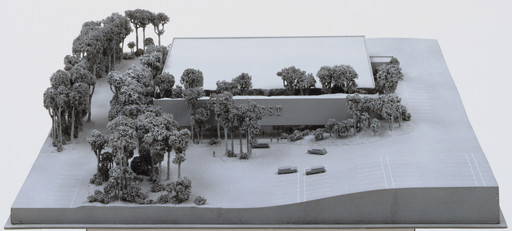
In 1972, Best Products Company, a department store based in Richmond, Virginia, began a design collaboration with SITE, a multidisciplinary architecture and environmental arts organization founded by Wines. SITE reimagined the big-box store, manipulating setting, site, and facade through radical “invasions of nature,” challenging visitors to strip malls with unexpected architecture. Here, an ordinarily untamed element of nature transforms a banal architectural type through a tongue-in-cheek intervention, creating a new environment in the expanses of a suburban parking lot. With popular appeal, the buildings raised political awareness of consumer culture, creating intriguing oases in commercial landscapes, where a sense of place was frequently missing. The showrooms in this series were “a way of asking questions and changing public response to the significance of commercial buildings in the suburban environment,” the designer has said.
9 + 1 Ways of Being Political: 50 Years of Political Stances in Architecture and Urban Design, September 12, 2012–March 25, 2013.
Explore more

James Wines
American, born 1932 21 works onlineJames Wines, founder of the architecture and environmental design studio SITE , has spent much of his career challenging the notion that architecture is an act of formal invention.
Learn more →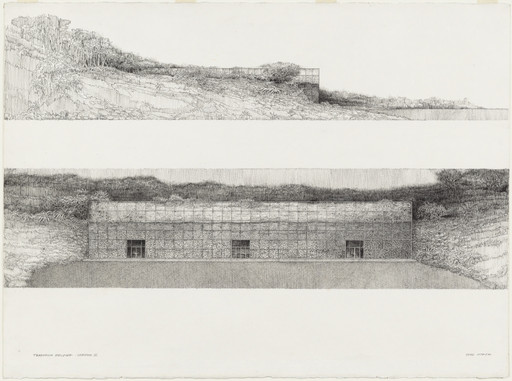

From MoMA Design Store


Installation views
We have identified this work in the following photos from our exhibition history.
Licensing
Artwork or archival images
If you would like to reproduce an image of a work of art in MoMA's collection, or an image of a MoMA publication or archival material (including installation views, checklists, and press releases), please contact Art Resource (publication in North America) or Scala Archives (publication in all other geographic locations).
Audio and film clips
MoMA licenses archival audio and select out of copyright film clips from our film collection. At this time, MoMA produced video cannot be licensed by MoMA/Scala. All requests to license archival audio or out of copyright film clips should be addressed to Scala Archives at [email protected]. Motion picture film stills cannot be licensed by MoMA/Scala. For access to motion picture film stills for research purposes, please contact the Film Study Center at [email protected]. For more information about film loans and our Circulating Film and Video Library, please visit Circulating Film and Video Library.
Text from a publication or the archives
If you would like to reproduce text from a MoMA publication, please email [email protected]. If you would like to publish text from MoMA's archival materials, please fill out this permission form and send to [email protected].
Feedback
This record is a work in progress. If you have additional information or spotted an error, please fill out this feedback form.