Gelatin silver print
Not on view
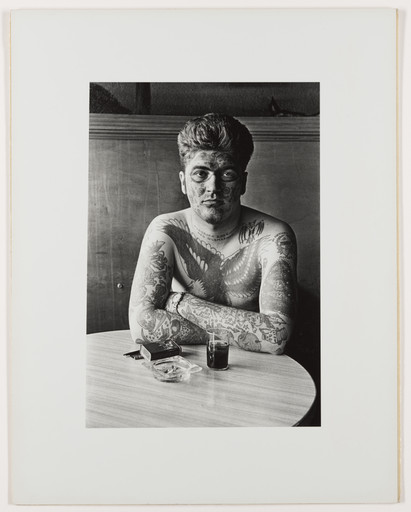
Arbus approached photographic portraiture as a two-way street, through which a relationship is established between the viewer (who has taken the place of the photographer) and the subject. To experience the picture is to enter into that relationship, whose candor and depth may be assessed in just the same way that we gauge the sincerity of others every day—and as they judge ours.
Many of Arbus's subjects are outcasts of one sort or another, and many viewers are at first repelled or merely fascinated by her pictures. Only after these defenses are set aside are we able to see that the vulnerability of her people invites us to recognize our own.
Apart from a handful of pictures, including this one, Arbus did not address political issues directly. But her unsparing frankness in confronting human frailty is one of the signal achievements of American art in the dark days of the Vietnam War.
The Museum of Modern Art, MoMA Highlights, New York: The Museum of Modern Art, revised 2004, originally published 1999, p. 253.
Research in progress; information about this work may be incomplete.
Explore more
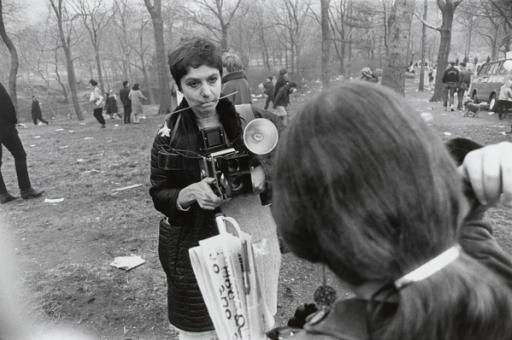
Diane Arbus
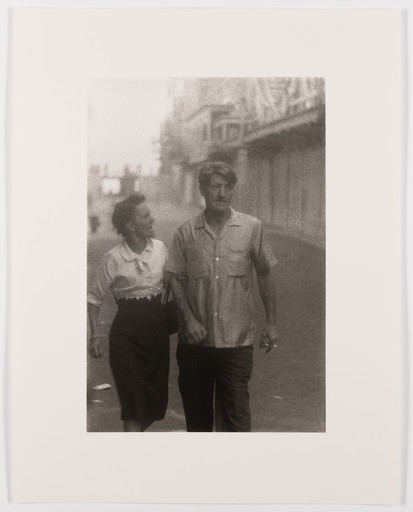
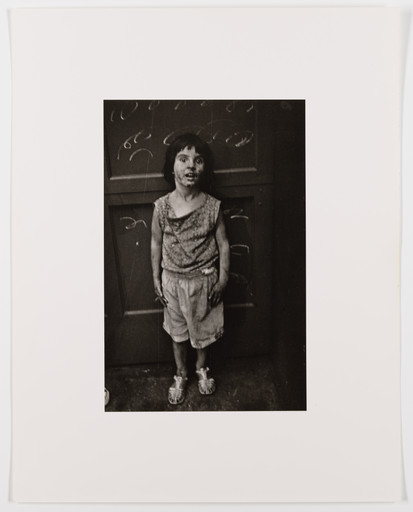
American, 1923–1971 84 works onlineUnlike most people, who “go through life dreading they’ll have a traumatic experience,” the “freaks” that interested Diane Arbus “were born with their trauma. They’ve already passed their test in life. They're aristocrats.
Learn more →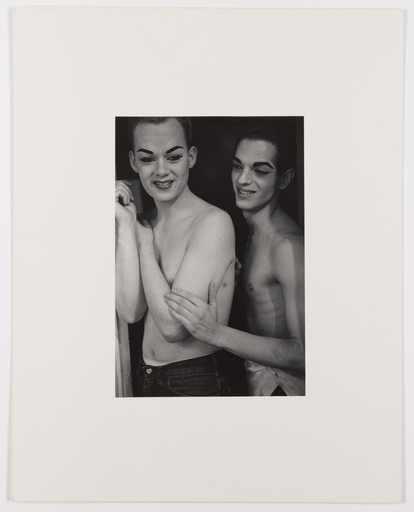

From MoMA Design Store


Licensing
Artwork or archival images
If you would like to reproduce an image of a work of art in MoMA's collection, or an image of a MoMA publication or archival material (including installation views, checklists, and press releases), please contact Art Resource (publication in North America) or Scala Archives (publication in all other geographic locations).
Audio and film clips
MoMA licenses archival audio and select out of copyright film clips from our film collection. At this time, MoMA produced video cannot be licensed by MoMA/Scala. All requests to license archival audio or out of copyright film clips should be addressed to Scala Archives at [email protected]. Motion picture film stills cannot be licensed by MoMA/Scala. For access to motion picture film stills for research purposes, please contact the Film Study Center at [email protected]. For more information about film loans and our Circulating Film and Video Library, please visit Circulating Film and Video Library.
Text from a publication or the archives
If you would like to reproduce text from a MoMA publication, please email [email protected]. If you would like to publish text from MoMA's archival materials, please fill out this permission form and send to [email protected].
Feedback
This record is a work in progress. If you have additional information or spotted an error, please fill out this feedback form.