Ernie Gehr
Panoramas of the Moving Image: Mechanical Slides and Dissolving Views from 19th Century Magic Lantern Shows
2006
Not on view
The first moving images were painted or printed images on glass; by the late 1600s they were being shown in public presentations called magic lantern shows. In these shows mechanical slides were manipulated to simulate various forms of motion or change in the images; later, through the use of two or more projectors to superimpose or cross-dissolve a series of images, dissolving views were introduced. Duration of the cross-dissolves and superimpositions varied with occasion and context—sometimes they were quite brief (for example, when simulating lightning over a landscape), but dissolves were frequently executed slowly. They were thereby not only able to visually depict complex sequential pictorial developments but also accentuate the movement of light, the passage of time, and the magical quality of a visual transformation.
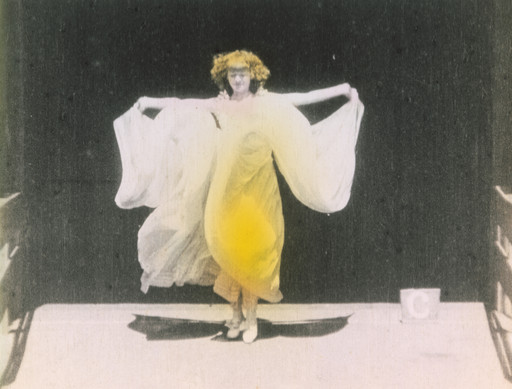
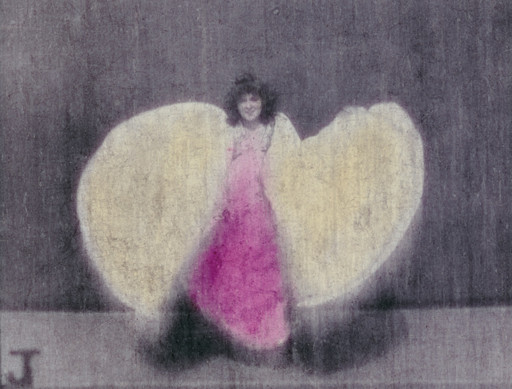
The eighty-seven individual slides that compose Panoramas of the Moving Image were handcrafted and depict human or fantasy figures and landscapes, beautifully detailed with magnificent, bright colors. Historically these slides would have been presented in a storytelling context that included live narration, music, and sound effects. In this five-screen video installation, Gehr presents his own magic lantern slides, collected since the 1970s, as silent artifacts of another era.
The Museum of Modern Art, MoMA Highlights since 1980, New York: The Museum of Modern Art, 2007, p. 249.
Explore more
From MoMA Design Store


Licensing
Artwork or archival images
If you would like to reproduce an image of a work of art in MoMA's collection, or an image of a MoMA publication or archival material (including installation views, checklists, and press releases), please contact Art Resource (publication in North America) or Scala Archives (publication in all other geographic locations).
Audio and film clips
MoMA licenses archival audio and select out of copyright film clips from our film collection. At this time, MoMA produced video cannot be licensed by MoMA/Scala. All requests to license archival audio or out of copyright film clips should be addressed to Scala Archives at [email protected]. Motion picture film stills cannot be licensed by MoMA/Scala. For access to motion picture film stills for research purposes, please contact the Film Study Center at [email protected]. For more information about film loans and our Circulating Film and Video Library, please visit Circulating Film and Video Library.
Text from a publication or the archives
If you would like to reproduce text from a MoMA publication, please email [email protected]. If you would like to publish text from MoMA's archival materials, please fill out this permission form and send to [email protected].
Feedback
This record is a work in progress. If you have additional information or spotted an error, please fill out this feedback form.