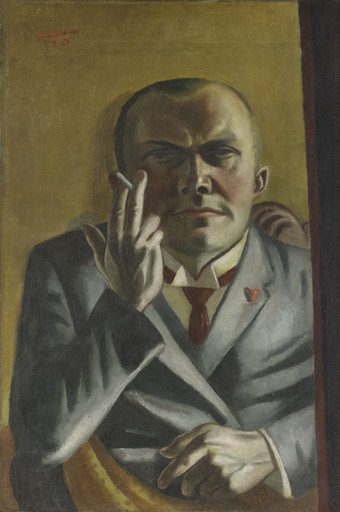
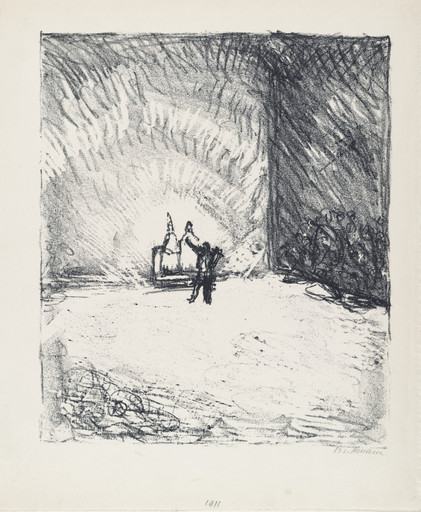
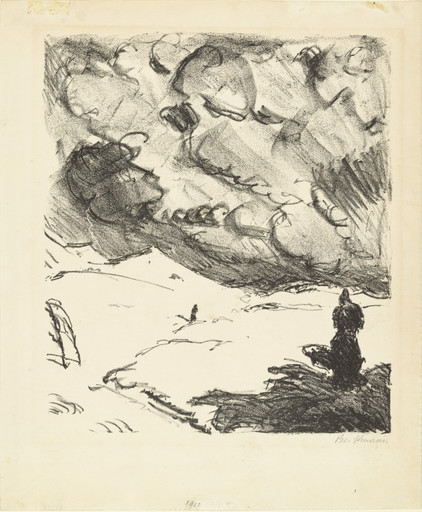
Beckmann's six drypoints loosely follow the dreamlike, erotic tales that unfold in this collection of five novellas by his friend Kasimir Edschmid, a leading Expressionist author. Beckmann included his own self-portrait in two of the prints: in one he appears with his family; in the other, he is seen groping a prostitute. In the years near the end and immediately following World War I, his most prolific period of printmaking, Beckmann began using Expressionist pictorial strategies, which earlier he had criticized, to convey his increasing disillusionment with the war. Distorted figures and cramped spaces heightened the emotional intensity of his images.
PUBLISHING HISTORY
Beckmann met Edschmid through Ugi Battenberg, an old friend from his student days in Weimar and whose studio he used in Frankfurt while recovering from his mental breakdown during World War I. After Die Fürstin, Beckmann and Edschmid continued collaborating. In 1918, Beckmann contributed to Edschmid's volume of artists' statements, Schöpferische Konfession (Creative credo). The following year, he joined the progressive artists' group Darmstadt Secession, which Edschmid had organized.
Their publisher, Gustav Kiepenheuer in Weimar, wrote in a letter to a friend, "Beckmann and KE—I don't like either of them, but they are current." Upon hearing this, Edschmid and Beckmann raised their honoraria by 1,000 marks each.
Heather Hess, German Expressionist Digital Archive Project, German Expressionism: Works from the Collection. 2011.
Explore more
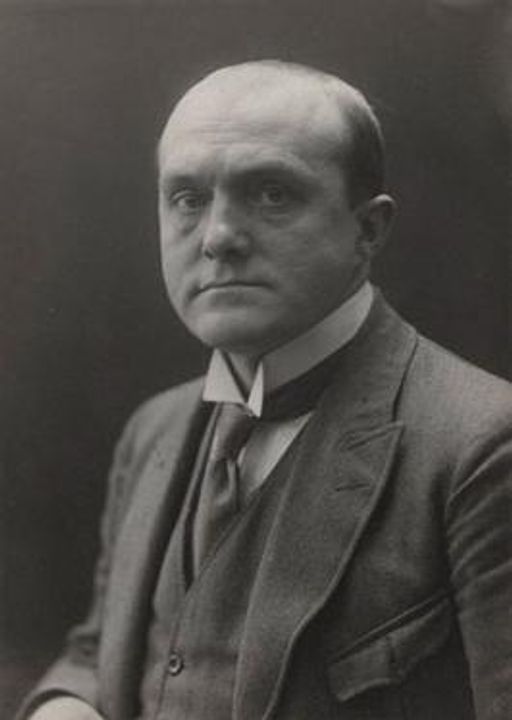
Max Beckmann
German, 1884–1950 218 works onlineMax Beckmann dreamed up a world of actors, cabaret singers, heroes, and thugs, whose dramas unfold on city streets, at masquerades and carnivals, and in candlelit chambers.
Learn more →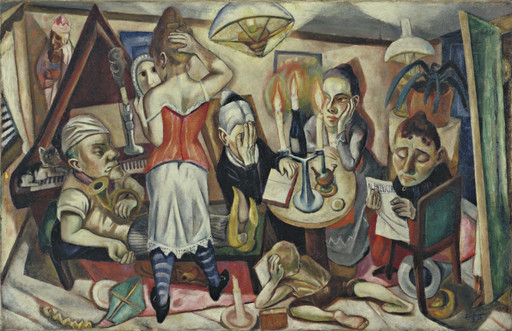

From MoMA Design Store


Licensing
Artwork or archival images
If you would like to reproduce an image of a work of art in MoMA's collection, or an image of a MoMA publication or archival material (including installation views, checklists, and press releases), please contact Art Resource (publication in North America) or Scala Archives (publication in all other geographic locations).
Audio and film clips
MoMA licenses archival audio and select out of copyright film clips from our film collection. At this time, MoMA produced video cannot be licensed by MoMA/Scala. All requests to license archival audio or out of copyright film clips should be addressed to Scala Archives at [email protected]. Motion picture film stills cannot be licensed by MoMA/Scala. For access to motion picture film stills for research purposes, please contact the Film Study Center at [email protected]. For more information about film loans and our Circulating Film and Video Library, please visit Circulating Film and Video Library.
Text from a publication or the archives
If you would like to reproduce text from a MoMA publication, please email [email protected]. If you would like to publish text from MoMA's archival materials, please fill out this permission form and send to [email protected].
Feedback
This record is a work in progress. If you have additional information or spotted an error, please fill out this feedback form.