Not on view
Lockhart’s Goshogaoka, a breakthrough success, is an early-career experiment with time, movement, ritual, and chance that blurs the boundary between documentary and performance-based filmmaking. A Los Angeles–based photographer and filmmaker, Lockhart has created moving-image work that builds on the pioneering cinema of the Lumière brothers, the Structuralist films of Michael Snow and James Benning, the ethnographic studies of anthropologists Robert Gardner and Jean Rouch, and the fictional narratives of filmmakers like Jean Eustache, John Cassavetes, Robert Bresson, and François Truffaut. Painstakingly choreographed and edited, Lockhart’s works are also rooted in diverse traditions of dance, theater, photography, and sculpture, from Japanese Noh dramas to the photorealist sculptures of Duane Hanson. Lockhart ennobles her subjects, whether clam diggers and factory workers in her native Maine, farmers in Japan, indigenous tribal people in the Amazon, or a dance composer and textile artist in Israel. Even as she remains deeply connected to Western histories of portraiture, landscape, and still life, she confronts the vexing questions of class and race that underlie these traditions.
After spending months observing a middle school girls’ basketball team in suburban Japan, for Goshogaoka Lockhart choreographed the team’s drills and turned them into six filmed takes, each of them ten minutes long and shot with a fixed camera at court level. Her fascination with childhood and adolescence—transitional stages of development in which awkwardness and confidence are uninhibitedly on display—has been an abiding theme throughout her career.
MoMA Highlights: 375 Works from The Museum of Modern Art, New York (New York: The Museum of Modern Art, 2019)
Explore more
Celluloid
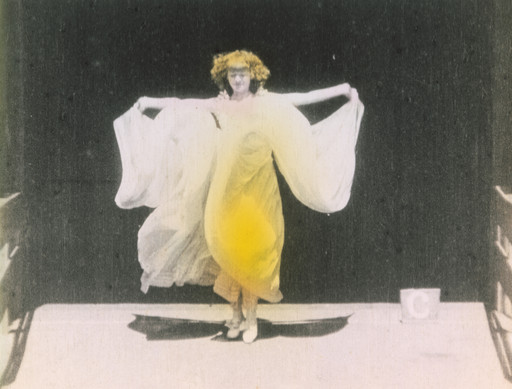
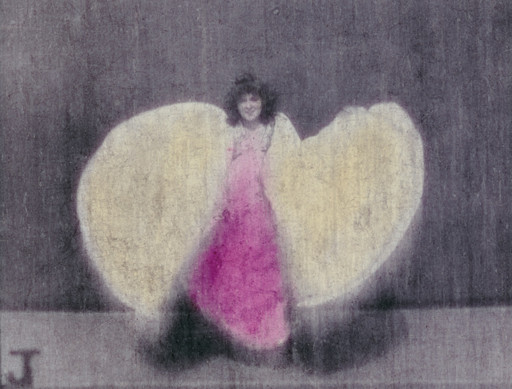
The first synthetic plastic material, developed in the 1860s and 1870s from a combination of camphor and nitrocellulose. Tough, flexible, and moldable, it was used to make many mass-produced items, including photographic film for both still and motion picture cameras.
Learn more →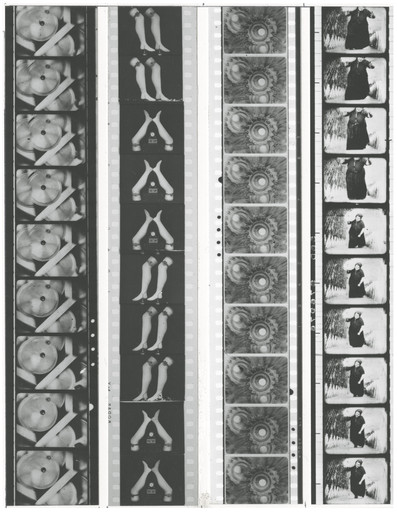
From MoMA Design Store


Licensing
Artwork or archival images
If you would like to reproduce an image of a work of art in MoMA's collection, or an image of a MoMA publication or archival material (including installation views, checklists, and press releases), please contact Art Resource (publication in North America) or Scala Archives (publication in all other geographic locations).
Audio and film clips
MoMA licenses archival audio and select out of copyright film clips from our film collection. At this time, MoMA produced video cannot be licensed by MoMA/Scala. All requests to license archival audio or out of copyright film clips should be addressed to Scala Archives at [email protected]. Motion picture film stills cannot be licensed by MoMA/Scala. For access to motion picture film stills for research purposes, please contact the Film Study Center at [email protected]. For more information about film loans and our Circulating Film and Video Library, please visit Circulating Film and Video Library.
Text from a publication or the archives
If you would like to reproduce text from a MoMA publication, please email [email protected]. If you would like to publish text from MoMA's archival materials, please fill out this permission form and send to [email protected].
Feedback
This record is a work in progress. If you have additional information or spotted an error, please fill out this feedback form.