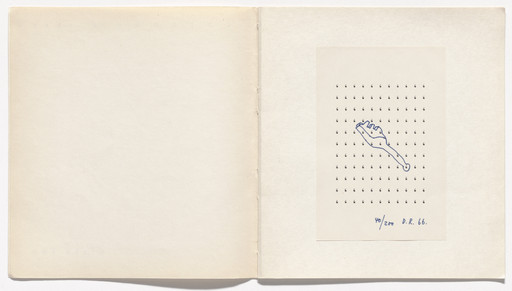
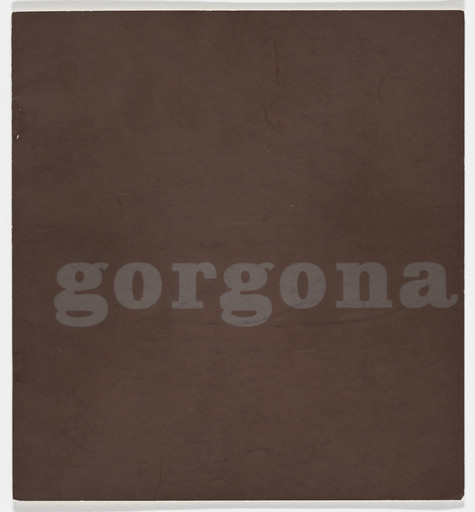
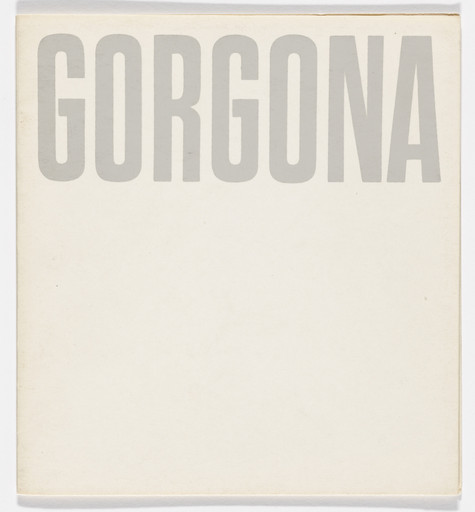
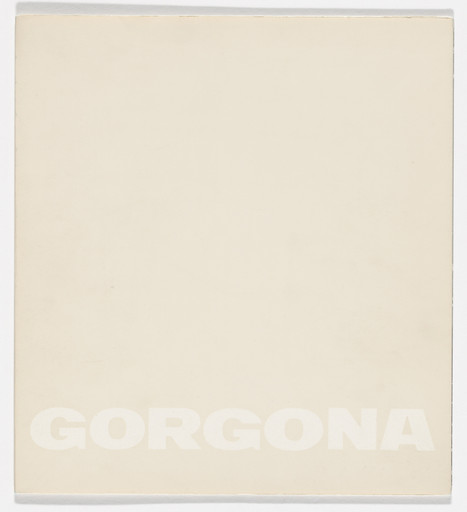
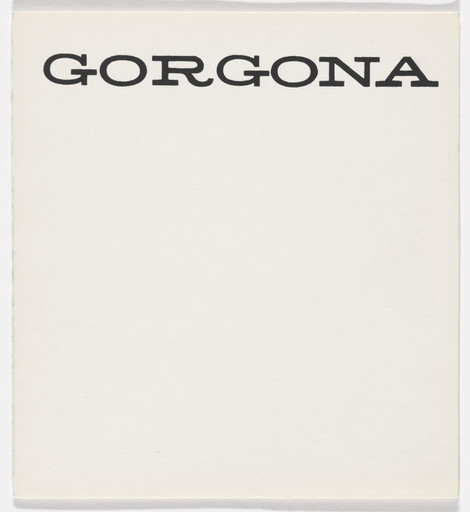
Periodical with screenprinted cover and letterpress plate with felt-tip pen additions
Not on view
Lacking a formal manifesto or program, the Gorgona group aimed to exist, as founder Josip Vaništa once enigmatically stated, “in the sphere of ideas.” In addition to Vaništa, Gorgona comprised Miljenko Horvat, Marijan Jevšovar, Julije Knifer, Ivan Kožarić, Mangelos, and Đuro Seder. Their first official group exhibition took place at the Gallery of Contemporary Art, Zagreb, in 1977, years after they were no longer a group. They also self-organized exhibitions in Studio G, a space that had formerly been a framing shop; published the “anti-magazine” Gorgona; and held discussions. Group members shared correspondence with each other in a series titled “Thoughts of the Month,” in which they would send selections of quotes that were most reflective of their current thinking.
2025
Gallery label from 2025
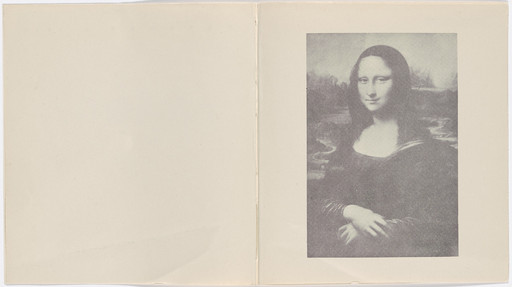
From 1961 to 1966, Gorgona published eleven issues of the “anti-magazine” Gorgona. Unlike other art periodicals, it did not offer scholarly essays or reproductions of art; instead, each issue was prepared as an original artwork by a single artist. Contributors included members of the core group as well as international artists like Dieter Roth, Harold Pinter, and Victor Vasarely. Josip Vaništa conceived the first issue, which consisted of the same photograph of a shelf in an empty shop window, repeated on every page. Julije Knifer designed the second issue, filling it with what he called a “meander”—a serpentine black line on a white field.
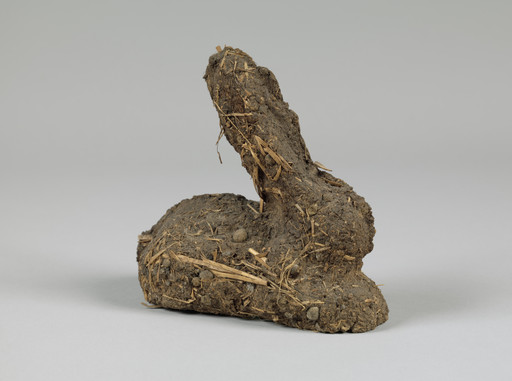
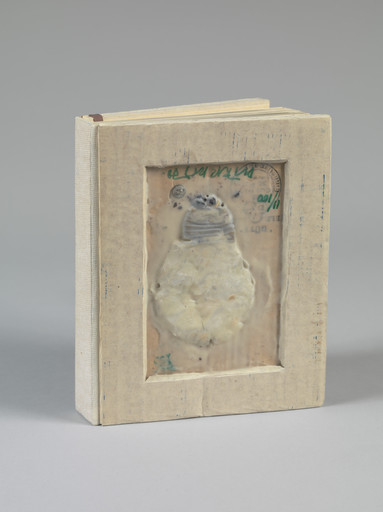
Gallery label from Wait, Later This Will Be Nothing: Editions by Dieter Roth , February 17–June 24, 2013
When Roth first started making concrete poetry, in the mid-1950s, he termed his compositions “ideograms.” In them, pictures are formed out of letters, punctuation, or other letterset characters. As the rigor of this exercise began to wear on him, he found release in a visually related but philosophically distinct activity, making what he called “stupidograms.” Working from a grid of printed commas, he used a pen or pencil to coax out looping chains, teacups, toothbrushes, and other forms, mimicking word-search games. As part of his increasing play with verbal-visual equivalency, here the artist circled punctuation to form pictures rather than circling letters to form words.
Explore more


Licensing
Artwork or archival images
If you would like to reproduce an image of a work of art in MoMA's collection, or an image of a MoMA publication or archival material (including installation views, checklists, and press releases), please contact Art Resource (publication in North America) or Scala Archives (publication in all other geographic locations).
Audio and film clips
MoMA licenses archival audio and select out of copyright film clips from our film collection. At this time, MoMA produced video cannot be licensed by MoMA/Scala. All requests to license archival audio or out of copyright film clips should be addressed to Scala Archives at [email protected]. Motion picture film stills cannot be licensed by MoMA/Scala. For access to motion picture film stills for research purposes, please contact the Film Study Center at [email protected]. For more information about film loans and our Circulating Film and Video Library, please visit Circulating Film and Video Library.
Text from a publication or the archives
If you would like to reproduce text from a MoMA publication, please email [email protected]. If you would like to publish text from MoMA's archival materials, please fill out this permission form and send to [email protected].
Feedback
This record is a work in progress. If you have additional information or spotted an error, please fill out this feedback form.