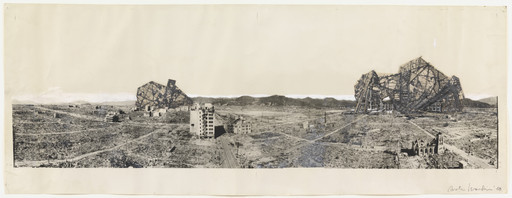
In this unbuilt design, massive pylons support elevated transportation, housing, and office systems as well as parks and walkways suspended above the existing city. Isozaki’s round columns permit growth in any direction. He represented his urban proposal among the ruins of a Greek temple, hinting at the artistic and discursive nature of his ideas. By conflating radical ideas with rejected modes of representation (those related to Romanticism), he created an ironic cultural statement about the discourses and ways of life of the period.
9 + 1 Ways of Being Political: 50 Years of Political Stances in Architecture and Urban Design, September 12, 2012–March 25, 2013.
Explore more
Arata Isozaki
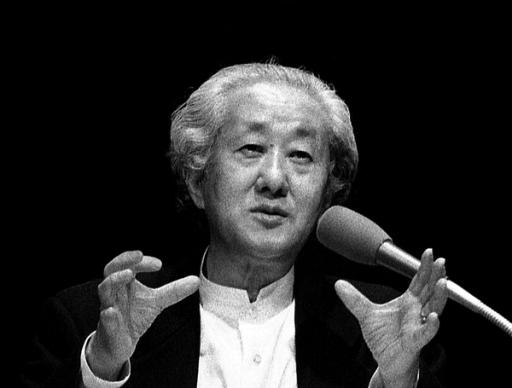
Japanese, born 1931 22 works onlineLike many of his generation, Arata Isozaki was strongly shaped by the destruction of Japanese cities during World War II.
Learn more →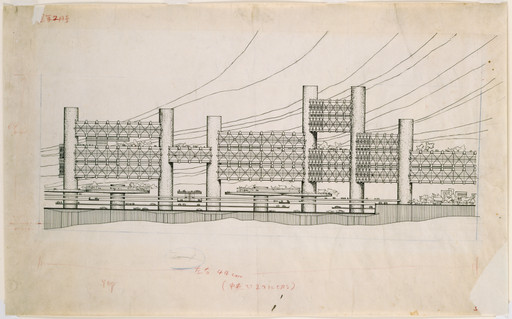

From MoMA Design Store


Installation views
We have identified this work in the following photos from our exhibition history.
Licensing
Artwork or archival images
If you would like to reproduce an image of a work of art in MoMA's collection, or an image of a MoMA publication or archival material (including installation views, checklists, and press releases), please contact Art Resource (publication in North America) or Scala Archives (publication in all other geographic locations).
Audio and film clips
MoMA licenses archival audio and select out of copyright film clips from our film collection. At this time, MoMA produced video cannot be licensed by MoMA/Scala. All requests to license archival audio or out of copyright film clips should be addressed to Scala Archives at [email protected]. Motion picture film stills cannot be licensed by MoMA/Scala. For access to motion picture film stills for research purposes, please contact the Film Study Center at [email protected]. For more information about film loans and our Circulating Film and Video Library, please visit Circulating Film and Video Library.
Text from a publication or the archives
If you would like to reproduce text from a MoMA publication, please email [email protected]. If you would like to publish text from MoMA's archival materials, please fill out this permission form and send to [email protected].
Feedback
This record is a work in progress. If you have additional information or spotted an error, please fill out this feedback form.