Born to parents who had been enslaved, Edmondson worked as sharecropper, a railroad worker, and a hospital worker before turning in his mid-fifties to sculpture, which he saw as an expression of his religious faith. Repurposing blocks of limestone from demolished houses and other sources, he first carved tombstones and grave markers; later he made figures and ornaments, such as angels and nurses, like the one on view here. In 1937, MoMA presented an exhibition of Edmondson’s sculptures—the first of several shows that examined the work of twentieth-century “self-taught” artists, a term used at the time to describe artists who were not formally trained.
American Folk Art: Revisiting the Collection of Abby Aldrich Rockefeller, June 13, 2026–August 09, 2026
Kids label from 2025
How would you describe the texture of this stone?
Before teaching himself to carve stone, William Edmondson worked at a hospital. This sculpture is of a nurse. Notice the nurse’s long hair, posture, and arm positioning.
Imagine if the sculpture came to life. Act out how the nurse might move her body and what she might do.
2025
Explore more
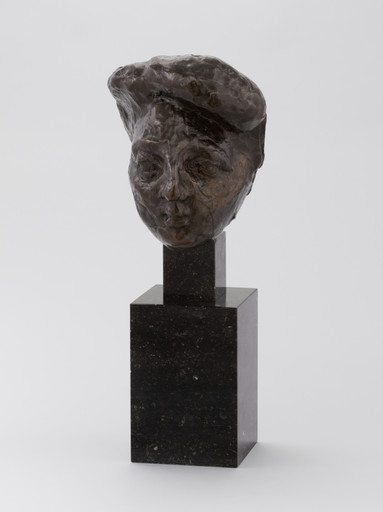
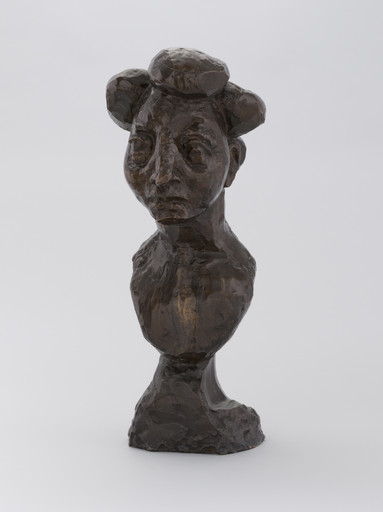
From MoMA Design Store


Installation views
We have identified this work in the following photos from our exhibition history.
Licensing
Artwork or archival images
If you would like to reproduce an image of a work of art in MoMA's collection, or an image of a MoMA publication or archival material (including installation views, checklists, and press releases), please contact Art Resource (publication in North America) or Scala Archives (publication in all other geographic locations).
Audio and film clips
MoMA licenses archival audio and select out of copyright film clips from our film collection. At this time, MoMA produced video cannot be licensed by MoMA/Scala. All requests to license archival audio or out of copyright film clips should be addressed to Scala Archives at [email protected]. Motion picture film stills cannot be licensed by MoMA/Scala. For access to motion picture film stills for research purposes, please contact the Film Study Center at [email protected]. For more information about film loans and our Circulating Film and Video Library, please visit Circulating Film and Video Library.
Text from a publication or the archives
If you would like to reproduce text from a MoMA publication, please email [email protected]. If you would like to publish text from MoMA's archival materials, please fill out this permission form and send to [email protected].
Feedback
This record is a work in progress. If you have additional information or spotted an error, please fill out this feedback form.