Ernst Ludwig Kirchner
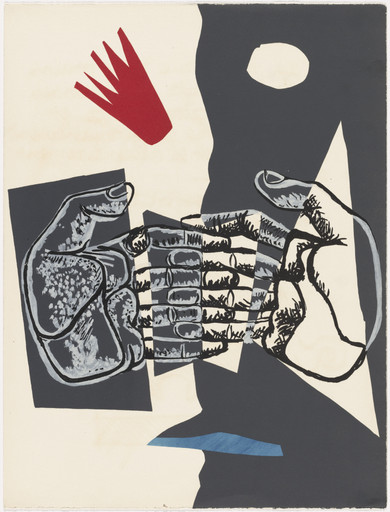
Front cover/title page from Das Stiftsfräulein und der Tod (The Canoness and Death)
1913
Woodcut from an illustrated book with five woodcuts
Not on view
Alfred Döblin's novella Das Stiftsfräulein und der Tod (The canoness and death) was the first book that Ernst Ludwig Kirchner illustrated. The novella had originally appeared in a 1913 collection of Döblin's tales titled Die Ermordung einer Butterblume und andere Erzählungen (The murder of a buttercup and other stories). Later that year, Alfred R. Meyer in Berlin published Kirchner's illustrated version as part of his Lyrische Flugblätter (Lyrical leaflets) series, which featured short stories and poems by young writers.
Döblin's novella relates the fears and desires of a dying "old maid" in a monastery's retirement home. Kirchner's woodcuts illustrate key scenes from the story. The dramatic lines and angular forms of the images enhance the expressive force of Döblin's narrative.
Kirchner had met Döblin in Berlin in 1912 through Herwarth Walden, the publisher of the avantgarde periodical Der Sturm (The tempest). Döblin was a psychiatrist by profession but would go on to become one of the most successful writers of the Weimar Republic, best known for his 1929 novel Berlin Alexanderplatz.
Iris Schmeisser, German Expressionist Digital Archive Project, German Expressionism: Works from the Collection. 2011.
Explore more
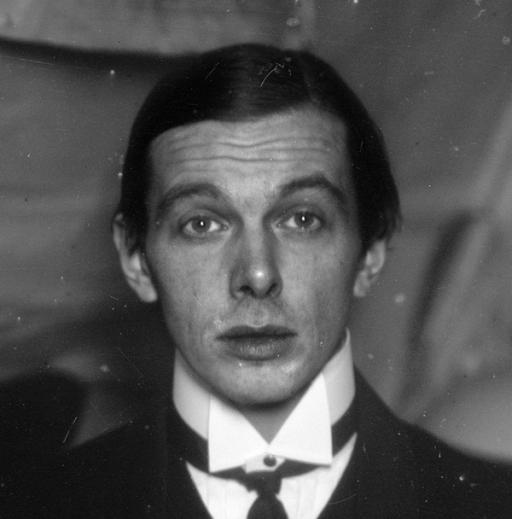
Ernst Ludwig Kirchner
German, 1880–1938 176 works onlineIn 1905, painter and printmaker Ernst Ludwig Kirchner, along with Fritz Bleyl, Erich Heckel , and Karl Schmidt-Rottluff —all untrained in the visual arts—founded the artists’ group Die Brücke , or “The Bridge,” a moment that is now considered the birth of German Expressionism.
Learn more →

From MoMA Design Store


Licensing
Artwork or archival images
If you would like to reproduce an image of a work of art in MoMA's collection, or an image of a MoMA publication or archival material (including installation views, checklists, and press releases), please contact Art Resource (publication in North America) or Scala Archives (publication in all other geographic locations).
Audio and film clips
MoMA licenses archival audio and select out of copyright film clips from our film collection. At this time, MoMA produced video cannot be licensed by MoMA/Scala. All requests to license archival audio or out of copyright film clips should be addressed to Scala Archives at [email protected]. Motion picture film stills cannot be licensed by MoMA/Scala. For access to motion picture film stills for research purposes, please contact the Film Study Center at [email protected]. For more information about film loans and our Circulating Film and Video Library, please visit Circulating Film and Video Library.
Text from a publication or the archives
If you would like to reproduce text from a MoMA publication, please email [email protected]. If you would like to publish text from MoMA's archival materials, please fill out this permission form and send to [email protected].
Feedback
This record is a work in progress. If you have additional information or spotted an error, please fill out this feedback form.