Men, Women, and Interiors
1938–1945
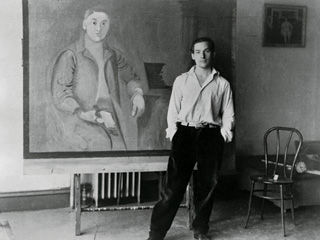
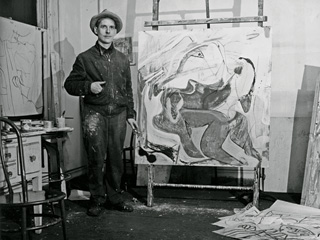
De Kooning in his loft on West 22nd Street, New York, 1937. Photograph by Rudolph Burckhardt. © 2011 Artists Rights Society (ARS), New York/Estate of Rudy Burckhardt: Courtesy Jacob Burckhardt
- Previous Period:
Early Work (1904–1937) - Next Period:
Pink Angels to Black-and-Whites (1946–1948)
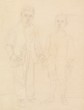
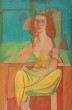
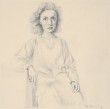
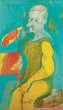
In the late 1930s, de Kooning began to paint figures and abstracted interiors with a new liberation in the means of their making, placing himself in opposition to the geometric abstraction then popular in New York. He produced beautifully detailed figurative drawings, modernized figurative paintings (including his only series of paintings of men) where limbs float away from the bodies, and quasi-abstract compositions suggestive of interiors. The works of this period were created through a lengthy revisionary process in which charcoal drawing and oil paint were applied alternatively, and the changes were allowed to show.