 |
|
|
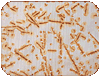
Keiji Otani. (Technical Process: Reiko Sudo). Brickyard. 1997. Nylon and polyurethane, 39 3/8" (97.5 cm) wide. Mfr.: Nuno Corporation, Tokyo; also Umetani Craft, Kyoto. Screen printed
|
|
|
|
|
The tradition of printing has always involved the mechanical transferring of characters or patterns to a surface using inked type, blocks, or plates. Conventionally the process has a visual rather than tactile effect. Expectations about printing are drastically altered, however, when one discovers that printing inks have been replaced with chemicals and adhesives, and rusted metal can be used as a printing implement. Screenprinting combined with heating, shrinking, or other finishing processes can further achieve unusual three-dimensional surfaces.
The tactility of Keiji Otani's Brickyard results from a two-way, knitted-nylon base fabric printed with polyurethane foam. The fabric of the bricks remains in relief even when the cloth is stretched to its full extent. In Reiko Sudo's Scrapyard series, barbed wire, nails, and iron plates are rusted and become the printing tool for cloth. Different patterns can be formed simply by varying the placement of the metal scraps and the length of weathering time.
|
|
|
|
|
|
|
|
|
|
|
VIDEO:
Reiko Sudo. (Transfer print technique: Hiroko Suwa). Scrapyard (Nail). 1994. Rayon with transfer print, 22 x 62 " (55.9 x 158.1 cm). Collection The Saint Louis Art Museum. Mfr.: Nuno Corporation, Tokyo; also Kanebo Spinning Co., Ltd., Osaka. Hand printed
(Quicktime 3.0) 2:25 mins. 56k
[ Download Quicktime Plug-In ]
|
|
|



