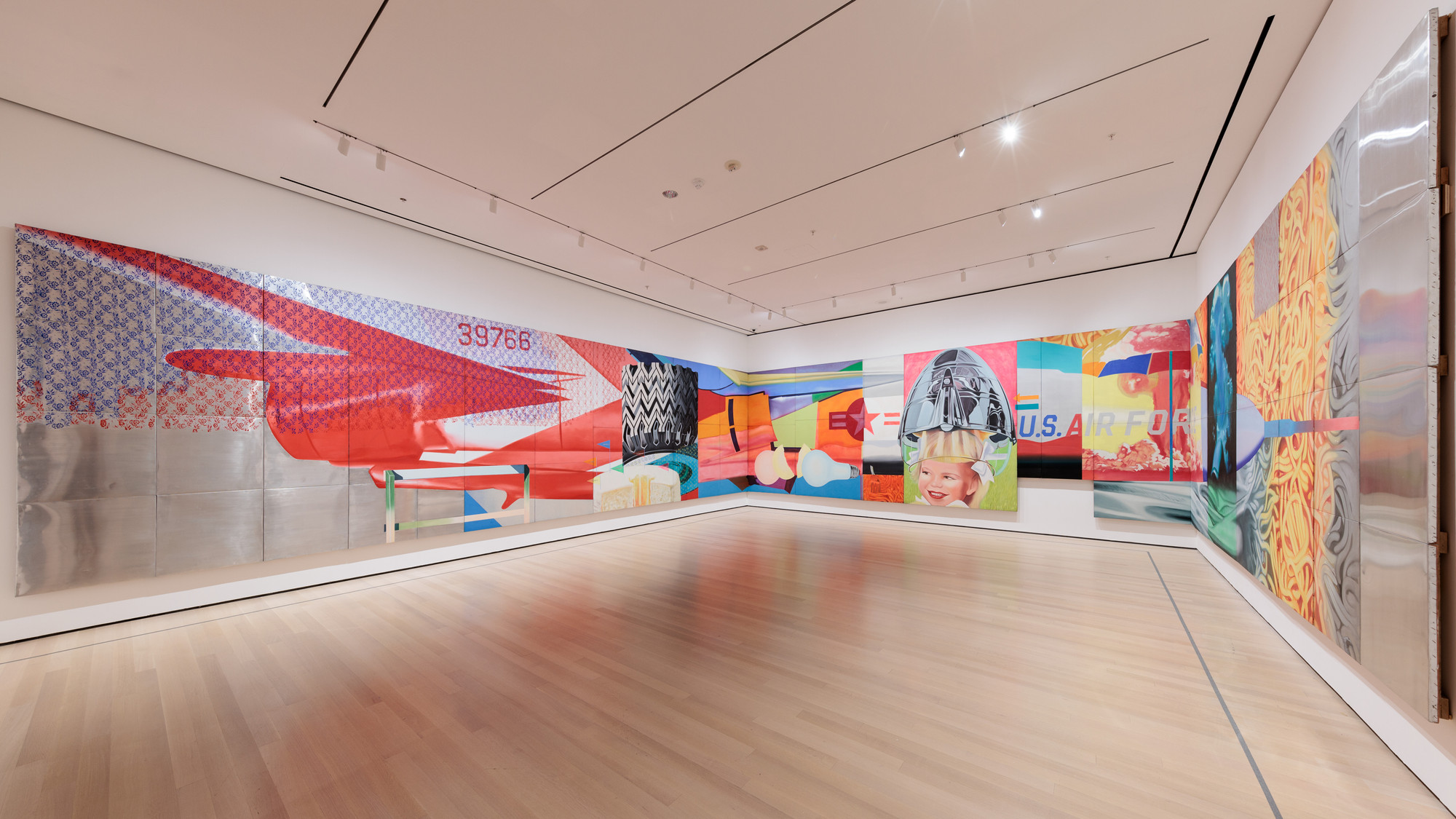
Learning Specialist, Carolina Malagamba: In this room, we have a piece by James Rosenquist. I really enjoy that this piece is created on panels, which is a really nice way to be able to create something monumentally big, and it sort of envelops us.
But my favorite thing about it is that the colors and the initial imagery seem very fun and very happy. And then you start noticing little details that don’t fully add up.
Artist, James Rosenquist: In the painting, I incorporated orange spaghetti, cake, light bulbs, flowers, and many other things.
Carolina Malagamba: But then, behind the cute girl, behind the spaghetti, behind the cake, you actually notice there is a fighter jet that stretches from one extreme to the other.
James Rosenquist: I painted F-111 in 1964. F-111 was the latest American fighter-bomber in the planning stage. At the time, I thought people involved in its making were headed for something, but I didn’t know what. The little girl was the pilot under a hair dryer. The umbrella and the Italian, flowered wallpaper roller image had to do with atomic fallout. The swimmer gulping air was like searching for air during an atomic holocaust.
Carolina Malagamba: This piece has a collage-like arrangement. It’s assembling images on top of other images, and we recognize certain visuals as advertisements, as things that we know of popular culture.
My question to you is: this bringing together of images and colors—how do they interact? What visual effect do they have? How does this piece make you feel?