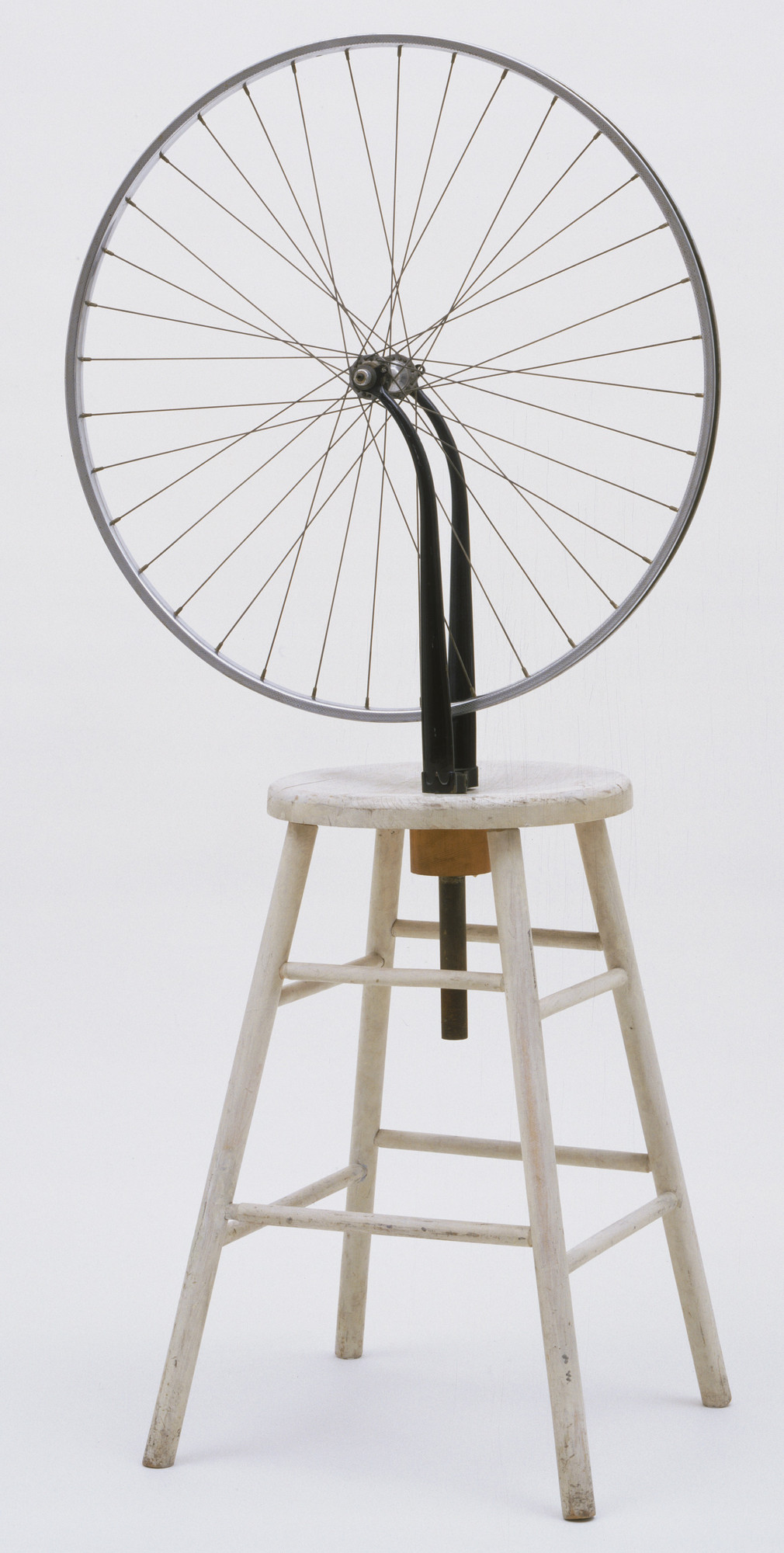
Narrator 1: Bicycle Wheel. Originally made in 1913, but subsequently lost. By the French artist Marcel Duchamp, 1887–1968. This replica was made by Duchamp in 1951. Overall dimensions: 51 inches high by 26 by 17 inches in width. 128 x 64 x 42 cm. It is displayed on pedestal about six inches height and about five feet square. You can walk all the way around it.
Narrator 2: 61. Bicycle Wheel. Originally made in 1913, but subsequently lost. By the French artist Marcel Duchamp, 1887–1968. This replica was made by Duchamp in 1951. Overall dimensions: 51 inches high by 26 by seventeen inches in width. 128 x 64 x 42 cm. It is displayed on pedestal about six inches height and about five feet square. You can walk all the way around it.
It's been done in such a way that the wheel is able to turn, so it's potentially a moving sculpture. The wheel itself is of the old fashioned kind. Nothing fancy, no colorful paint work, no rubber tire. Just thin silver metal spokes running from the silver rim of the wheel to the hub. There are about 36 spokes in total.
The stool is also plain and simple coated with cream colored paint, which is rather chipped. Yet these two simple objects were a bomb thrown at the conventional art. Duchamp exploded the idea that a work of art has to be the unique creation of the artist's hand. Instead, his attitude was, if you call it a work of art, then it is a work of art. By combining a bicycle wheel and a stool, Duchamp took two everyday objects and created art. The so-called ready-made was born.