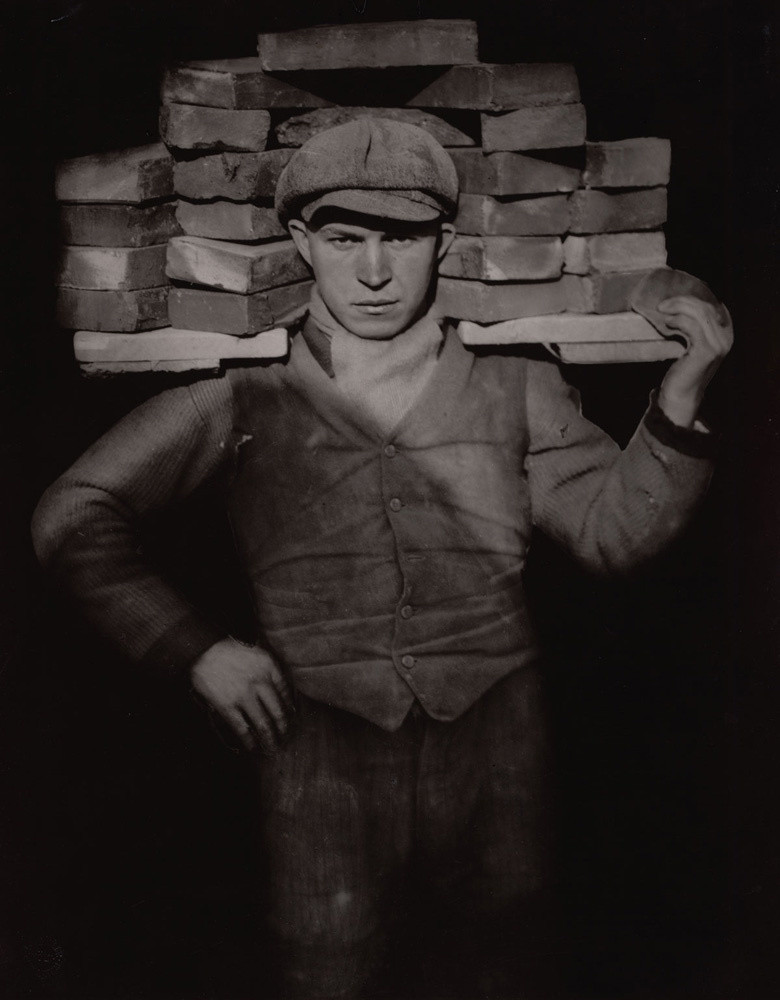
In 1924, the art historian Gustav Hartlaub coined the term Neue Sachlichkeit, or New Objectivity, to describe a form of new German realist art that engaged with and reported on objective reality in contrast to prevailing abstract styles. In photography the term was applied to the works of Krull, Renger-Patzsch, and Sander. Krull's pioneering portfolio Métal (Metal) is a collection of sixty four unbound collotype plates portraying gravity-defying modernist iron giants: cranes, machines, a bridge, and the Eiffel Tower. In 1928 Renger-Patzsch published Die Welt ist schön (The World Is Beautiful), the world's first photographic best seller, which comprises pictures of nature as well as industrial and mass-produced objects presented with the clarity of scientific illustrations. Sander's Antlitz der Zeit (Face of Our Time) is a portrait survey of the different professions, social classes, and character types that made up German society in the interwar years.