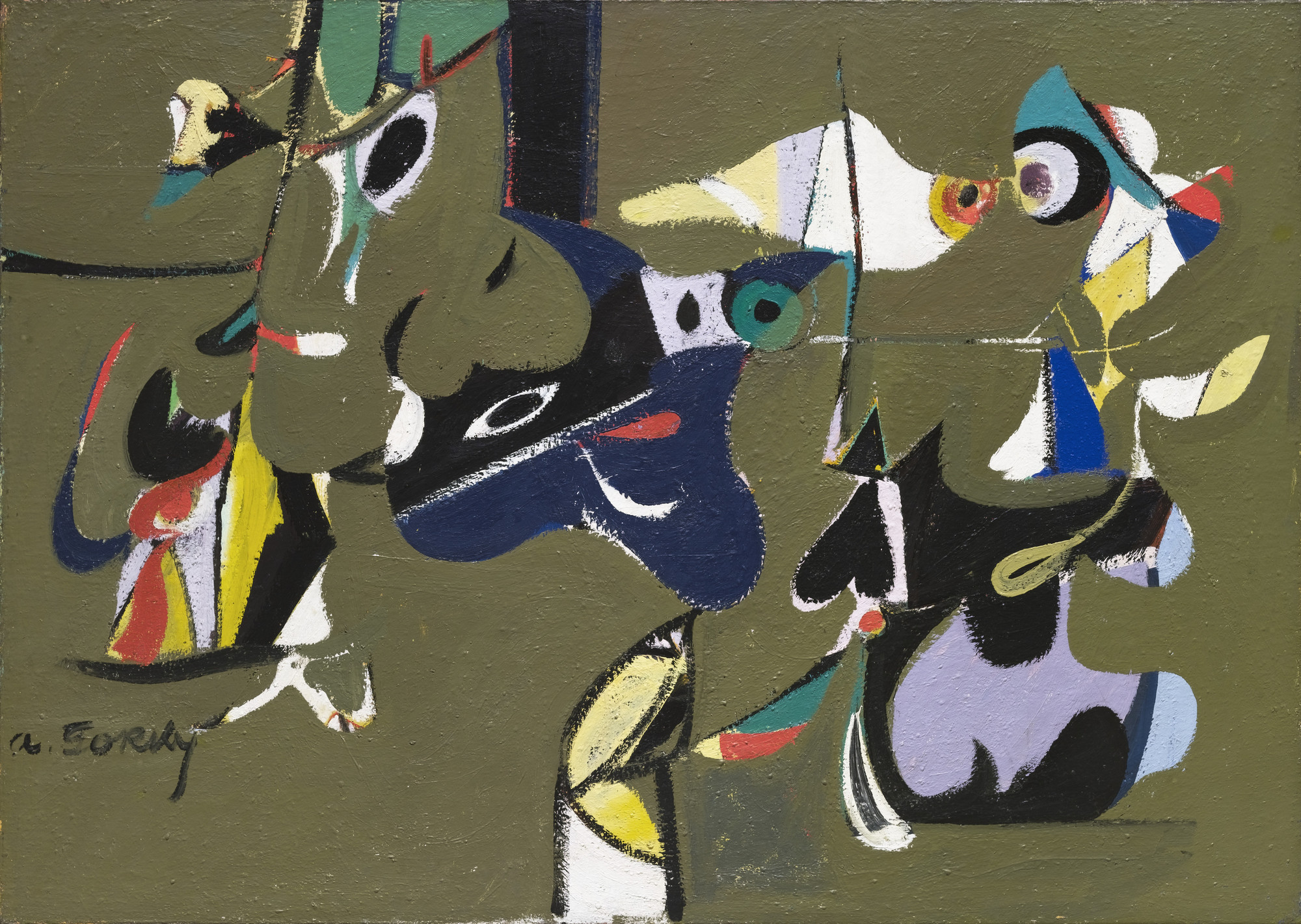
Learning Specialist, Emma Waldman: The idea behind this artwork comes from a childhood memory. Arshile Gorky, the artist who made it, wrote a letter to MoMA in 1942 where he said: "My father had a little garden with a few apple trees, which had retired from giving fruit. There was a ground constantly in shade where grew incalculable amounts of wild carrots, and porcupines had made their nests."
Here’s the artist’s wife, Agnes McGruder:
The artist’s wife, Agnes McGruder: You could see how nature was alive to him. I mean, he saw things in it—like things that he might have seen in his dreams or imagination. Always a mixture of his early memories and his new perceptions.
Emma Waldman: A lot of Gorky’s personal memories stem from his childhood, including his connection to nature and his homeland of Armenia. He also experienced a lot of hardships growing up.
Agnes McGruder: Gorky always said his mother died of starvation. There were enormous lots of Armenian refugees from Turkish Armenia over the border into Russia. He told me about leaving with his sister. They had to leave their farm. Torn from their mother, torn from home.
Emma Waldman: Gorky wasn’t always comfortable making work about his memories of Armenia. When asked about this, Gorky’s wife said that he felt no one wanted to hear the stories of immigrants.
Agnes McGruder: I didn’t know his real name anyhow until after he was dead, and found that his real name was Vostanig Adoyan. He didn’t want to ever say that he was an Armenian. He wanted to become an American.
Emma Waldman: A lot of immigrants talk about feeling like they have to get rid of or ignore their past in order to be accepted by their new country. And so Gorky tried to put his past behind him, thinking that would make him more successful. But what he actually found was that the more personal his artwork became, the more other people connected to it.