Learning Specialist, Emma Waldman: So far, we've seen how identity can be shaped by memories, personal experiences, your community, your personality, but this is really an example of how identity can be formed and shaped by culture.
Curator, Smooth Nzewi: Hector Hyppolite is a self-taught Haitian painter. He started off making shoes and painting houses before he became an artist.
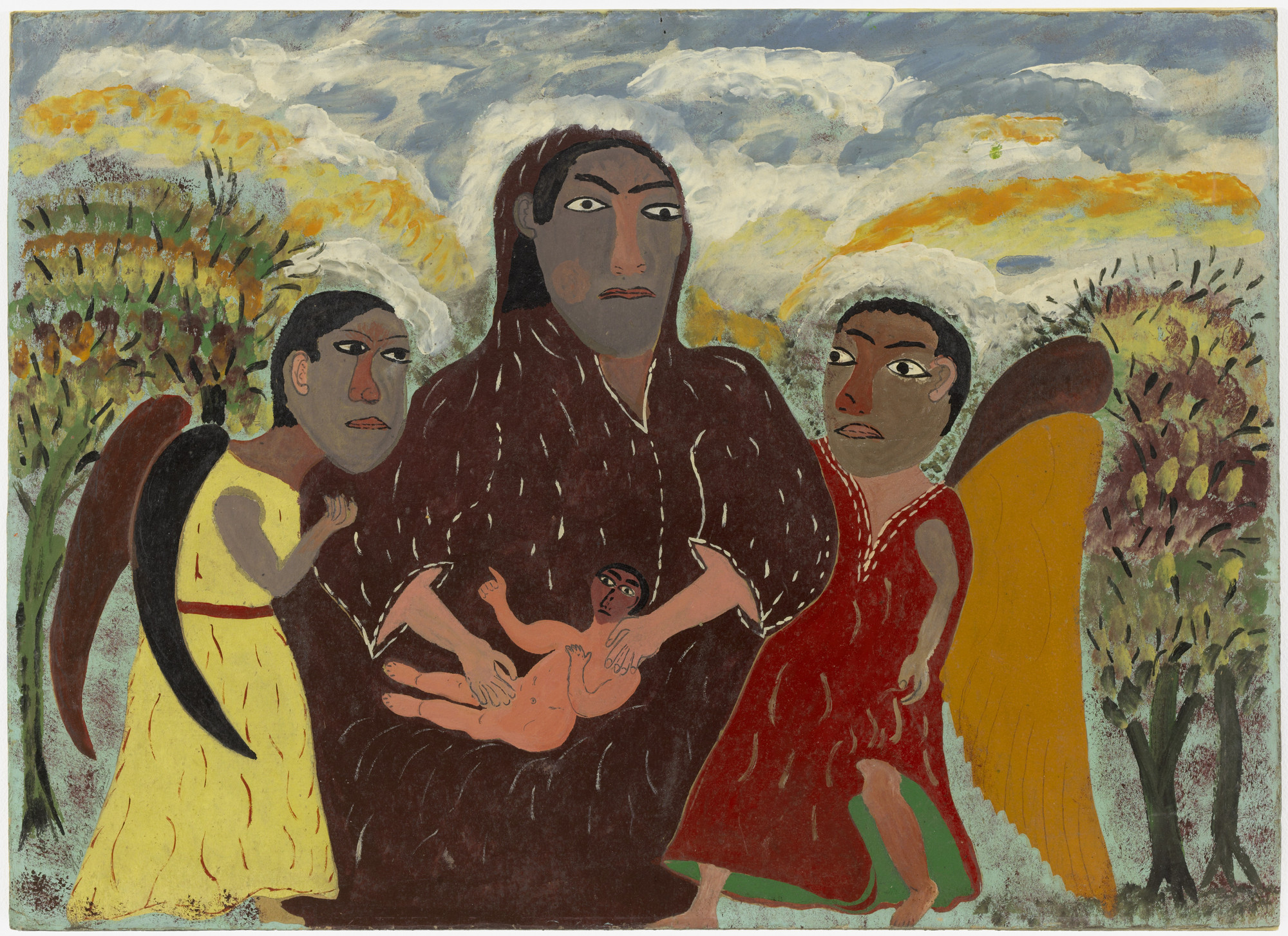
Congo Queen is a painting that features a central figure of a woman who looks quite monumental. For a lot of people, they've described the work as sort of an image of the Black Madonna. And with Haitian religious practice, there’s this incredible syncretism of Voudou, which is from West Africa, and Roman Catholicism, which is a reflection of the French origins of Haiti.
But African is very much part of the Haitian identity and consciousness. And so one could also argue that the Congo Queen being referenced here might be the historical Queen Nzinga of Angola, part of the historical Congo Kingdom. She's often seen as this figure of resistance. But I also think about the connection with that sense of anti-colonial resistance that started with the Haitian Revolution.
Emma Waldman: Hyppolite was incredibly inspired by his homeland, Haiti, which was the first independent Black republic.
Smooth Nzewi: Not just Hector Hyppolite, but a lot of Haitian artists were drawing from Voudou imagery blended with Roman Catholic imagery. And also, what is interesting is the way in which the figures are set against the Haitian landscape. You see a cloud formation in the horizon, and then a sort of mountainous landscape with trees.
So those two things creates this incredible visual imagery that makes Haitian art stand out. And I think Hector Hyppolite was one of the very first artists to be able to create that in modern art.