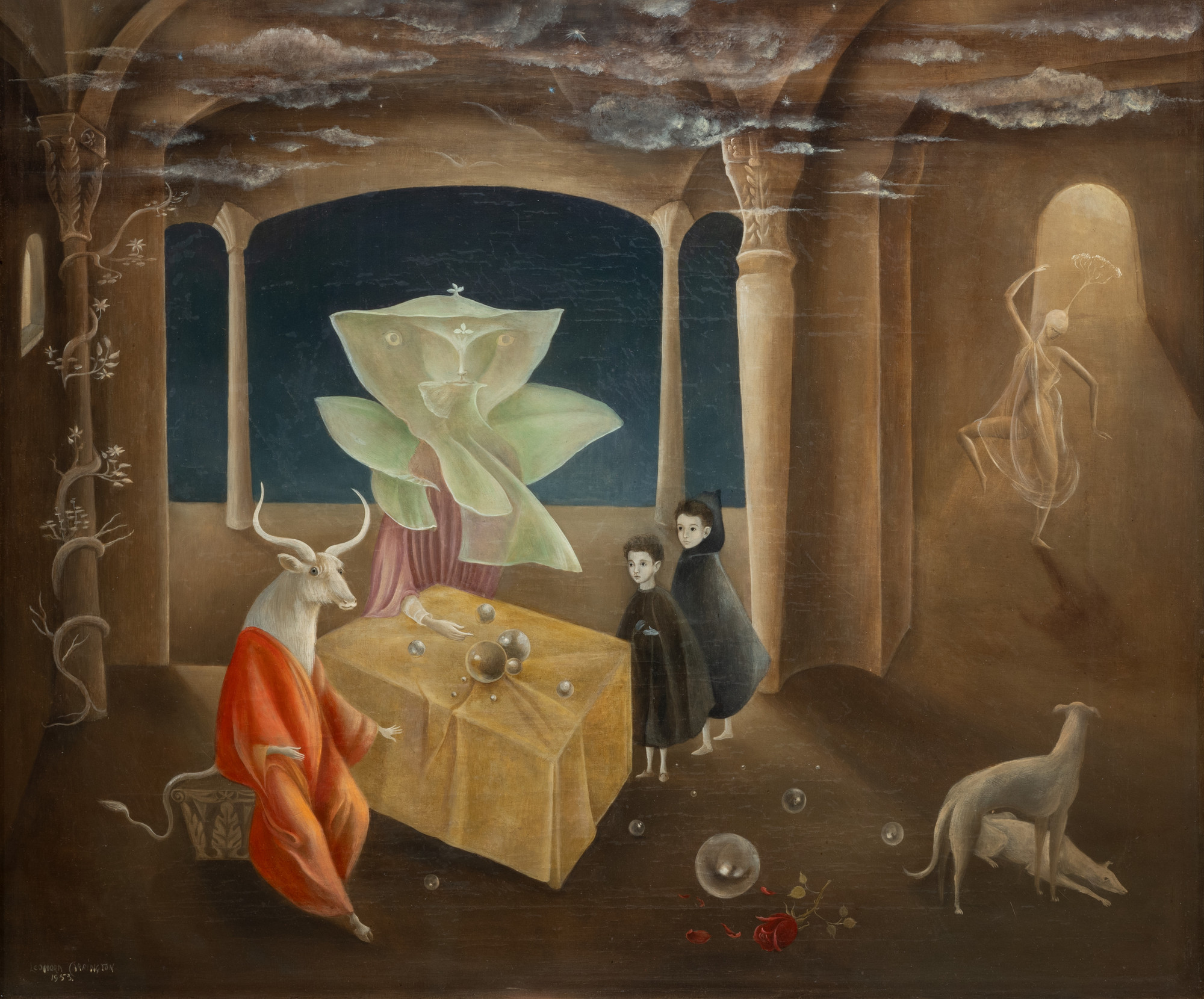
Learning Specialist, Emma Waldman: One of my favorite ways to look at this painting is to enter it. I imagine I'm inside of this scene, and I'm starting to look around and see all of these imaginative and unfamiliar elements. I'm thinking about what it might smell like. I'm thinking about if I ran my fingers over this table, what it might feel like, what I might hear.
This painting is by the artist Leonora Carrington, who used dreamscapes and fantastical imagery and mythology in a lot of her paintings.
Curator, Anne Umland: There is a seated figure with a bull's head, but a human body, a type of being that was known as a minotaur. And then I see that mysterious looming figure presiding over the table. And the title of this work had always made me wonder: who are these figures…?
There's no one right answer. But the two figures of young boys on the right suggest that, on one level, this is a family portrait.
Carrington had two young boys, whose names were Gabriel and Pablo. So, perhaps on some level, that mysterious, large female figure is Leonora Carrington at the table with her husband and two children.
Emma Waldman: Another way this painting relates to the theme of identity is that it shows the artist’s interest in dreams. Carrington once said, “I’ve always had access to other worlds. We all do, because we dream.” What I love about this quote is this idea of dreams as being powerful forces of imagination. I think showcasing your dream in your art is a really personal act. It’s an entryway into the artists’ mind, world, and who they are.