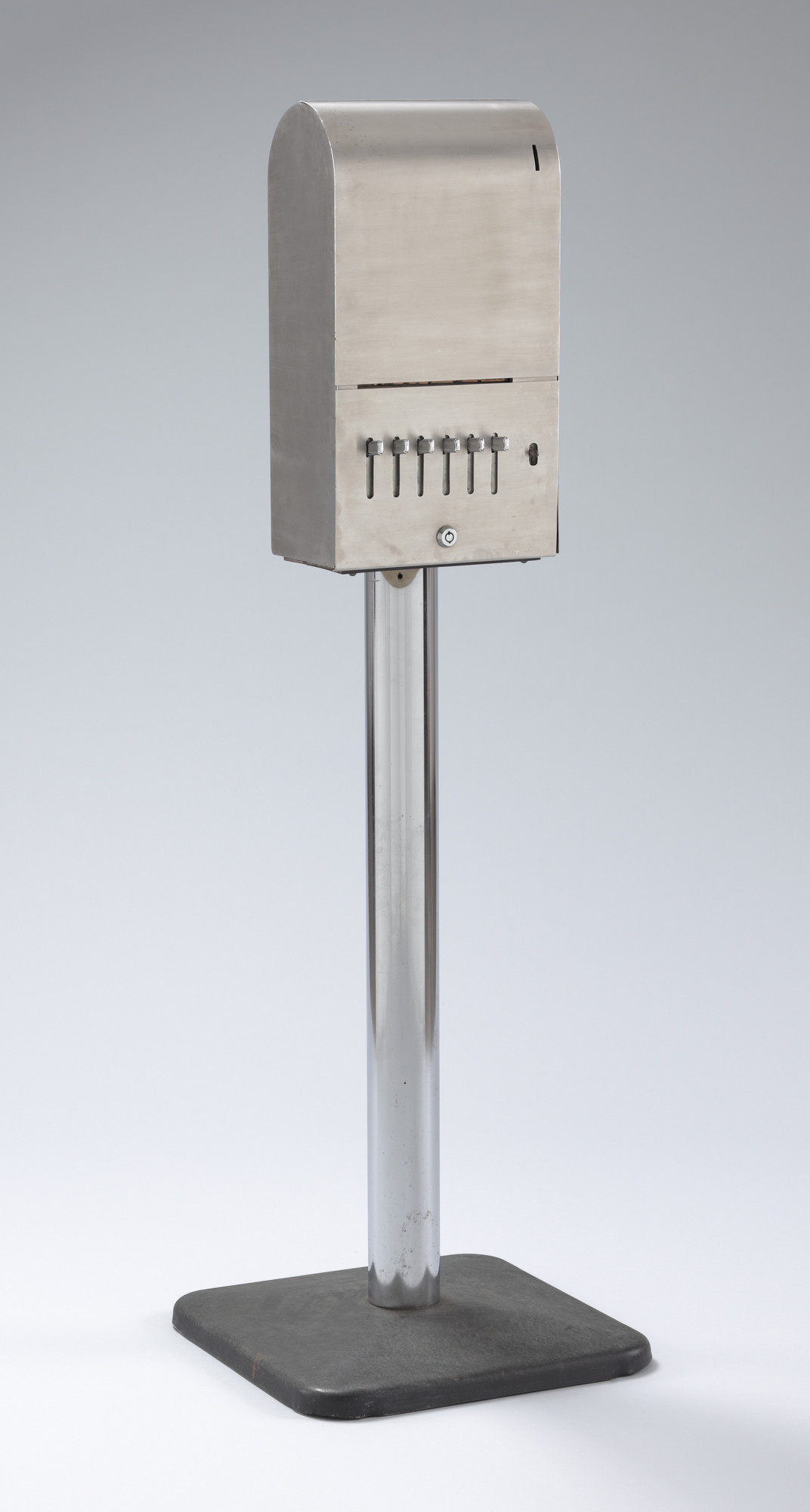
Learning Specialist, Carolina Malagamba: Oftentimes, when we think about art, the first thing that comes to mind is a painting or a sculpture or a drawing. But sometimes an artwork is more about the concept that it reflects than about the material itself.
This piece is called Sky Machine, and at first glance, it reminds me of the machines outside of candy stores or grocery stores. And what the sculpture dispenses is handwritten cards bearing the word sky.
The idea for this piece is actually rooted in childhood memories. Here's the artist:
Artist, Yoko Ono: Sky was a big thing in my life. I got into it in the place that we moved during the war.
Carolina Malagamba: Yoko Ono grew up in Japan during World War II, and there was a time when she was around 12-years-old where her and her siblings were sent to a rural area because it was considered to potentially be safer than living in Tokyo.
Yoko Ono: And I was there with my younger brother and younger sister, and it was very difficult at time. In those days, I just looked at the sky and it was so beautiful and there were not many beautiful things in my life, except the sky.
Carolina Malagamba: Yoko Ono is known for conceptual art, where what is most important is not the final product but the idea, concept, or the thought that the art piece evokes. When she created this piece, it was meant to be placed in public space, like the streets of New York.
Yoko Ono: For me, it was very important to give each piece an original function. I think that conceptual art works in many ways. What I think it does the most is it opens up things within people's mind, and they will follow it and do something that is asking you to use your creativity and add it to the work.