Learning Specialist, Marco Hermosillo: At MoMA, we’re not only showing work by artists. We also have the work of other creative people, like designers and architects.
Architect, Marina Tabassum: My name is Marina Tabassum. I’m an architect based in Bangladesh.
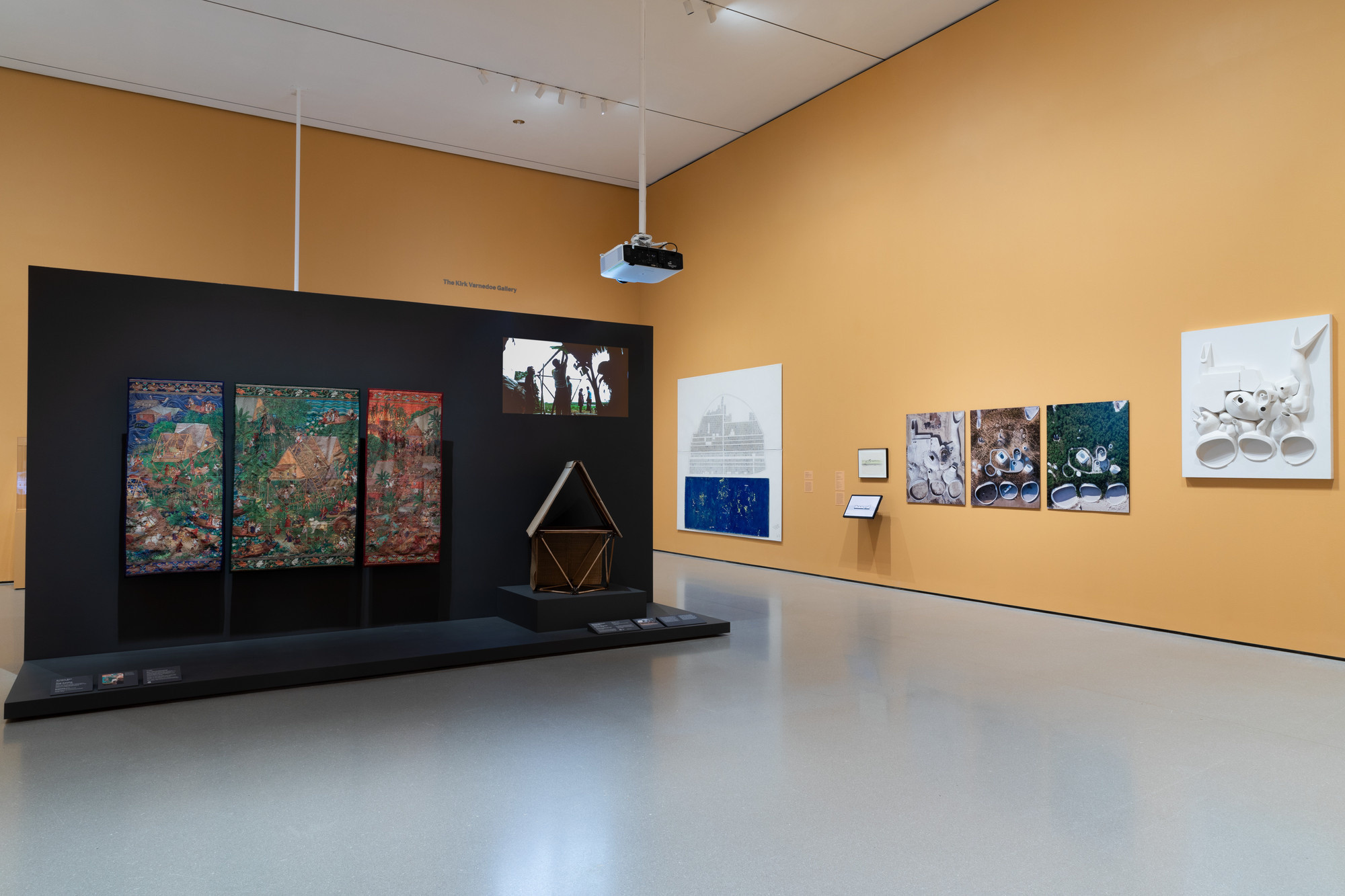
Marco Hermosillo: The film projected on this platform shows a community of people building what the designer calls a “khudi bari."
Marina Tabassum: Khudi Bari means tiny house, but it’s more than that. The project came about when we were addressing issues that are becoming more predominant because of the climate crisis.
Marco Hermosillo Bangladesh, the country where Tabassum lives, is more than two-thirds water.
Marina Tabassum: We have more than 700 rivers. And so, the land is constantly shaping and reshaping, and these sand beds form in the middle of the river, which give place for people who have no land ownership to come and make their houses. They don’t know how long that sandbar will exist, so people need to move.
As architects, we thought, can we do something? We asked a lot of people, why do you still stay here? And the answer was, this is home. The notion of home and your connection to the ground is so sacred that you cannot really question that, so you just have to find a better way of giving that ability to move.
Marco Hermosillo: So Tabassum and her team created Khudi Bari, a kit of lightweight structural elements that would allow users to move easily between locations and create shelters.
Marina Tabassum: It should not be too complicated for people to be able to build it or take it down. All you need are a few steel corner joints, to then plug them together with bamboo. And then if you add these modules together, it can turn into a really large structure.
I think the role of an architect is expanding. You need to be there, in different places, not in your office behind your computer, but really out there. To be with people, to understand where your knowledge and your expertise can be of use to people.