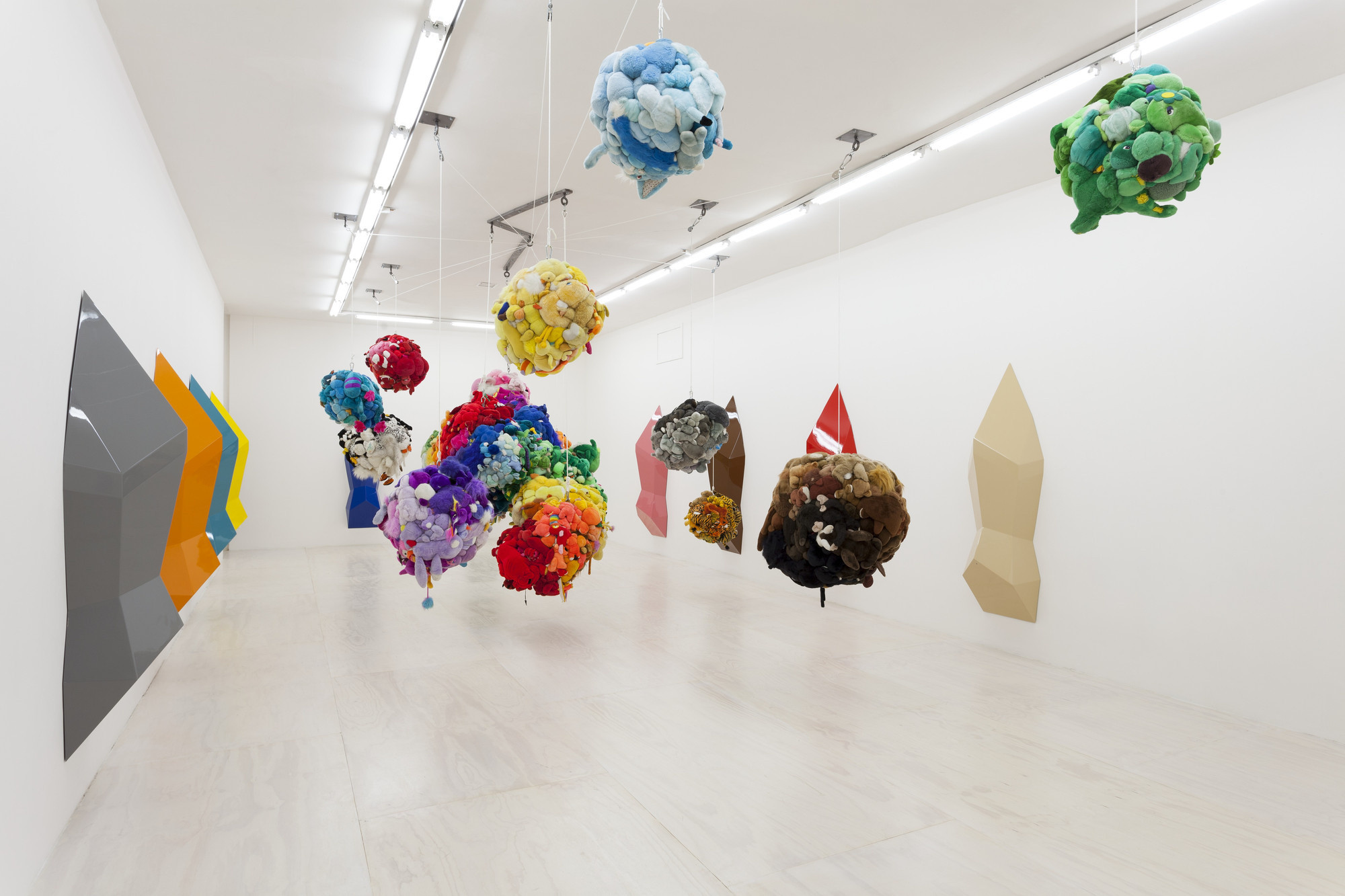
Learning Specialist, Marco Hermosillo-McCune: Some artists want us to immerse ourselves in their artwork, and that’s what we’re gonna do here.
When I walk into this room, I start noticing the bright colors, and then the fluffiness of the stuffed animals. Some of them remind me of toys I had when I was a kid. Some of them, they’re a little dirty. The color seems a little dull.
The artist who created this liked to use objects that already existed in the world. Here’s Mike Kelley speaking about this work.
Artist, Mike Kelley: This was one of the very last works I made using, found homemade craft items. There was a general tendency amongst a number of New York artists at that time to try to capture the look of the brand-new manufactured object. There was a lot of focus on advertising, newness, commodification, in those terms.
So I was trying to think of a different approach that didn't have to do with the look of newness. So I started collecting things that weren't made to be sold. Hand-sewn stuffed animals and things I knew that were designed to be given away. And then I tried to come up with various ways of presenting them that I felt would focus on them as a kind of commodity. And I did that through accumulation.
Marco Hermosillo-McCune: Commodity culture is this idea that everything and anything can be bought. You can buy the life that you want. If we think about all of these stuffed animals from that perspective, what Mike Kelley is pointing at is this idea that when we buy something, we’re not really interested in the object itself. We’re interested in buying the emotion that we think that object is gonna bring to us.
But in the end, each one of these stuffed animals were abandoned, and they become part of the past.