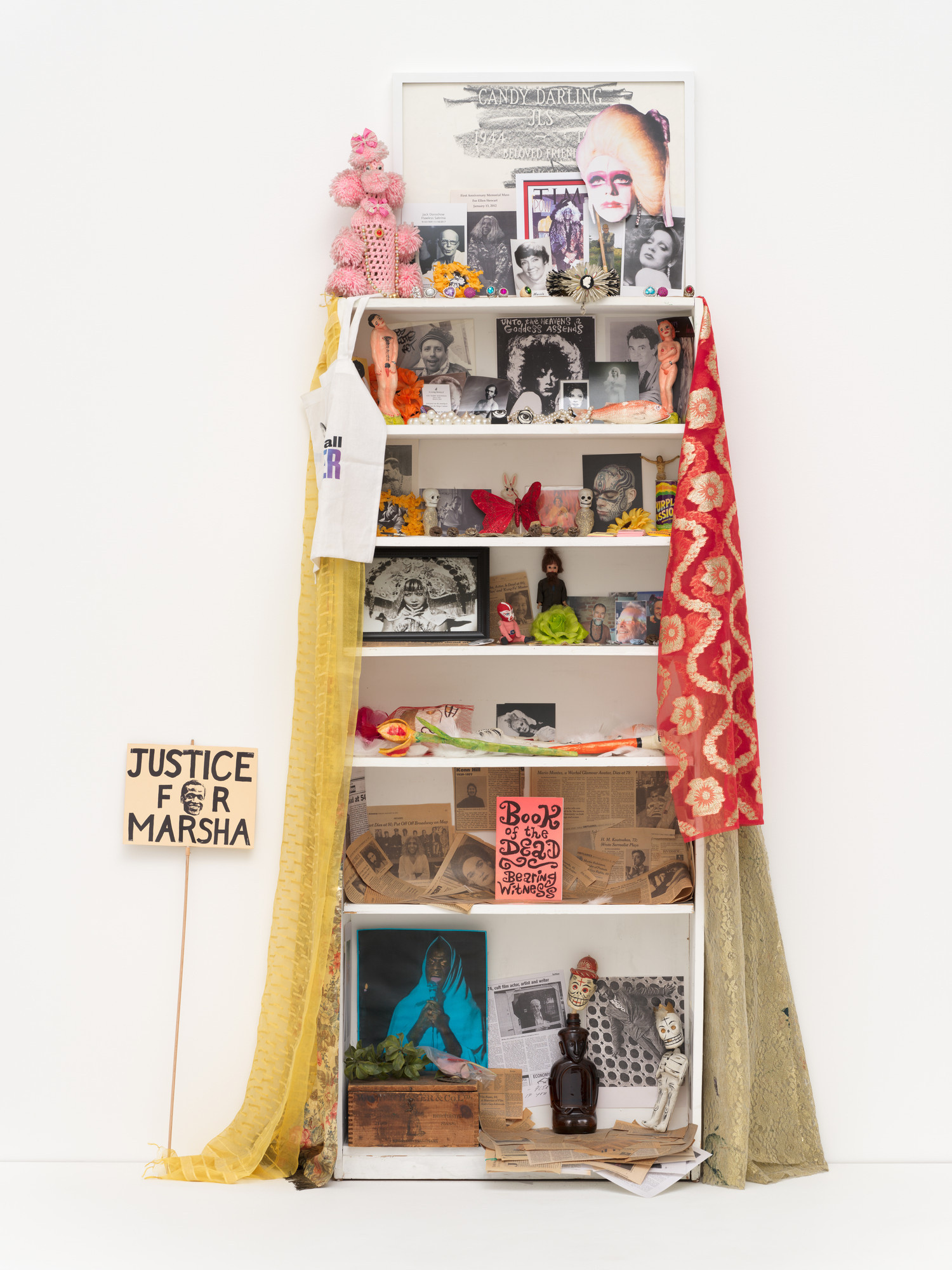
Learning Specialist, Marco Hermosillo: What I’m gonna ask you to do right now is look at this artwork and make a mental list of all the objects that you can see: paperclips, dolls, pieces of fabric. Then I start noticing images of people. All of these objects belong to an artist called Agosto Machado.
Artist, Agosto Machado: My name is Agosto Machado, and I never intended to be an artist, really. I’m a hoarder. If you’ve ever been in my place, it’s very dangerous because it’s floor-to-ceiling things, and it’s things that people don’t normally save, but I do. [Laughs]
Marco Hermosillo: To us, perhaps they look like random objects, but to him, it’s a way of conjuring up these different beings who are special to him.
Machado got the idea to make shrines in the 1980s. This was a time where many of the people in his community were getting very sick and dying of AIDS. It’s a virus that targets the immune system, and it makes it very difficult to fight off infections. It's also a disease that affects queer people at a higher rate. AIDS soon became an epidemic, kind of like what we experienced with COVID-19. The response from the government was very slow, and many people died because of it.
Agosto Machado: I was a caregiver for 12 years. And when word got out that I was helping people, wherever I went, people would shift away. The thought was if I got near you, that you’d get AIDS. I couldn’t understand the fear. But we lived through that, and we learned from that.
People have criticized the piece, that it’s so sad. No, it’s not sad. All these people lived and contributed. Throughout history in so many different cultures, as long as your name or your memory is remembered, you live.