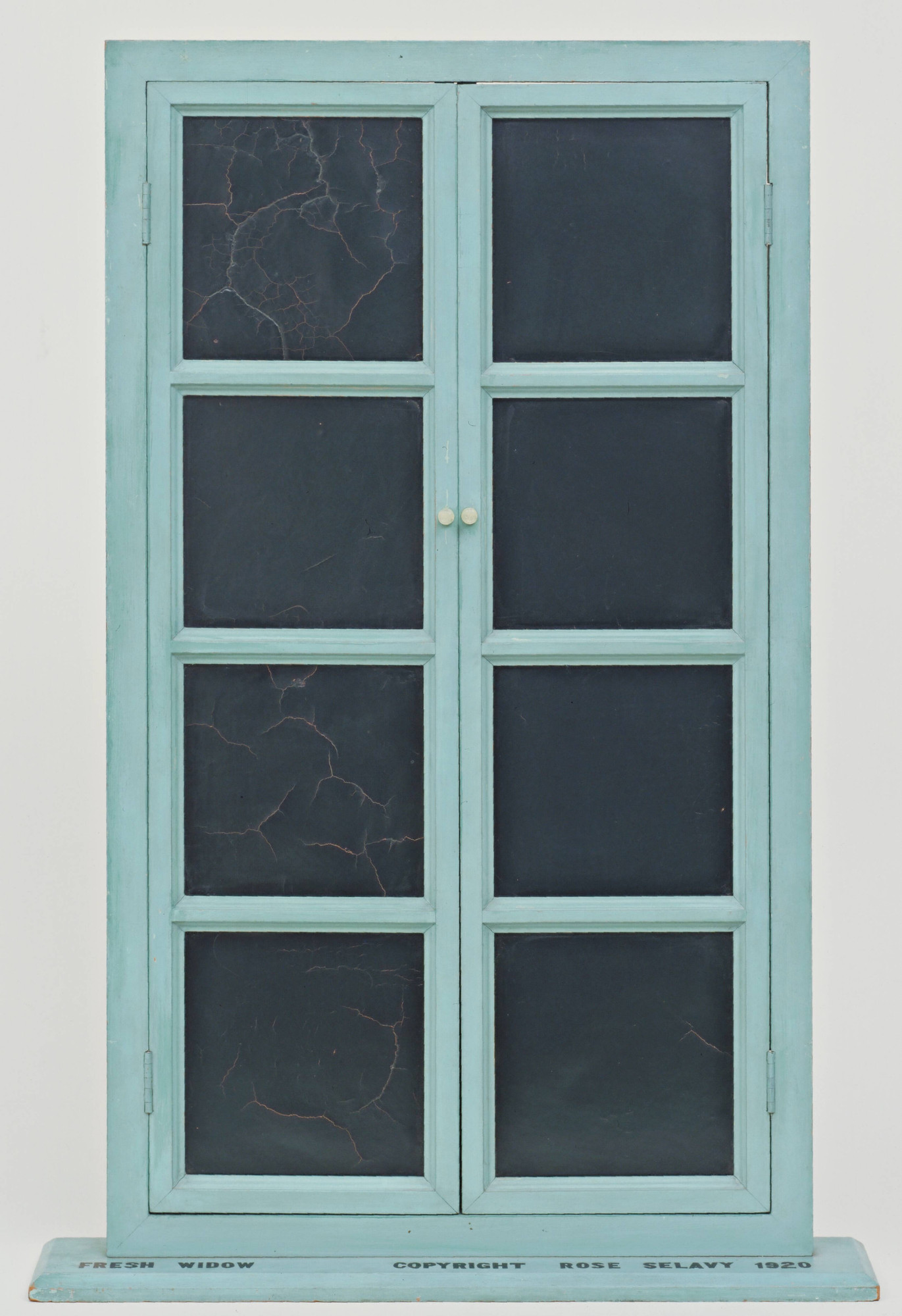
Artist, Jacqueline Humphries: What we’re looking at is a set of French doors. The panes of glass are covered in leather. Titles are very important in all of Duchamp’s work. So it’s a French window, but he removes two consonants, and it becomes Fresh Widow.
Curator, Ann Temkin: Does it mean fresh as in recent? And of course, there were all of these women who, in 1920, had lost husbands to World War I. The black leather squares could refer to the way that, traditionally, widows would cover their windows in black to indicate mourning.
Jacqueline Humphries: The title no longer describes the work, so it opens up this space to make you think about what you’re seeing, what is this object, and that is really what the work is—trying to reconcile these things that don’t quite fit together.
Curator, Michelle Kuo: Duchamp was fascinated by anything that occluded your vision, and that was unobtainable to you and had a kind of sense of mystery.
Ann Temkin: And so I think that having obscurity represented in his work directly is an indicator that he would’ve wanted to send out there that art was not easy. Art is to set your mind going about all the giant questions in our world.