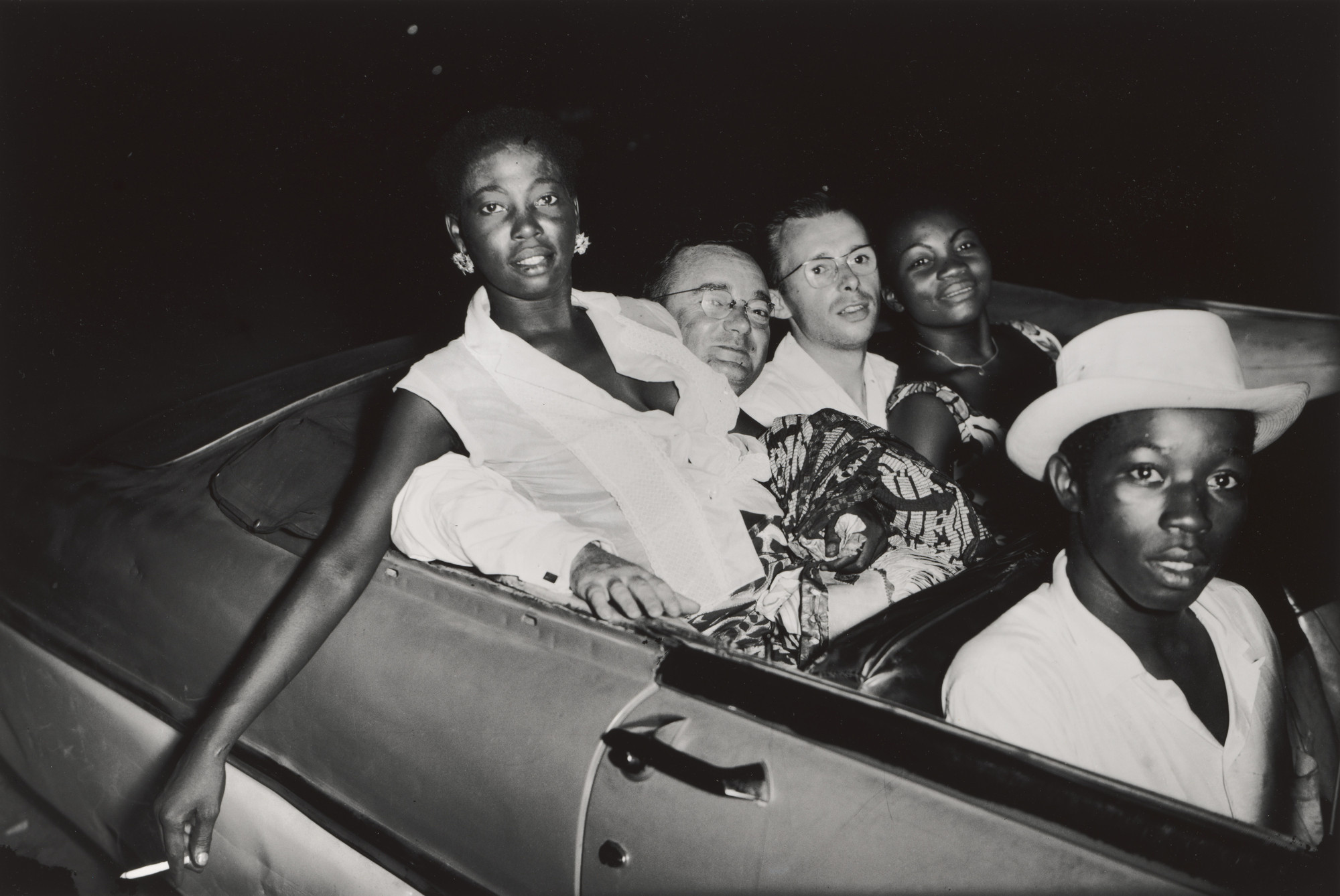
Historian, Sandrine Colard: Depara was a photographer of young people, partying people, in the nights. And here, we see two white men in a car with two Congolese ladies. The arm of this lady, the comfort in which she pose, the cigarette—these were independent women who were vilified by the colonial authorities at that time, particularly because they were in charge of their own sexuality.
Léopoldville was de facto segregated. You had Cité Indigène, the Native City, where all African Black people were supposed to live. Mostly, authorities were not supposed to be in this part of town, so things were happening outside of the colonial gaze because of segregation.
These photographs were taken just a couple of years before independence. The very fact of shooting outdoors, of shooting, certainly, after what was the curfew, the time where you were not supposed to be out, was definitely very politically charged. The political imagination of these photographs is these many transgressions in an image that looks like people just having fun.