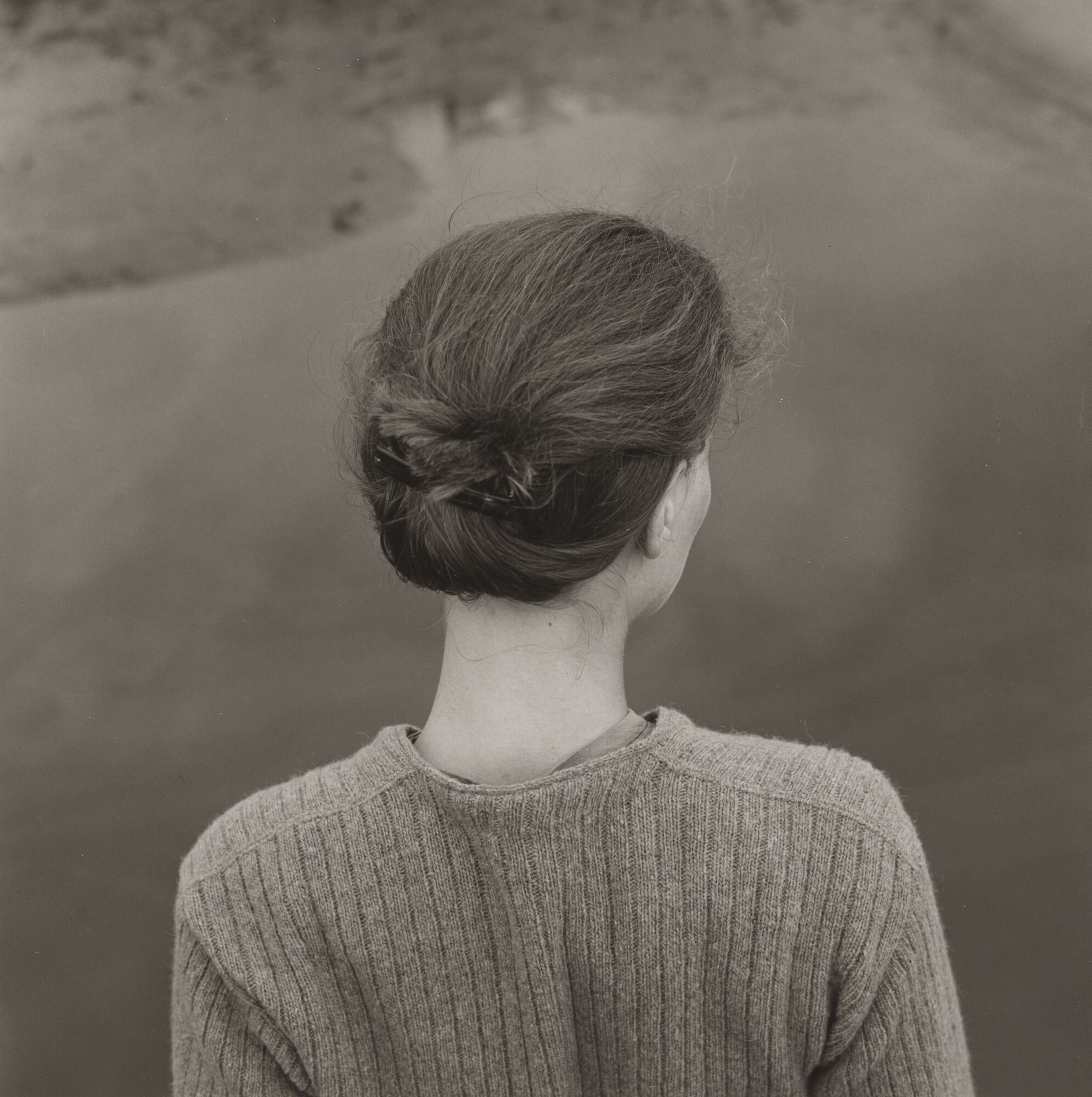
Artist, Emmet Gowin: I met Edith on a Saturday night—December of 1960. And Edith and I would get married three years later. I photographed her from the minute I got a camera.
Curatorial Assistant, Samuel Allen: That was Emmet Gowin. This is a photograph of his wife Edith, in Chincoteague, Virginia.
Gowin’s earliest photographs draw inspiration from the snapshot and family photography. There’s a candidness to them, but they’re also frequently posed, which means that the sitter’s an active agent in the picture-making process.
Emmet Gowin: I wanted to announce to anybody who saw these pictures, you may think you’re talking about me as an artist. That would be a confusion. Without Edith’s gift to me, you wouldn’t be looking at anything. In a way, I’m there being the observer to her. She consents to my observation, but both of us are equally exposed.
Samuel Allen: Chincoteague was this island where Gowin lived as an adolescent, so there’s this personal significance for him. With this photograph, one of the notable qualities of it is that it’s a square. It’s not portrait format, it’s not landscape; it’s maybe both, simultaneously. The person and the landscape are being given an equal kind of importance.
Emmet Gowin: We think that people age and change. For me, it’s just as true of a landscape. And if you’ve loved a place, and marked its particulars in your mind, and revisit it a year later, anybody with this experience will say something about the shock, how the landscape is not the landscape you have fixed in your mind. It’s just not there anymore.
Archival audio from: Oral history interview with Emmet Gowin, 2010 May 13-14. Archives of American Art, Smithsonian Institution.