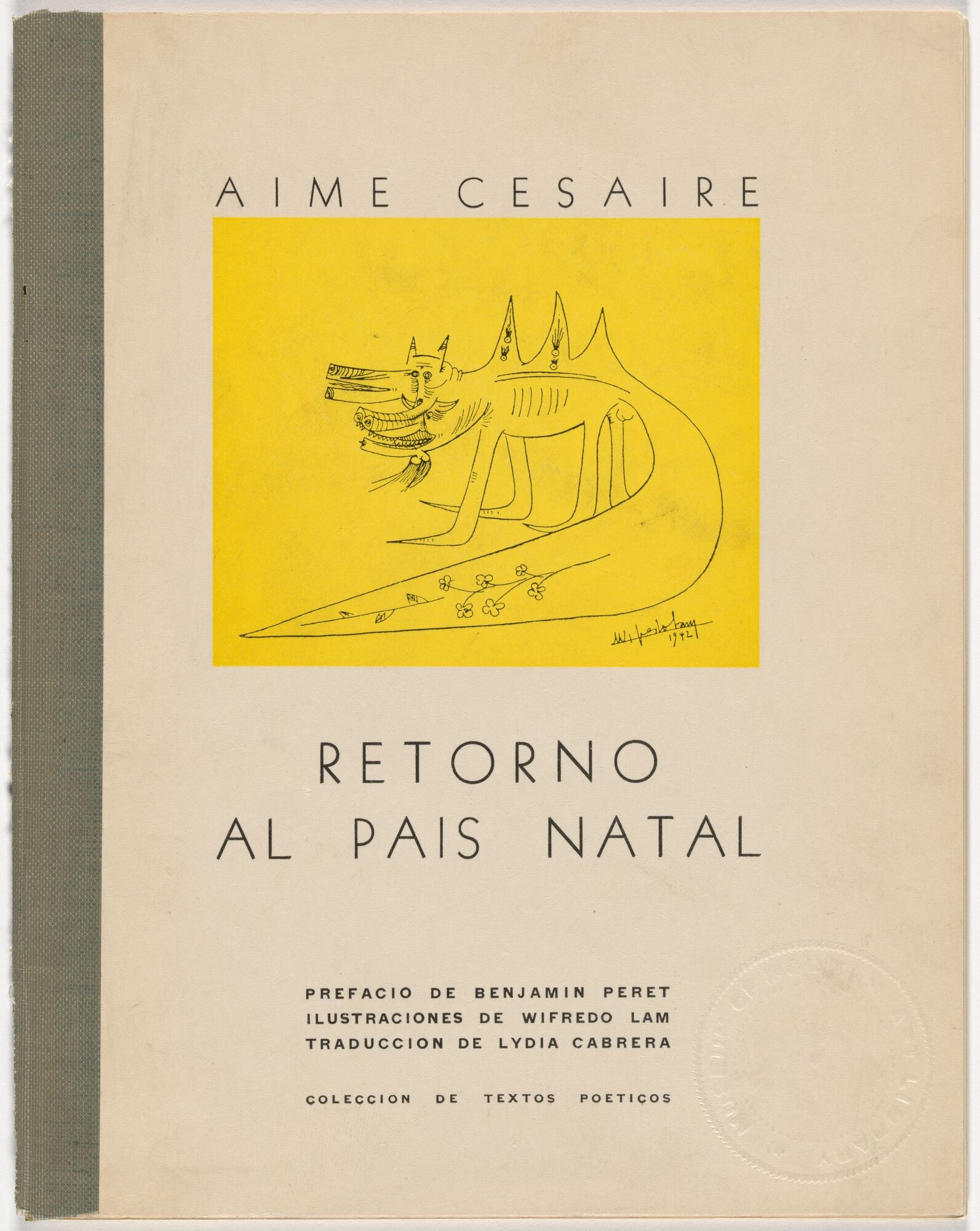
Narrator, Marlin Ramos: When Lam returned to the Caribbean from Europe, he forged two powerful friendships that deeply influenced his work. You can see evidence of their collaboration in this case.
The first was with the poet Aimé Césaire, whom Lam met in Martinique.
Artist, Rashid Johnson: Aimé Césaire is a writer, he's a thinker, but he's also an active politician. He is fighting, for most of his life, to free the people of Martinique of the chains of French colonial reign.
Marlin Ramos: In Cuba, Lam met Lydia Cabrera, who reconnected him with the Afro-Cuban cultures and religions he had experienced as a child.
Anthropologist, Martin Tsang: Lydia Cabrera was an ethnographer and writer. She was able to document various Afro-Cuban religions. When Lam and Lydia met, they had both spent time in Europe and returned to Cuba to restart their lives within their native land.
Marlin Ramos: Lam, Césaire, and Cabrera collaborated on the book in this case, Notebook of a Return to the Native Land. Césaire wrote the influential text that Cabrera then translated from French into Spanish, and Lam illustrated it. The term “negritude,” in the poem, became the name of a growing literary movement.
Curator, Smooth Nzewi: Wifredo Lam was drawn by the arguments of Négritude in the poem, reconnecting with your Black heritage, but even more so, how those ideas of recuperating African cultural values was a form of anti-colonial resistance.
Marlin Ramos: The movement’s ideas of resistance, invention, and creativity would continue to shape Lam's work.