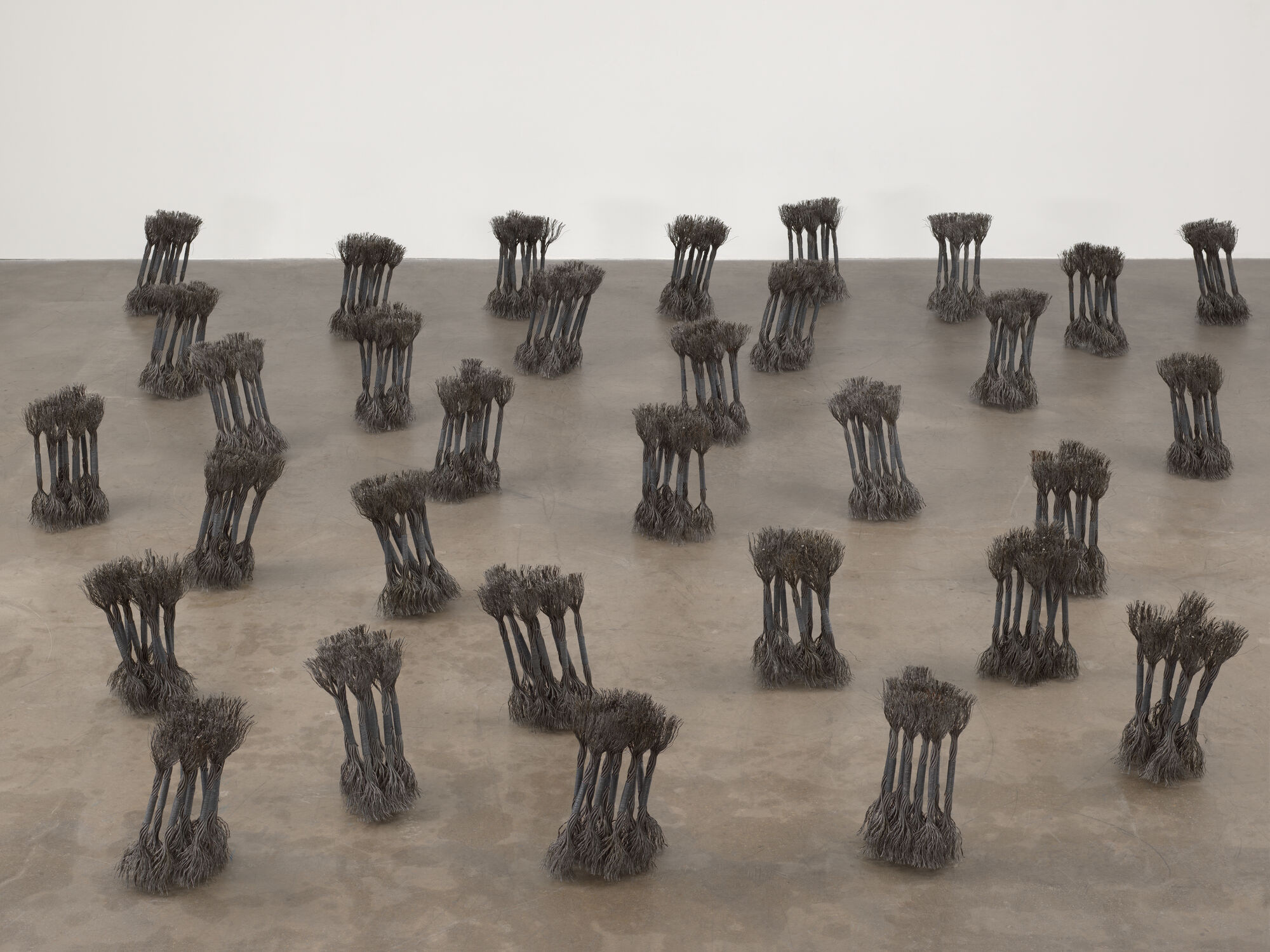
Curator, Lanka Tattersall: In this gallery, we see artists who are interested in forms that oftentimes look very abstract, but reference physical states. In Maren Hassinger’s Leaning, you see these wire forms and it's like each of them is a little entity dancing across the floor. So you have this suggestion of the way an individual might move amongst and within other bodies.
Artist, Maren Hassinger: My name is Maren Hassinger. I had the ambition to be a dancer and when I went to college they told me I wasn’t good in dance. I was better in art. But I never stopped doing it. And Leaning is part of a trilogy—all about movement, about dance.
It’s made from wire rope. It’s industrial material. It’s used whenever something is needed that’s strong but flexible. I had this wire rope cut into lengths. Then, we unwrapped all these wire rope lengths, which retain a memory of being wrapped around a core, so they’re wavy lines. And then we bound them and figured out a way of putting them together in the bundles that you see now.
Leaning means having an inclination. It also means literally leaning over. So I think that both of those things are part of the title. But the amount of lean and also the direction of the lean, it has to do with movement. If they’re all leaning the same direction, that’s more like all the wind is blowing that way. But if they’re doing this more chaotic thing, it’s more like a crowd of people running towards something.