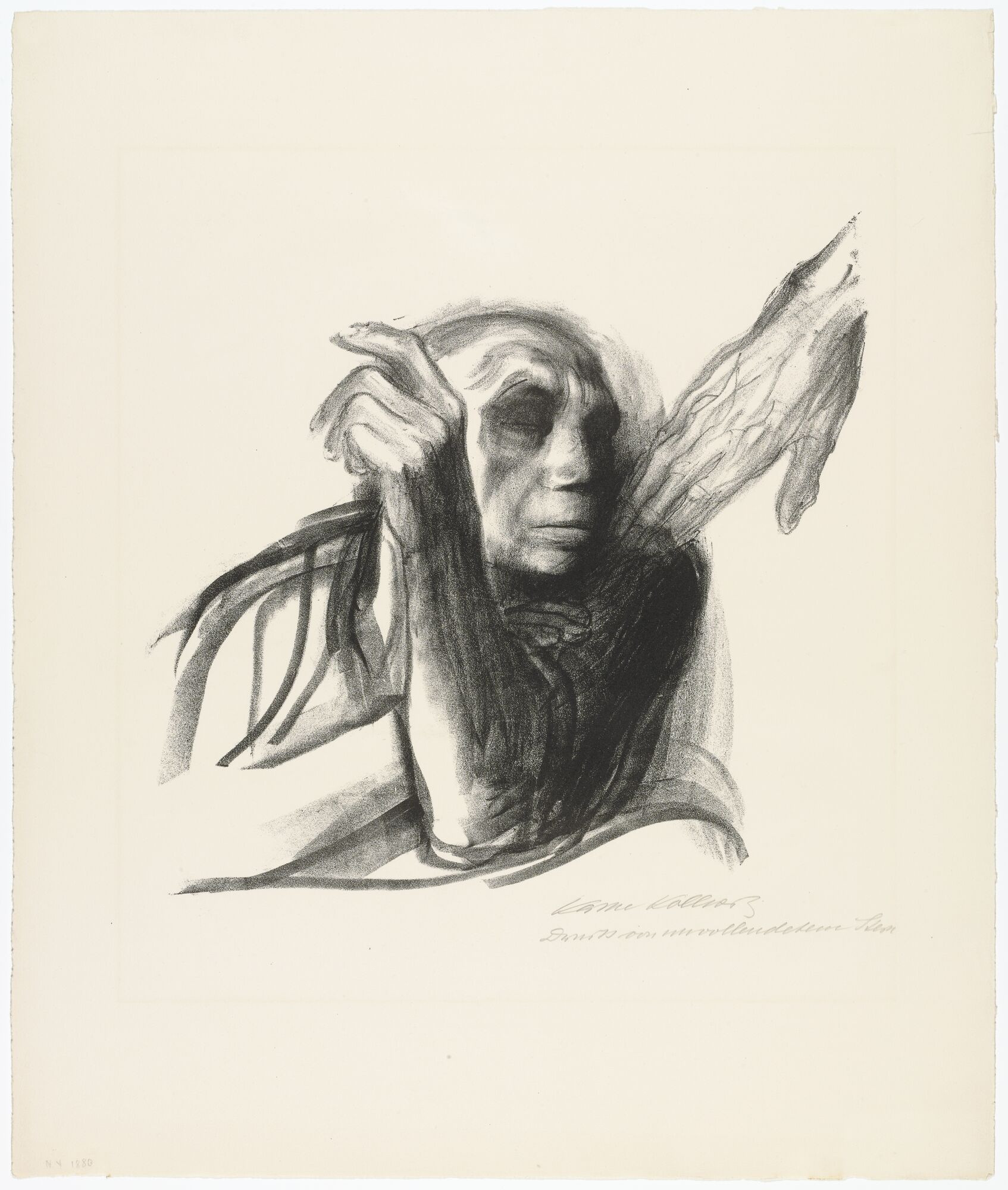
Curator, Starr Figura: This is Call of Death from around 1937. It’s one of the lithographs in Kollwitz’s last portfolio, titled Death, which, on the one hand, we can see as something that she was highly aware of from her childhood because one of her younger siblings died when she was a young child. And then death was just a much more prevalent thing in the world that she grew up in, before antibiotics, people died at a much higher rate, especially children.
On the other hand, we have to see it against the backdrop of the Nazis’ rise to power. What she sensed might be looming on the horizon in terms of World War II, those are all bound up in this final statement about the subject of death.
Writer, Sheila Heti: That's the duty, to look at the world, to actually be in it with other people, feeling. It causes you to suffer as an artist to be so tuned into that aspect of life. So there's some sense I get that she sacrificed some of her own personal happiness to keep herself attuned to the suffering in the world.
Starr Figura: She had written at one point to her sister, saying something like, I’m so afraid of death. In a way, she’s saying this is something I’ve been afraid of, but now I’m getting ready to accept it. You could say, it’s her confronting one of her fears and almost welcoming it because she’s reached that point of her life.