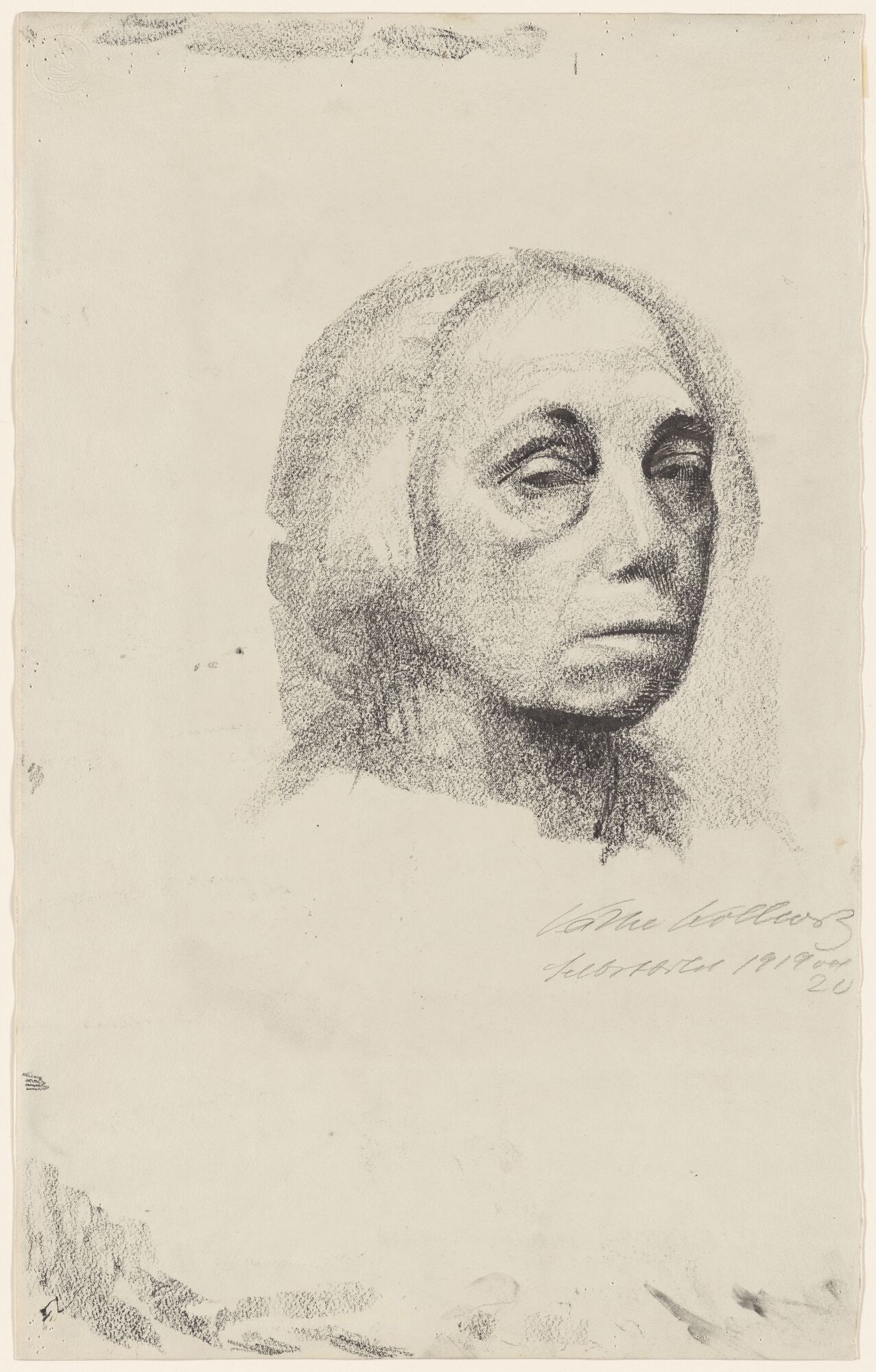
Curator, Starr Figura: Often we think large artworks are more monumental statements. This is a small self-portrait, but that emotional distillation and unflinching ability to look at herself with so much honesty gives it, nevertheless, a kind of monumentality.
Writer, Sheila Heti: In the earlier self-portraits, there’s less directness. Whereas the later ones, there’s much more of a confrontation. There’s not a question or an aspiration. It’s the other side. What does it look like to have done something, to have struggled—with art, with motherhood, with humanhood, with a culture?
Starr Figura: Kollwitz was in her early fifties when she made this self-portrait. World War I had just ended. She was coping with the many crises that were gripping Germany at the time. There was famine, people suffering from the trauma, physical and emotional, of the war. And I think we can see that when we look at this portrait.
Therapist, Emily Price: There’s something so powerful about the facial expressions she chose—just those tired eyes, but also a lot of dignity. I look at that and I can’t look away. I want to know more. It feels like I get to interact with somebody who is offering their experience willingly to me generations later. It’s a little bit of saying, I’ve seen dark things, but I’m still here.