Writer, Sheila Heti: My name is Sheila Heti. I’m a writer and I live in Toronto.
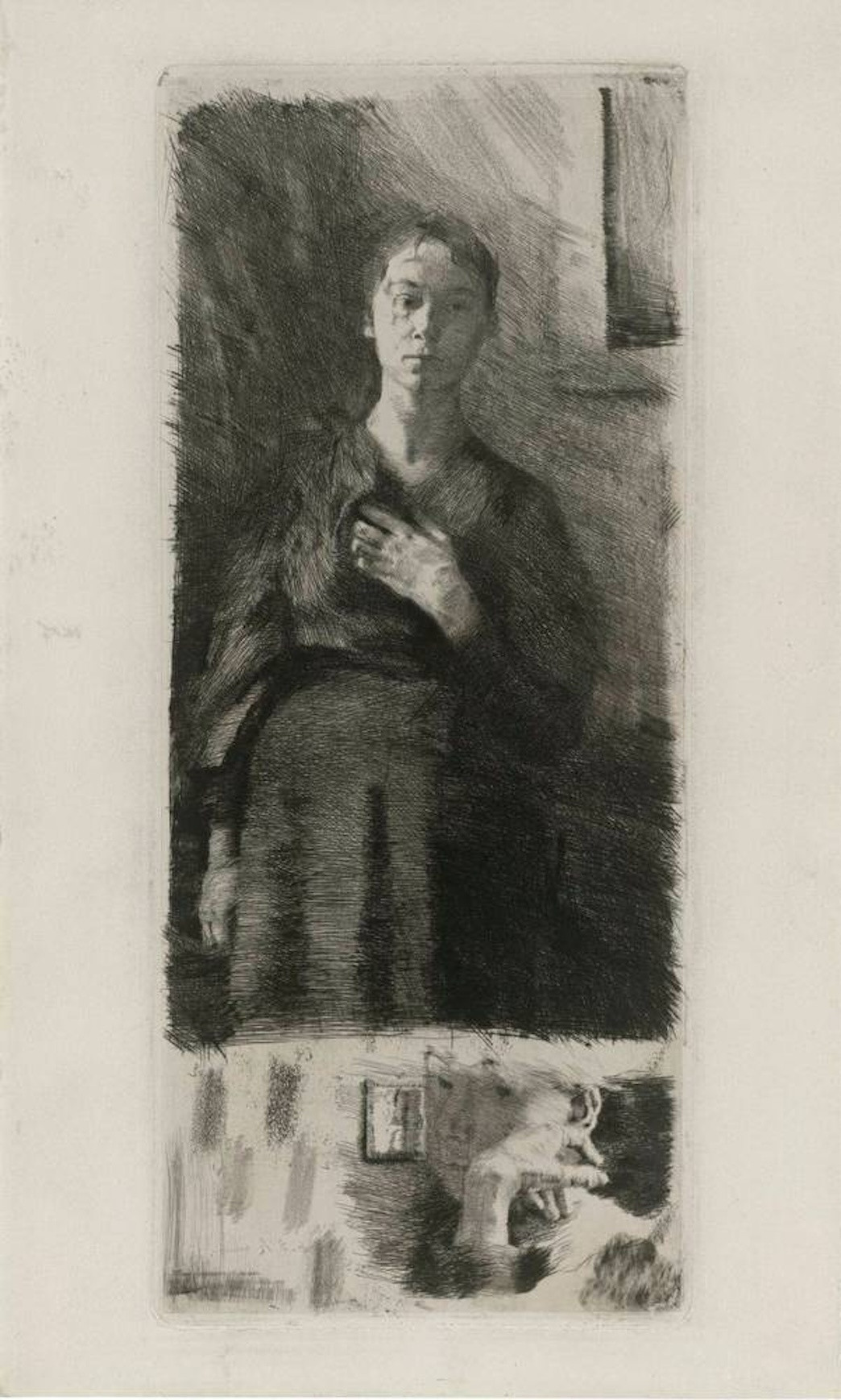
The image is divided into two parts. The top image, there’s a pensive, quiet quality to the way that her face is set. She is depicting herself as a mother to be, where the most important thing is her body in the midst of this process that is about her, but also not quite about her.
And the bottom is her focus on her face and her hand, which is what makes the art. It’s her as an individual, in relation to herself—not in relation to her pregnancy.
Curator, Starr Figura: In her day, nobody was a mother and an artist because motherhood was supposed to be all in. You sacrifice everything. So it’s really remarkable she puts herself out there as both of those things early on.
Etching is a printmaking technique. You can get incredible linear detail, even more than with pen and ink. She used that to show this male-dominated art world: look what I can do. And it succeeded.
She was one of the first women to succeed visibly as an artist, and also one of the first to really put the female point of view forward and to make women active, thinking, as opposed to passive or idealized or sexualized.
When you look at the early self-portraits. She’s not smiling to try to look pleasant. It’s just, this is me. I’m not here to be decorative. And I need you to take me seriously.