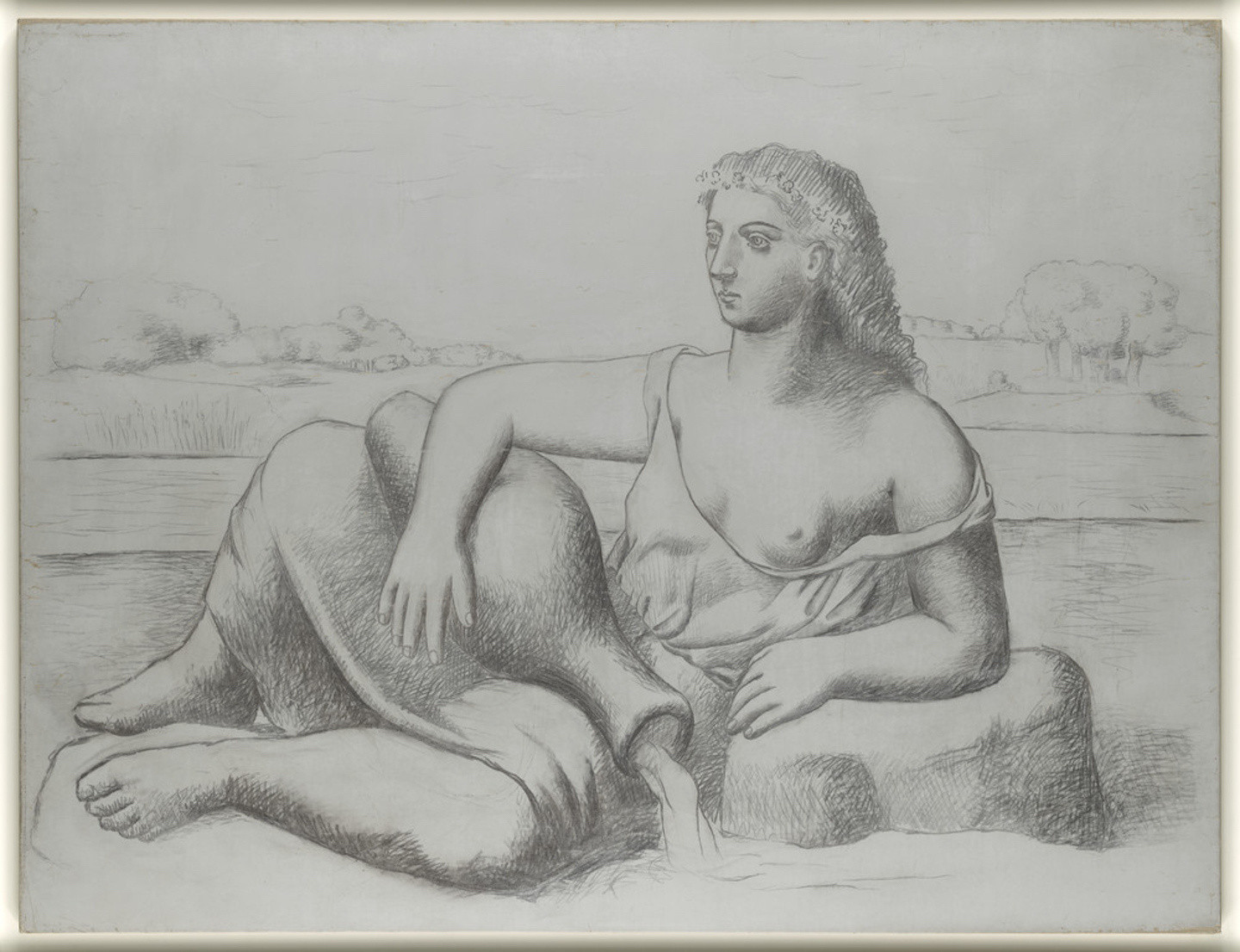
Curator, Anne Umland: This charcoal drawing is titled The Spring. It’s a female figure reclining in a landscape. And the figure holds an amphora that’s tilted and water is pouring out of.
Professor, Cassandra Tran: There’s this sort of serene stillness that makes me think of a statue.
I’m Dr. Cassandra Tran. And I’m an assistant professor in the Department of Classics at Wake Forest University.
When I tried to pinpoint what made this image classical, the first one is the reclining position, which is suggestive of guests reclining together at dinner parties in ancient Rome. Her simple dress is, perhaps not historically accurate, but harkens back to Greek and Roman dress.
The fact that the setting is a spring and it’s a woman at leisure, I was thinking of water nymphs. Nymphs are female divinities who have a relationship to the natural world, usually young women in perpetual youth and beauty.
So, it seems classical, but we’re talking about multiple cultures throughout multiple time periods.
Anne Umland: For Picasso, to use the word “classical” can connote visual references to Greco-Roman antiquity. But in his own time, people also talked about classicism in terms of classical training and making a work of art using shading and representations of volume and creating an illusion of space.