Curator, Anne Umland: I’m Anne Umland. I’m senior curator in the Department of Painting and Sculpture here at MoMA.
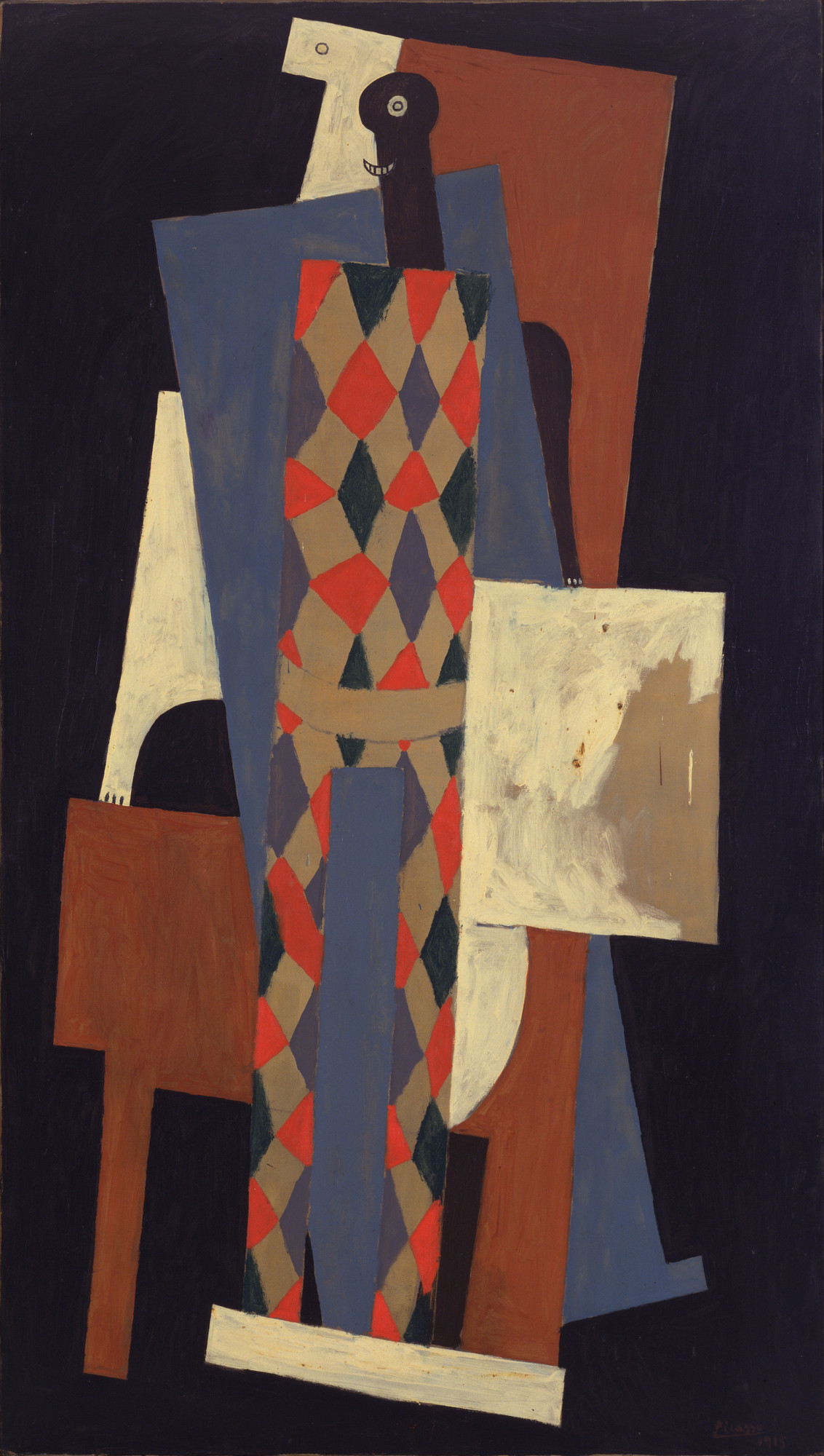
This work was painted in 1915. At its center is this elongated figure wearing a Harlequin costume, identifiable by its diamonds. Harlequin is a character from a type of Italian theater called commedia dell’arte.
The head and neck emerge from the flat top of the harlequin’s costume. The little, round head is tiny, the neck is really long, but has a single eye and then this very toothy smile that has floated off the face and overlaps onto the white shape behind it. The legs end in this tilted white rectangle. Nothing is stable in this picture.
Theater Director, Patricia McGregor: As a theater artist, I think of this as a performer emerging from the void.
My name is Patricia McGregor. I am the Artistic Director of New York Theatre Workshop.
I see the big black surround as the theater space that this figure is emerging from, clearly engaging with the audience. I feel like these eyes are looking at me, smiling and trying to make me smile.
Harlequin is zany, funny, mischievous—somebody who the world might see as not having power, but through his plots will find a way to move his agenda forward.
Anne Umland: Harlequin is the figure of the trickster, a character of multiple identities that Picasso identified with. I think in the Fontainebleau moment, this idea certainly plays a role in the different visual styles that Picasso’s using.