Artist, Revital Cohen: I’m Revital Cohen.
Artist, Tuur Van Balen: And I’m Tuur Van Balen.
Revital Cohen: We're an artist duo based in London working with objects, installations, film, and processes.
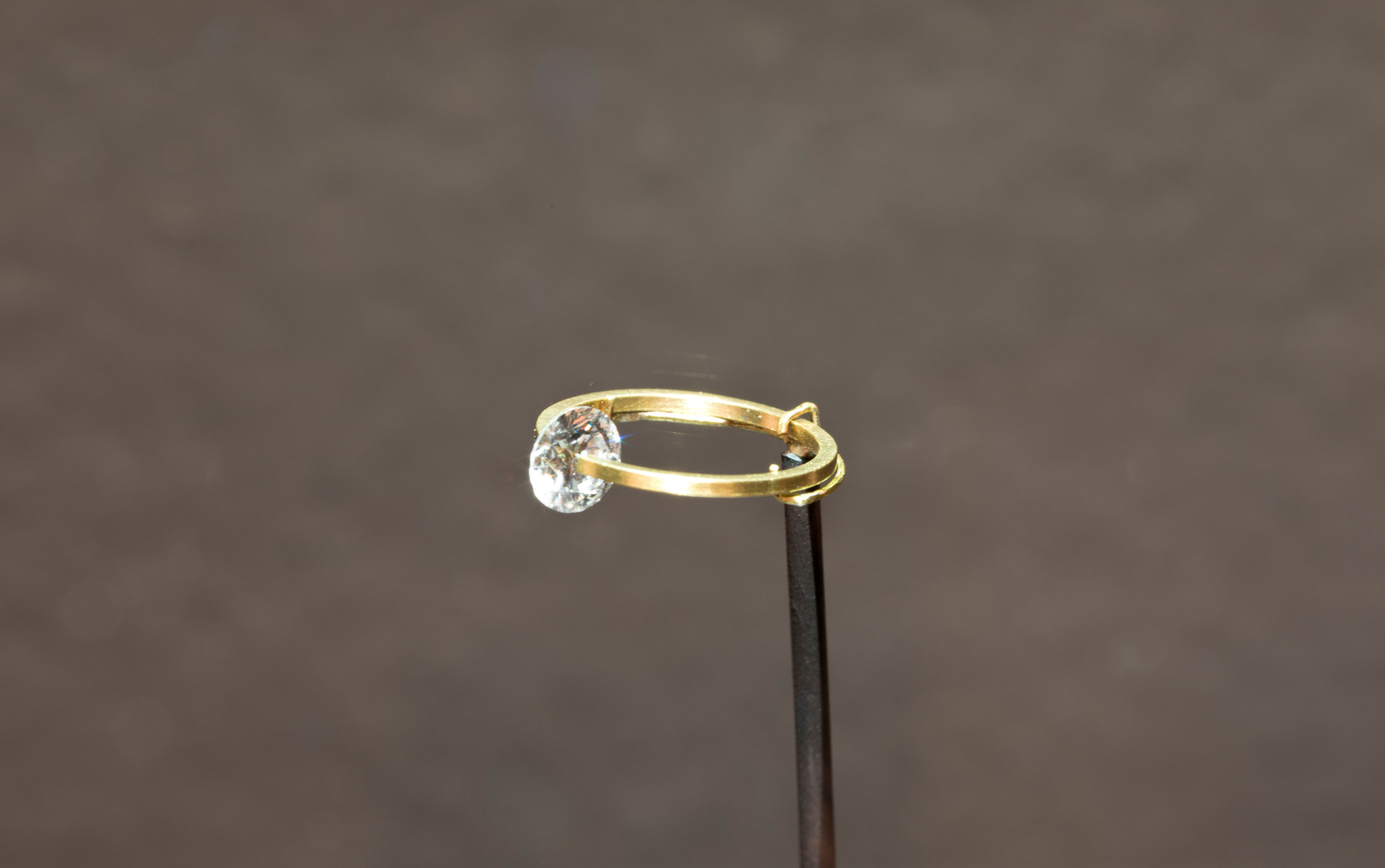
Tuur Van Balen: You’re seeing our interpretation of a diamond engagement ring.
Revital Cohen: And the diamond is made from the carbon that we collected after burning a tusk of an elephant's ivory.
Tuur Van Balen: The diamond is tilted on its side referencing the ourobouros, which is an alchemy symbol of a snake eating its own tail. This project is a continuation of a long investigation we've been doing around natural resources that have in many ways shaped the conditions of Central Africa and of Congo in particular.
Revital Cohen: It has a lot to do with theories that elephants are being poached on purpose to make ivory reserves worth more.
Tuur Van Balen: We see an analogy in the way that both the value of diamonds and the value of ivory is created through artificial scarcity. Scarcity in the case of diamonds comes through the slogan “Diamonds are Forever,” an attempt at preventing people from selling diamonds because it would increase the supply and value would decrease.
Revital Cohen: By making this diamond out of an elephant's tusk, a species which is about to become extinct, we wanted to create a future fossil that will question all these concepts of forever, of natural, artificial, of value, of perhaps lack of value and bring them all into this object.