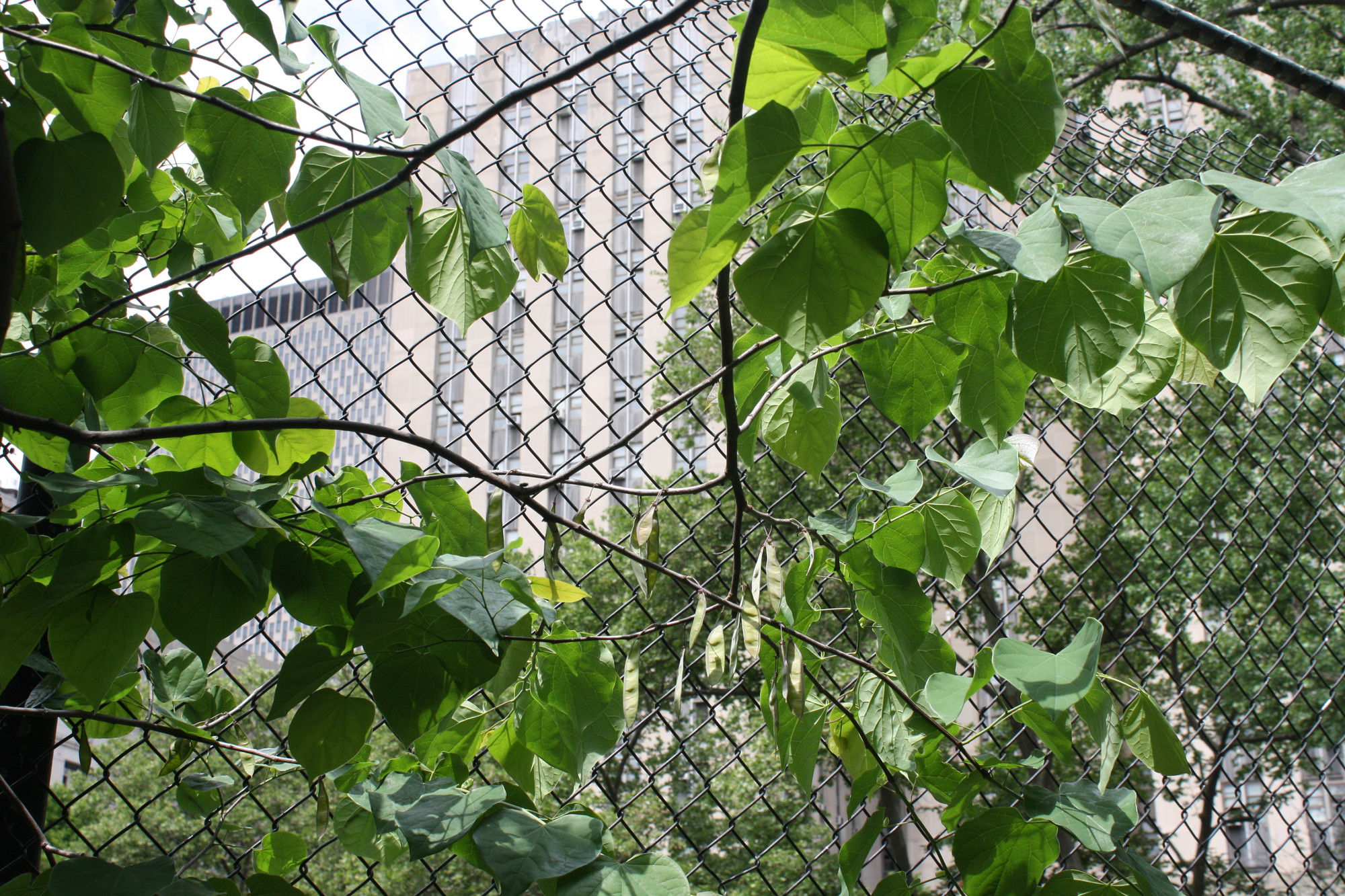
Tourmaline: We’re in the park across from 42 Baxter, which was formerly the site of the African Society for Mutual Relief.
T. Lax: And so here we are in Columbus Park.
Tourmaline: Oh my God. Here we are in Columbus Park.
T. Lax: And what a park it is. It's really, we’re—we have like white runners, a lot of Chinese folks playing Mahjong. And then in the former site of freedom that we decided to—you brought us to—
Tourmaline: Look how quickly the blame game happens.
T. Lax: Thank you for bringing us to this prison, Tourmaline.
Tourmaline: In the former site of that we—actually you
T. Lax: You brought us to a prison. Tell us about that.
Tourmaline: Tell us about your decision. Oh my God. So live from under the bus that T. threw me, I'm going to talk a little bit about MY decision.
So the African Society for Mutual Relief was a place where people could donate and put money into in order to have a kind of safety net when Black people were excluded from schooling and life insurance and buying property. So this was a way that people would come together and have a sense of security and stability with one another that was really necessary.
It's now a prison. So, to me, nothing is more clarifying about the world that I want to live in than a prison. When I am so up close to a place that is so about limiting freedom, it's so clarifying how much freedom we want. And how much ease we want, with being able to move around with pleasure and softness and receptivity.
Mariame Kaba is an activist and a writer. I invited her to tell you more about the African Society for Mutual Relief.
Mariame Kaba: What they wanted to do was to establish an independent autonomous Black organization in New York City that would unite to combat racism and oppression and to provide mutual aid and support for each other.
People have to understand what it was like to be a Black person who either was enslaved or had been emancipated at that period of time. It's not like there were social services around that people could go and access. It's not like the jobs they had provided significant financial ways to take care of themselves and their families.
Part of the mutual aid that people were engaged in at the African Society for Mutual Relief was having a whole floor that was dedicated to the underground railroad as a site for people to come and hide, when they were escaping enslavement or when they were running from slave catchers.
They really focused on trying to meet the most basic human needs. And one of those basic human needs was burial. In 1794, the city decided to close down the African burial ground and make it really difficult for Black people to then be able to bury their loved ones. And in a city like New York, at that time, where Black people died young and in large numbers, burial was super important to folks. Respecting Black people in death, if they couldn't be respected in life, made a huge, huge difference. And so they petitioned the common council at the time, in order to be able to have the city provide burial grounds for Black people. And they were successful in doing that.
Mutual aid was political survival and economic survival and cultural survival for Black people, particularly in the 18th and 19th century. This was the only way that Black people could actually make sure that they could take care of themselves and each other.