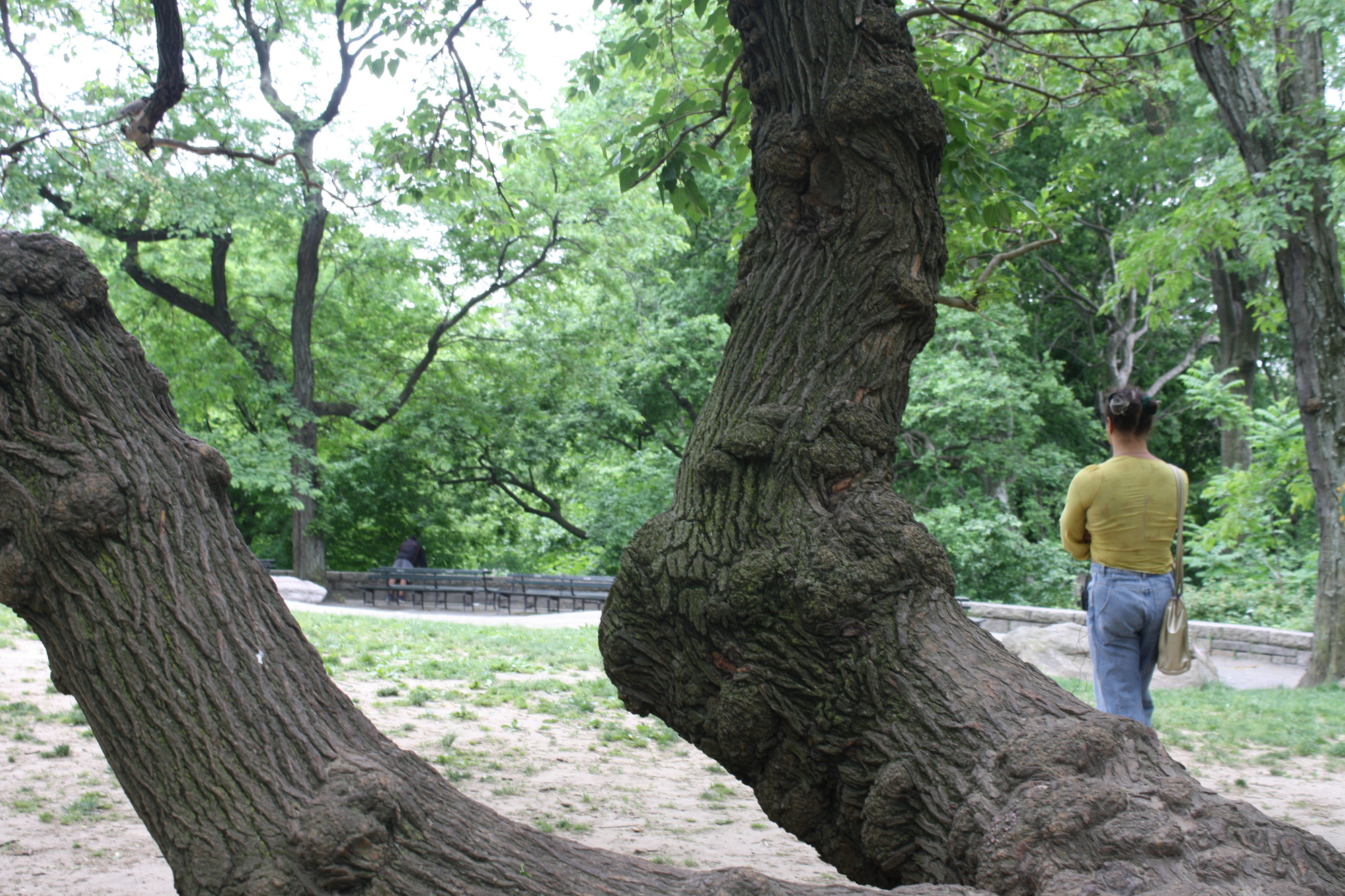
T. Lax: Where are we within Seneca Village?
Tourmaline: So we are in Summit Rock. This is one of my favorite places in the park because it's very high up and, at different moments, you can feel completely surrounded by the tree life. And then also you can turn your head and there's a high-key juxtaposition with the big buildings right there.
This used to be marshland and farms. There used to be churches and cemeteries and schools. There was prosperity, not necessarily in the capitalist sense, but just in feeling the abundance of what is possible.
T. Lax: When did you first start coming to Seneca Village?
Tourmaline: In about 2002. When I first started coming here, I felt really angry and upset. I was really focused on the tragedy, which was—this was a place that was destroyed to make Central Park. And then, I started to widen out and what became more pronounced was the real power of people coming together to feel each other's pleasure, to feel a sense of freedom, to little by little release outdated beliefs that you couldn't buy land if you were Black, or that you couldn't vote if you were Black.
In a moment when, in lower Manhattan, in the 1800s, there was a lot of fires being set to Black-owned churches and establishments. Slavery was still legal. People were regularly kidnapped from New York and sold south. So it was a really intense kind of contrast between what was happening in the city at large and what was happening here in Seneca Village. There was a sense of autonomy and self determination that moved through here.
T. Lax: And who would you say are the caretakers for that history?
Tourmaline: It’s any of us who are speaking it who or are feeling it, who are here having fun. It's like the birds, it's the trees. It's the bee that just flew by. I think it's the people who are unruly to the times that the parks close, or, you know, what you can and can't do in a park. It's the people who are still very angry about what happened. So it's an ever-expanding group of caretakers.
To me, it feels like a living memorial. When people gather here, high on the spirit of what came before, but are present in the what's happening now, what are we doing with this space, now? That to me feels like a really vibrant monument to the spirit of Seneca Village.