Curator, Andrew Gardner: The very first Jeeps were designed in 1940 at the outset of World War II. The United States War Department realized that they needed an easily maneuverable, four-wheel drive, reconnaissance military vehicle, capable of transporting 500 pounds.
An initial design was completed in just 18 hours by the car designer Karl Probst for the small automotive manufacturer American Bantam. Together, Bantam, Ford Motor Company, and Willys-Overland Motors of Toledo, Ohio began producing the first iterations of this combat-friendly vehicle, and over the course of World War II, some 360,000 were produced.
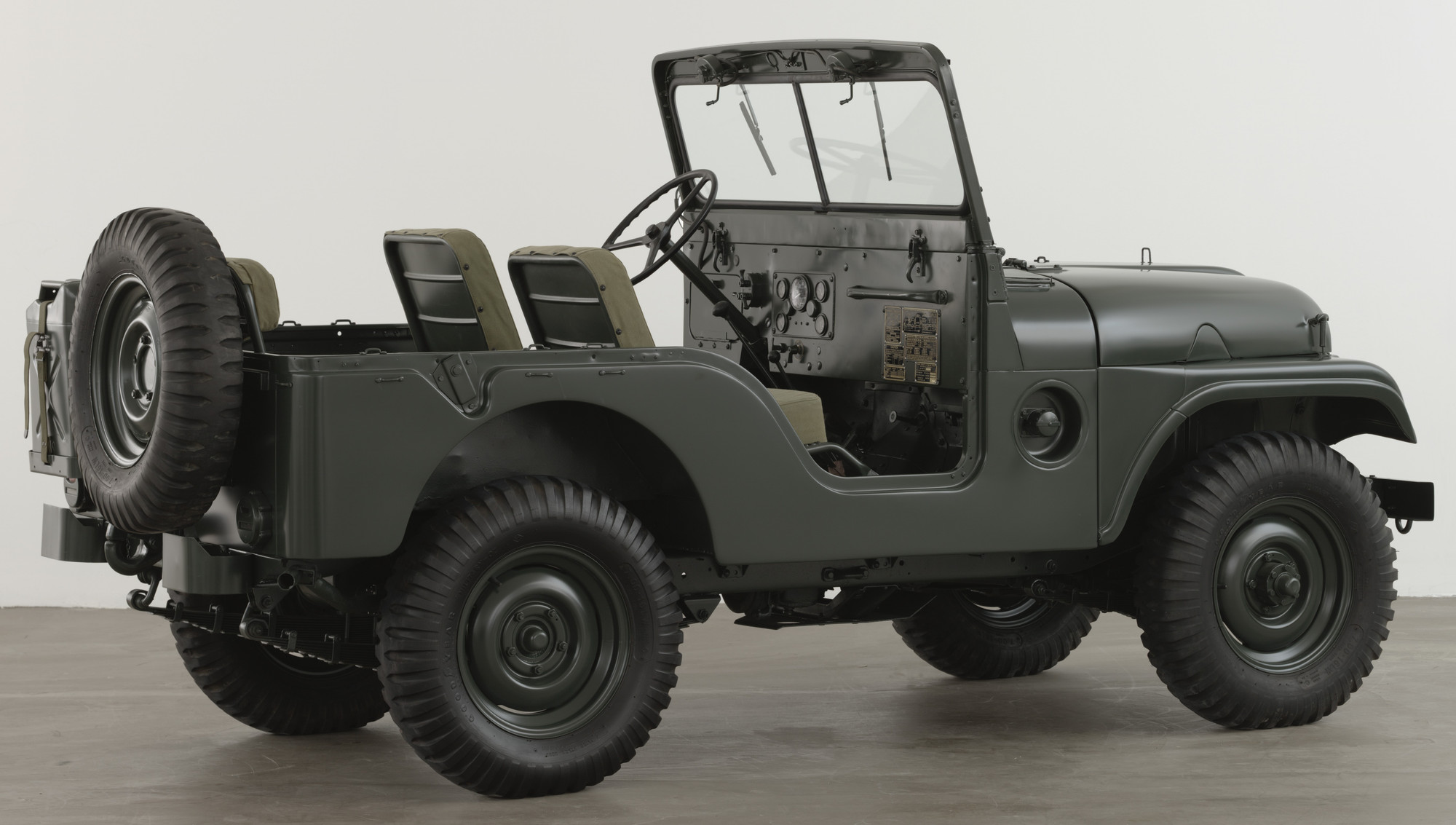
The M38A1 vehicle that we see here was designed in 1952. It's a faster, more robust version of Jeeps produced during World War II.
The Jeep is what one curator at the museum called "a sturdy sardine can on wheels." In order to maximize ground clearance over rocky terrain, the body was flat and compact. The gas tank is tucked under the driver's seat for further streamlining. The interior is spare, save for two seats, a steering wheel, a speedometer, and a fuel gauge.
It shows all of the nuts and bolts of its design. They can be easily dismantled, folded up, and shipped off for military operations, so they're extremely portable, box-shaped vehicles, and that's very much for a strategic reason.