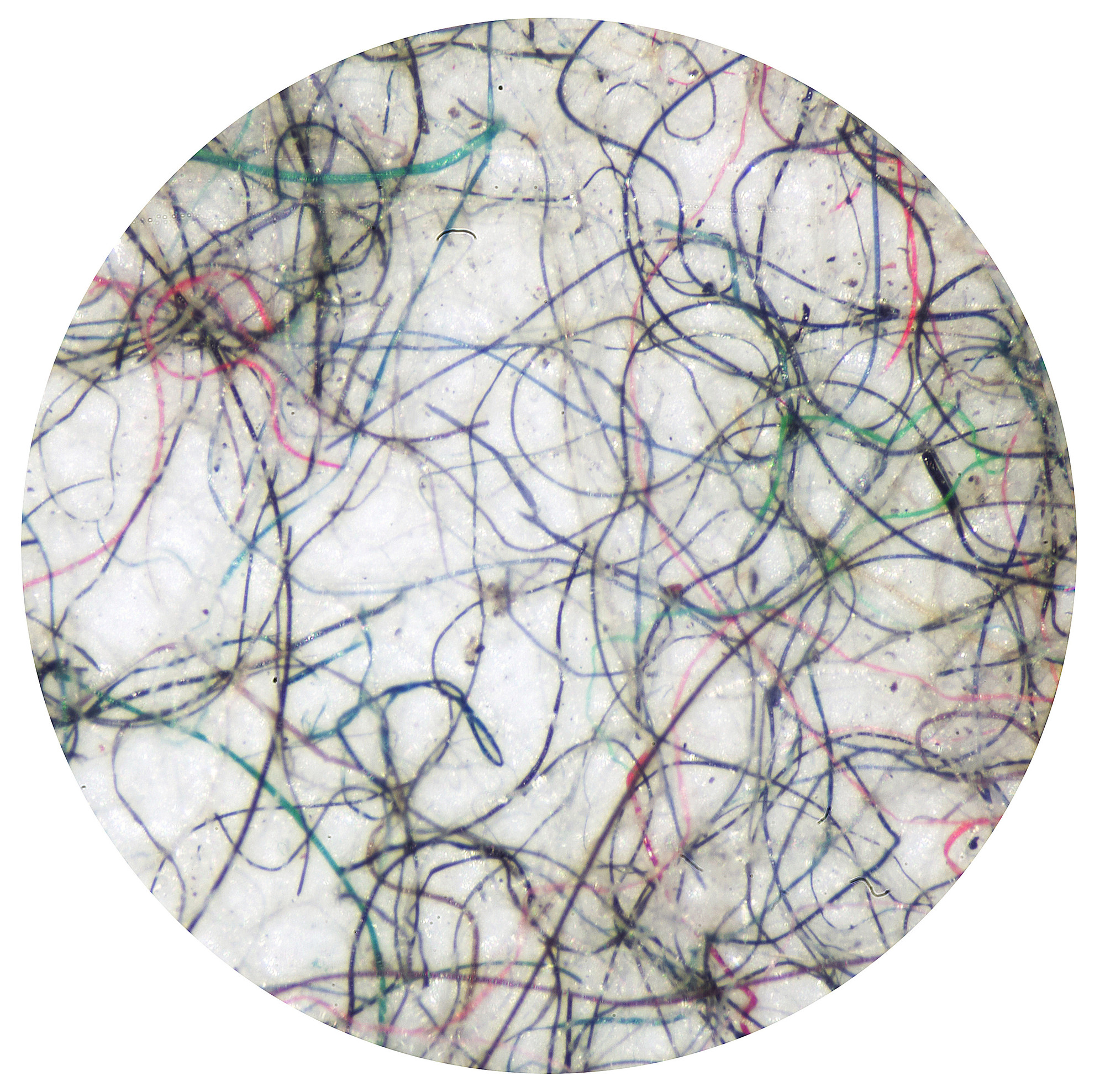
Artist, Nina Katchadourian: You may not know that what’s present in that little fluffball of dust is also a sumptuous banquet. Please allow allergist Dr. Sebastian Lighvani to introduce you to the dust mite.
Dr. Sebastian Lighvani: Dust mites are in some ways kind of like a cosmopolitan kind of, uh, mite, which belongs to the arachnid family. If you put a pencil with a small dot on a piece of paper, they’re a little bit smaller than that. And they’re translucent, fluid-filled, and they have eight little legs. And they kind of essentially eat shed human skin.
Nina Katchadourian: And what is the connection between dust allergies and the dust mite?
Dr. Lighvani:They produce fecal matter and fecal particles, which are even smaller than they are, and they contain protease enzymes, which actually digest the skin enzymes that they’ve just ingested. Now this, proteases enzymes are actually part of what triggers the allergic response in individuals. Dust mites actually go back and eat their own fecal matter. So not only do they eat that, they actually eat—they eat their own fecal matter, after the fact.
Nina Katchadourian: But really, don’t let that bother you. Think of them as companions, with simple lives, and minimal needs, that are always there to keep you company.
Dr. Lighvani: When you look at kinda less complex forms of life, they don’t need as much as we do. They don’t need to read the paper or relax; they just— they just do. So, uh, they have learnt, basically— find themselves in environments where they can be exposed to skin which is shed. And they’ve kind of synergistically evolved with us.