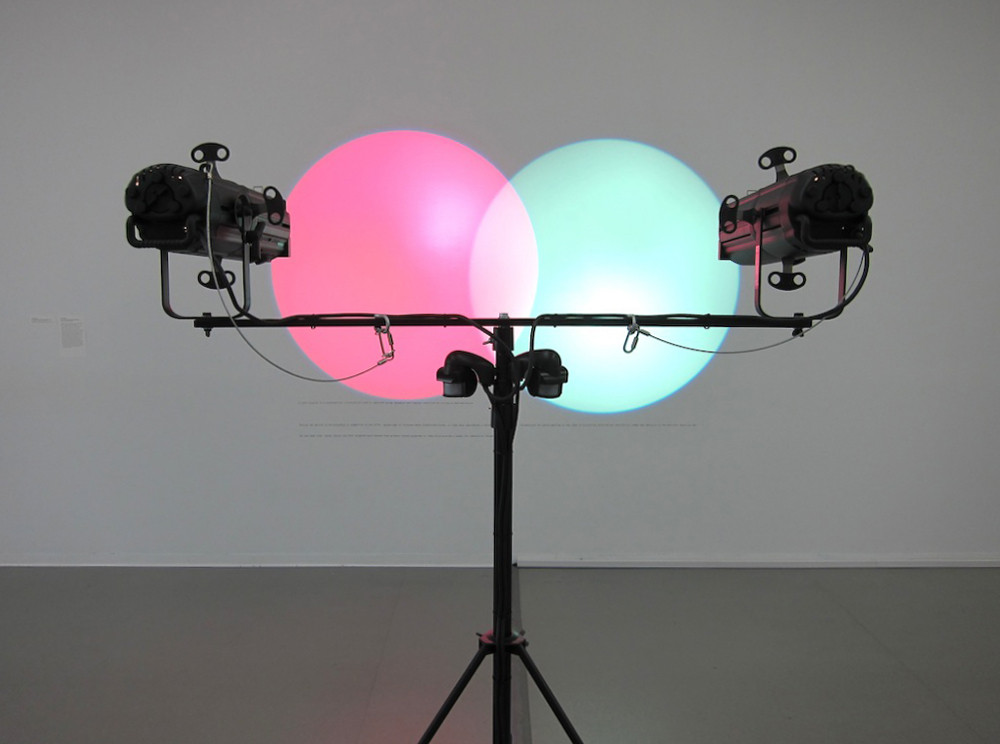
Artist, Amalia Pica: When I first finished art school in Buenos Aires, I was making work that had to do with Argentina's history and the way that it was being taught. I wanted to explore what was common. And that is when the work Venn Diagrams (Under the Spotlight) came about.
I feel that school plays a super important role in making sure that everybody has the same kind of base knowledge. But I remember that when I was in high school, I heard from a teacher of mine that Venn diagrams had been banned during dictatorship. Democracy was restored the year before I started primary school. So I learned about Venn diagrams, and the idea that somebody could have erased that bit of knowledge was interesting to me.
I'm often asked, why? Why was it banned? And I feel that to engage in the why would be to assume that what they did had any logic. I refuse to believe that what they did had any logic. Because the worst thing that happened during the period of dictatorship in Argentina was not the banning of Venn diagrams from primary school programs, it was the disappearance of 30,000 people.
Your body activates the spotlight. So it's sort of celebrating the presence of the human body. But at the same time, the motion sensors has to do with this idea of surveillance. And the spotlight also has to do with putting things in review, or in the spotlight.
It's again exploring things that we might have in common. Things like happiness and beauty and colors are really referencing elements that have to do with carnivals or popular celebrations. To me, it's a metaphor of how we can share social space. So it's very easy to be civil and loving with people that you love. But how do we come together with people that we don't know so well?