Architect, Chris Cornelius: [Oneida greeting] I said in Oneida that I extend my greetings, love, and thankfulness to all of you. I am Chris Cornelius, citizen of the Oneida Nation of Wisconsin.
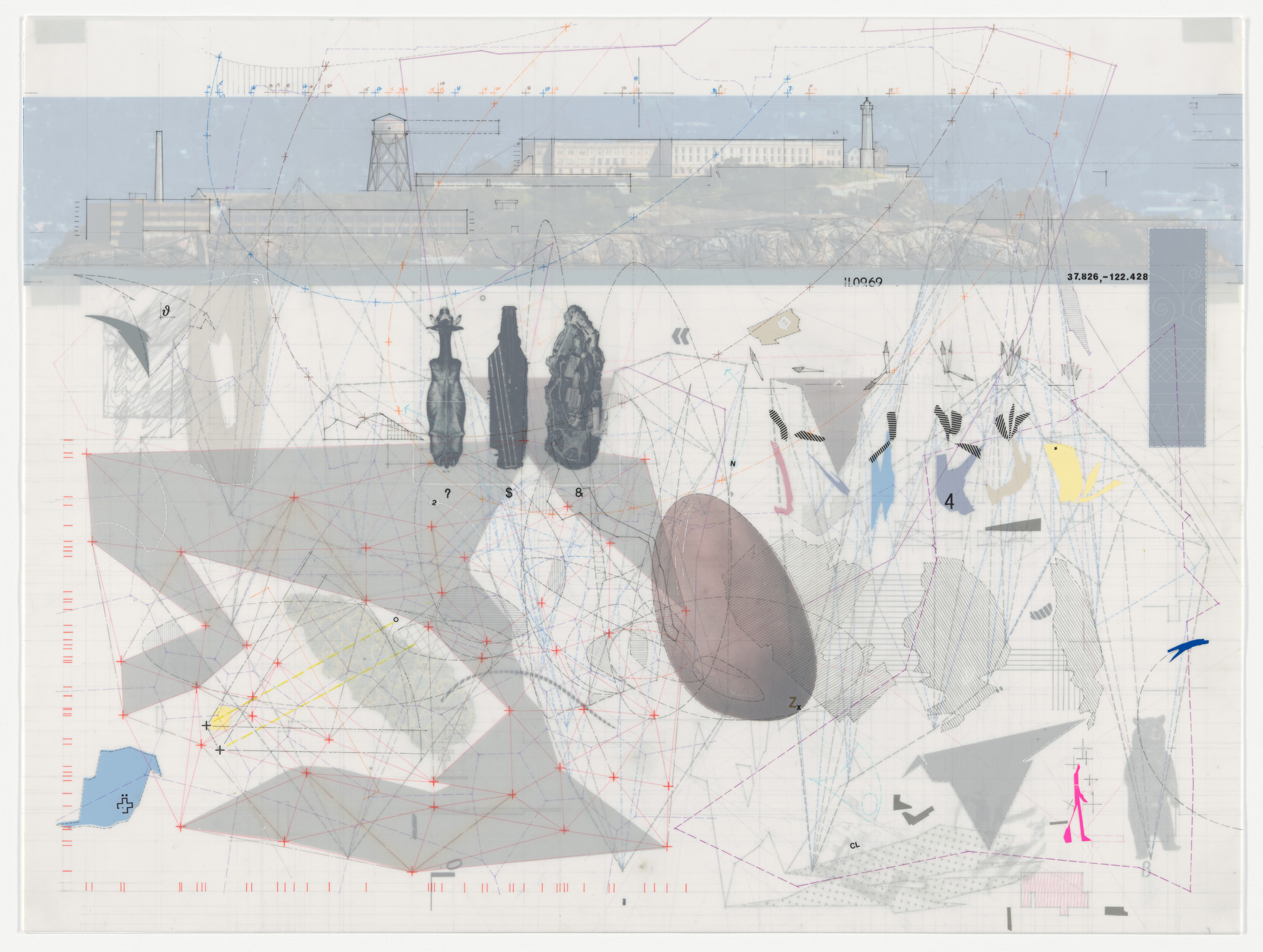
What you're looking at is one of three drawings from a project that I've created called Radio Free Alcatraz.
I started to dig into the occupation of Alcatraz Island by Indigenous people, which happened from November of 1969 to June of 1971. This was a time when Alcatraz was decommissioned as a prison, so it was basically vacant. The people that occupied the island wanted to create a Indigenous university, Indigenous cultural center, so they wanted architecture. I thought: what if I just started drawing and the architecture started to come out of that?
The Glyphs drawing, I started to think about how Indigenous people communicate to each other through your regalia. The Oneida are part of the Haudenosaunee Confederacy, but in our confederacy you identified yourself by the feather configuration on your hat.
Narrator: The feathers are on the right side of the drawing, near the middle.
Chris Cornelius: Oneida was two feathers up and one feather down. If there was one feather straight up, I would know that was an Onondaga person. If there was three feathers, I would know it's Mohawk.
Indigenous architecture, I think, is not a type or style, it's more of a way of thinking and being, so I wasn't really interested in getting to an answer before I had asked all the right questions and the drawings are the ways that I had asked the questions, and the drawings are the ways that I had asked the questions.