Architect, Chris Cornelius: We should be thinking about the physical things we put into the world and what relationships are we creating? Is it making the situation better or is it making it worse?
I am Chris Cornelius, citizen of the Oneida Nation of Wisconsin.
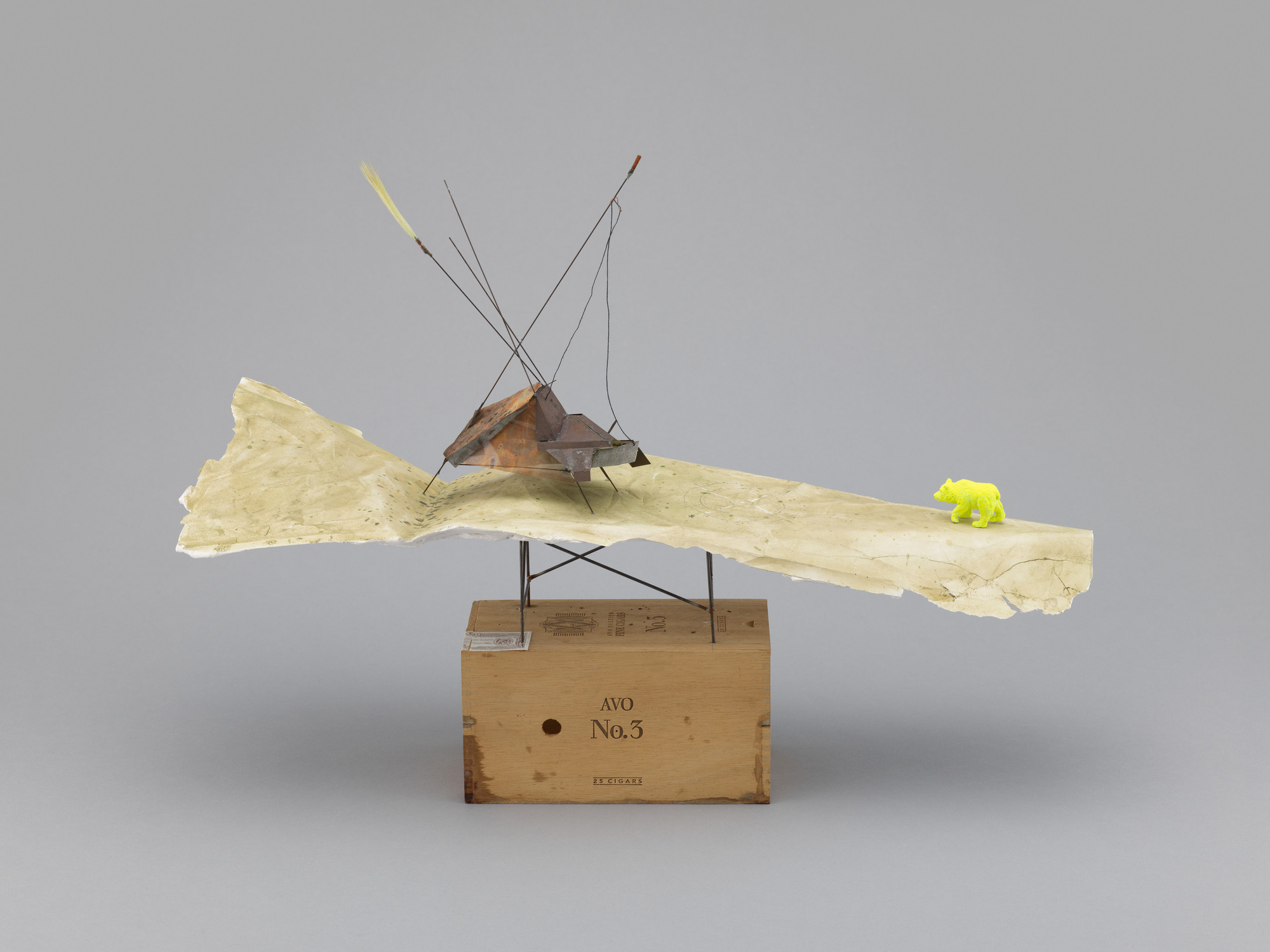
Bear is part of a series of architectural models at scale, but I made the decision not to put scale people in them but to put animals.
It consists of a plaster landscape that undulates, it twists, it dips. Above the plane of plaster is a form that’s created using brass, bronze sheets, copper mesh. I decided not to be very specific about the length of the rod that I was soldering together and some of them have this sort of fur, fuzz at the top of it. I think of it as regalia, which is really about connecting to the sky.
It was also important to me how architecture is going to engage the earth. So the complexity of the structure below is as important as the structure above. It’s on a steel rod base and that sits on top of a found cigar box. And all of that was just the statement about site.
When we get sites as architects, there’s very clear boundaries, like property lines. But the earth is much more complex than that, and that complexity is not just geology and earth and soil, but it’s also complex in its inhabitants.
Indigenous people speak of the earth as our mother, the sky is our father, the moon is our grandmother, the stones are our grandfathers, and non-humans are our relatives as well. For me, it’s really important that the ways that we’re making buildings do consider our non-human relatives.