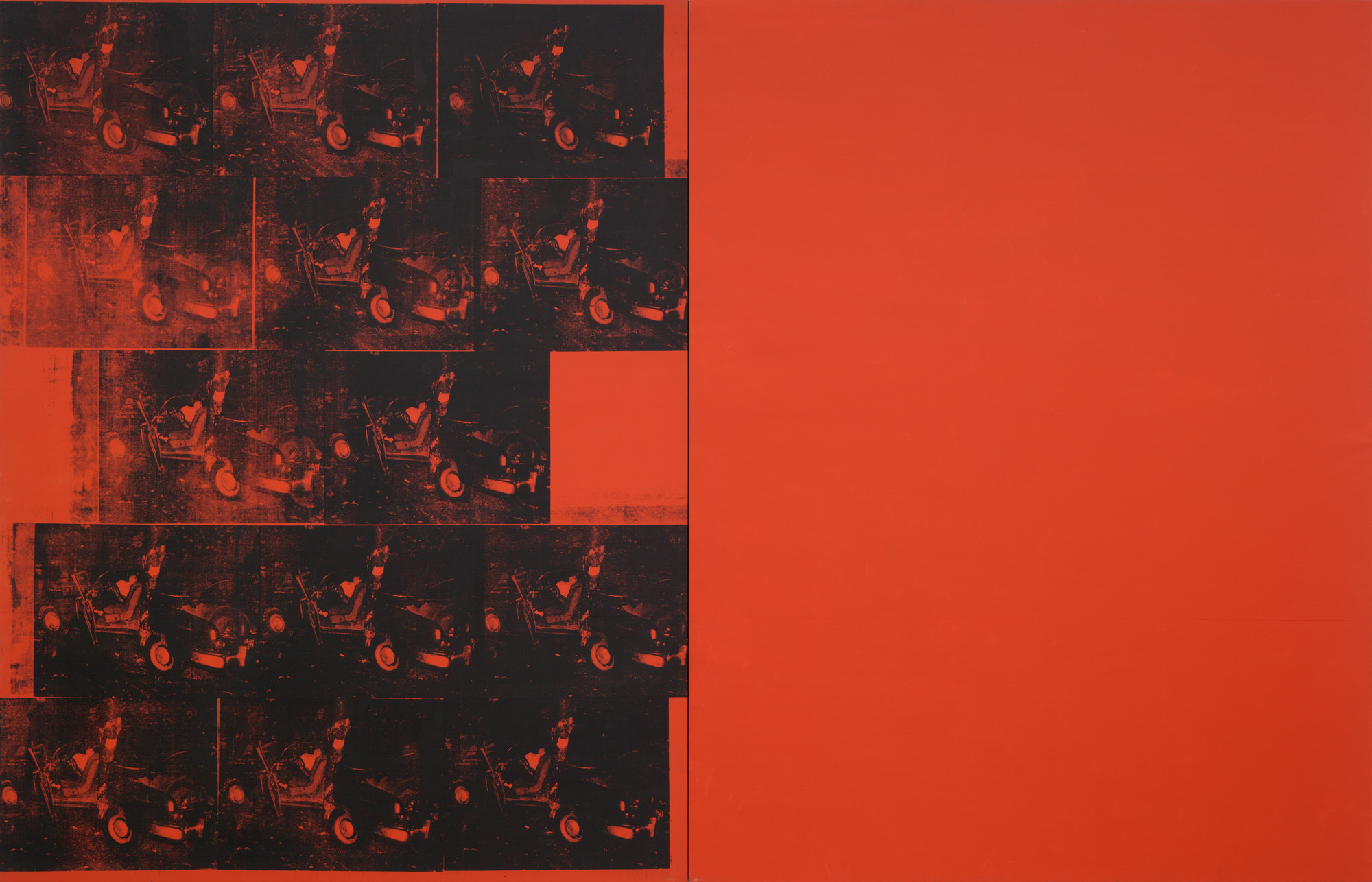
Art Historian, Jessica Beck: This is a painting by Andy Warhol titled Orange Car Crash Fourteen Times, and it's a part of his Death and Disaster series from 1963 and ‘64.
Warhol zeroed in on what it means to have death in the public eye and this American fascination with consumption, whether that be a celebrity star or commercial products, but also images that elicit certain feelings. Gossip magazines make their money off of sensational images. He starts looking at car accidents that are very gruesome. He plucks it from the source and then reproduces it over and over again, tapping into that dark desire for wanting to see an accident.
Warhol started silkscreening in the early ‘60s. Traditionally, this is more of a commercial technique. You could take any image and make basically a larger photocopy that then you would burn into silk fabric, and then you press ink through the image to get it onto the painting. In the silkscreen process, the screen can clog with ink. Also, sometimes you don't get the whole image. Warhol uses all of those possibilities for mistakes as a device in the paintings. You see a heavy layering of ink. You see little bits of double registration, kind of a ghost image.
It makes you get up close to see, “what is this image?” And then you zero in to see someone's head inside the car. And so the kind of haunting, almost mesmerizing quality about these paintings is looking for signs of life, looking for the figure, trying to orient yourself in this image.