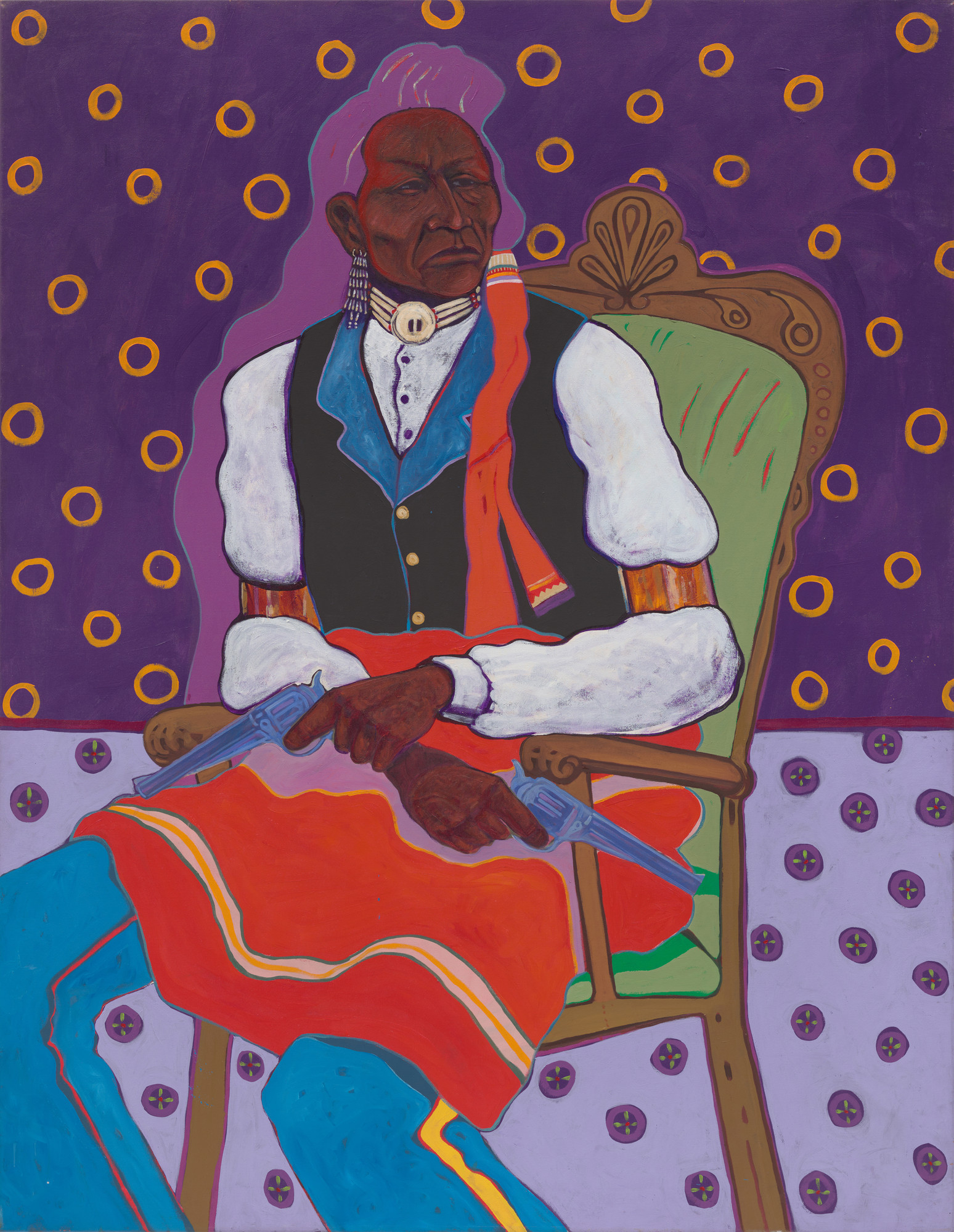
Art Historian, Joseph M. Pierce: I like the way that this painting invites us to question what this man is thinking, what he has experienced, and how we relate to him.
My name is Joseph Pierce. I'm a citizen of Cherokee Nation and a scholar of Indigenous art and literature. And this is Two Guns Arikara by T.C. Cannon.
We see a man with flowing purple hair seated on a green chair. He's wearing traditional Indigenous adornments like copper armbands, a bone and shell choker, and long earrings. But at the same time, the pants as well as the guns indicate a relationship with the US military. So you see these markers of identity that you might think are contradictory, and yet, because of the history of Indigenous peoples and American expansion, is part of the lived reality of native peoples across the 19th century and beyond.
And of course, the color. Who expects a purple pompadour?
I think one of the ways that color is used in this work is to invite us to question expectations that we have about Indigenous representation. Cannon was interested in highlighting the human qualities of subjects who had been divested of humanity. He was never satisfied with how native people have been positioned as people who are of the past, and he dynamically shows how bright and of the future we continue to be.