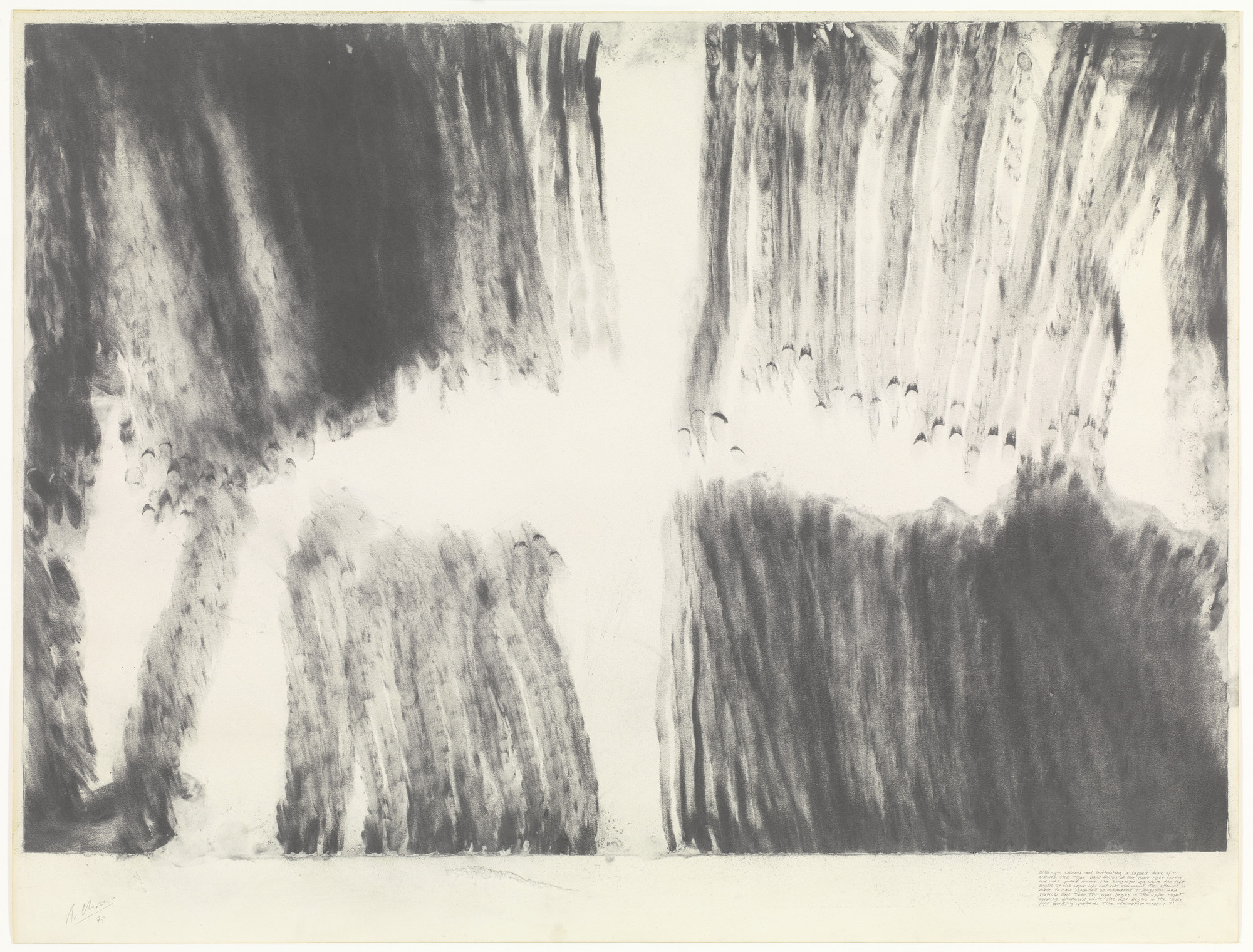
Narrator: This comes from a body of work that the artist Robert Morris called: Blind Time Drawings. For each work, Morris came up with a set of actions, written at the bottom of the drawing. Then he executed them blindfolded, often using his bare hands and a medium, like powdered graphite.
Artist, Robert Morris: The first series were fairly mechanical, based on tasks and different pressures or count the strokes or whatever—just physical contact with the paper in all the different ways the body could contact the paper with hands. There might be a natural limit by how much friction I could stand with my hands or fatigue of one sort or another. It's just laborious, a lot of physical effort.
Narrator: Blind Time XIII is part of the first iteration of the series. With each new attempt, Morris’s process changed.
Robert Morris: I would make a series and then leave them for a while, and then come back to them. The second series, I hired a woman who had been blind since birth to do them. And sometimes I would work on one side of the page and she would work on the other.
Archival audio from: Oral history interview with Robert Morris, 2018 April 19-20. Archives of American Art, Smithsonian Institution.