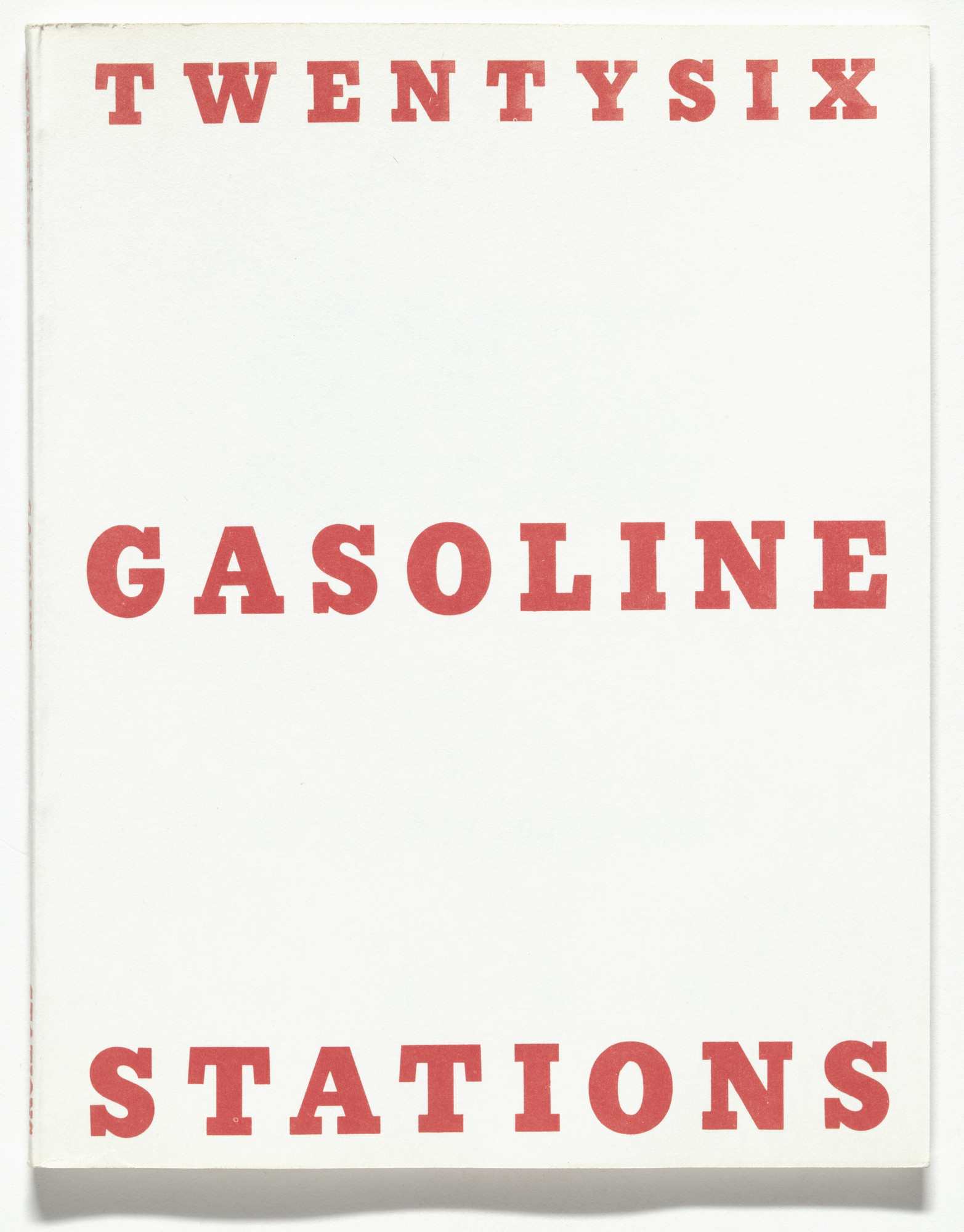
Artist, Ed Ruscha: Twentysix Gasoline Stations, 1963.
This sort of came out of a desire to make a book. I worked for a printer and I learned how to set type and learned how to run presses and that sort of thing. And I always wanted to make a book, and then I thought, "Well, why, why aren't books considered works of art?" They're considered library items and, uh, respected as that. But I always felt like they were more than that and had, uh, some more possibilities that were not being, um, looked at. Oddly enough, the, this idea of 26 precise gasoline stations came to me before the book was even edited or completed. The idea of landing on a specific number always intrigued me because there's something that's so odd, and it's the oddness that is the subject here, I guess. There's so much out there in the wasteland of America that it's gotta be brought back to the city.
I've done a lot of driving and began to love it and used it, used the car as sort of an editing machine. It's better than a circus, it's better than a movie. Driving in a car, especially over monotonous long periods of time, has just got a lot of juice to it. I had a two and a quarter twin lens reflex camera and it was like a new toy to me, and I felt like there was a new world out there to use this tool. And not like a photographer would use it exactly, but more like somebody who was an artist. I had seen works by, uh, Walker Evans and by, uh, Robert Frank and some other photographers, and, uh, felt like they were more artists than a lot of painters were. So I think that's where a lot of this came to me through the use of the camera.
Narrator: No one was more surprised than Ruscha himself to learn that his artist books, like Twentysix Gasoline Stations, have changed the look of contemporary art and photography. To learn more about the people who have been influenced by Ed Ruscha press three four.