Professor, Richard Powell: My name is Richard Powell. I’m an art historian at Duke University.
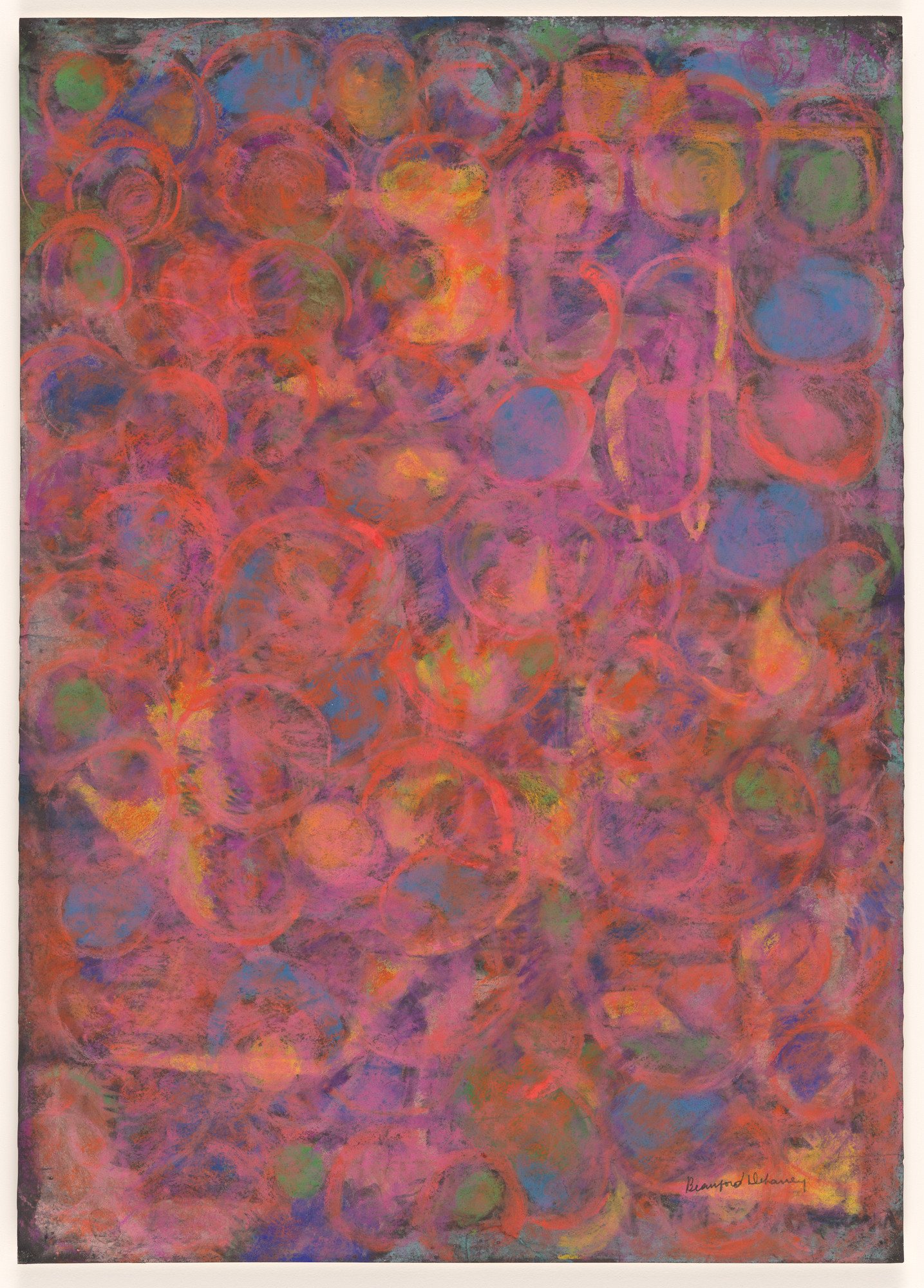
Beauford Delaney’s Untitled, circa 1955 is focused on circles and the repetitions of circles from an underdrawing of blue and other tones, and then this insistent orange encircling of the underdrawing. There’s an improvisational quality to his approach. There’s no agenda, other than that moment, when he is confronted with the paper, to let something happen.
The late ‘40s, early ‘50s—it’s a period when so many artists are confronting the reality that after World War II, the strides that Black people thought they were going to be able to achieve fell apart. Racism was at an all-time high. This is the prelude to the long civil rights movement. This is also a moment where a lot of artists are realizing that the United States is not a place that's hospitable for their aspirations.
I think that Delaney, as a gay Black man, realized that France would allow him to be himself. He's not alone in terms of Black artists who make that trek. This whole expatriate experience is an opportunity for many African American artists to realize their full potential.
For some artists, there’s a desire to really go political, but then we have other artists who use abstraction to think about other larger ideas and issues, as well. Beauford Delaney says abstraction is the path to a better realization of all the things that are swirling around in his head. I think the appeal of Delaney’s work is a kind of a license to engage with the visual, free of preconceived notions.