Narrator: In response to the outbreak of World War II, many European artists immigrated to the United States. This had an effect on American artists, like Adolph Gottlieb, who remembers the 1940s as a time of great change in his life.
Artist, Adolph Gottlieb: I think what happened in the early forties, after the war started was that I had to dig into myself, find out what it was that I wanted to express, what it was possible for me to express. And I think that, as a result of this sort of period of introspection and digging in, that was when I started doing what I call the pictographs.
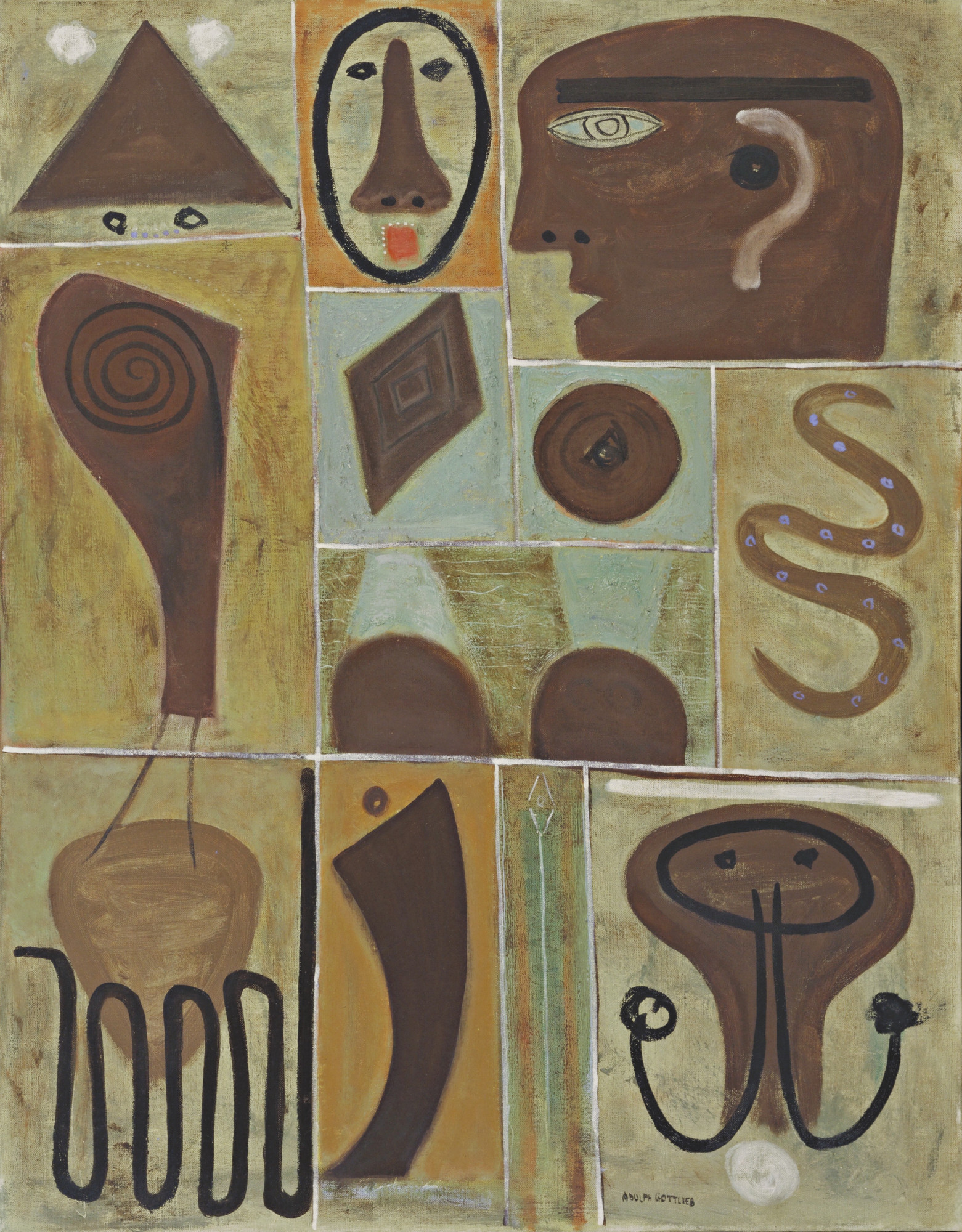
Narrator: Gottlieb’s pictographs, like this one, appear as arrangements of shapes, forms, and symbols within a boxlike structure. He borrowed this technique from Italian painters.
Adolph Gottlieb: I had always admired the early Italian painters, who preceded the Renaissance. I very much like these altar pieces in which there would be, for example, the story of Christ told in a series of boxes starting with the nativity and ending up with the resurrection. And this would be told chronologically, like a comic strip technique. And it seemed to me this was a very rational method of conveying something. So I decided to try it.
I made boxes, but then I put the images in with no sequence and no rational order. The images appeared apparently at random. They then established themselves in a new system. There would always be a different significance to them.
Archival audio excerpted from: Oral history interview with Adolph Gottlieb, 1967 Oct. 25. Archives of American Art, Smithsonian Institution.