Curator, Smooth Nzewi: Giacometti moved to Paris in 1920, and like most of the Parisian avant-garde, he was attracted to African art. He spent a lot of time in the Trocadéro, a museum that mostly featured African and Oceanic art.
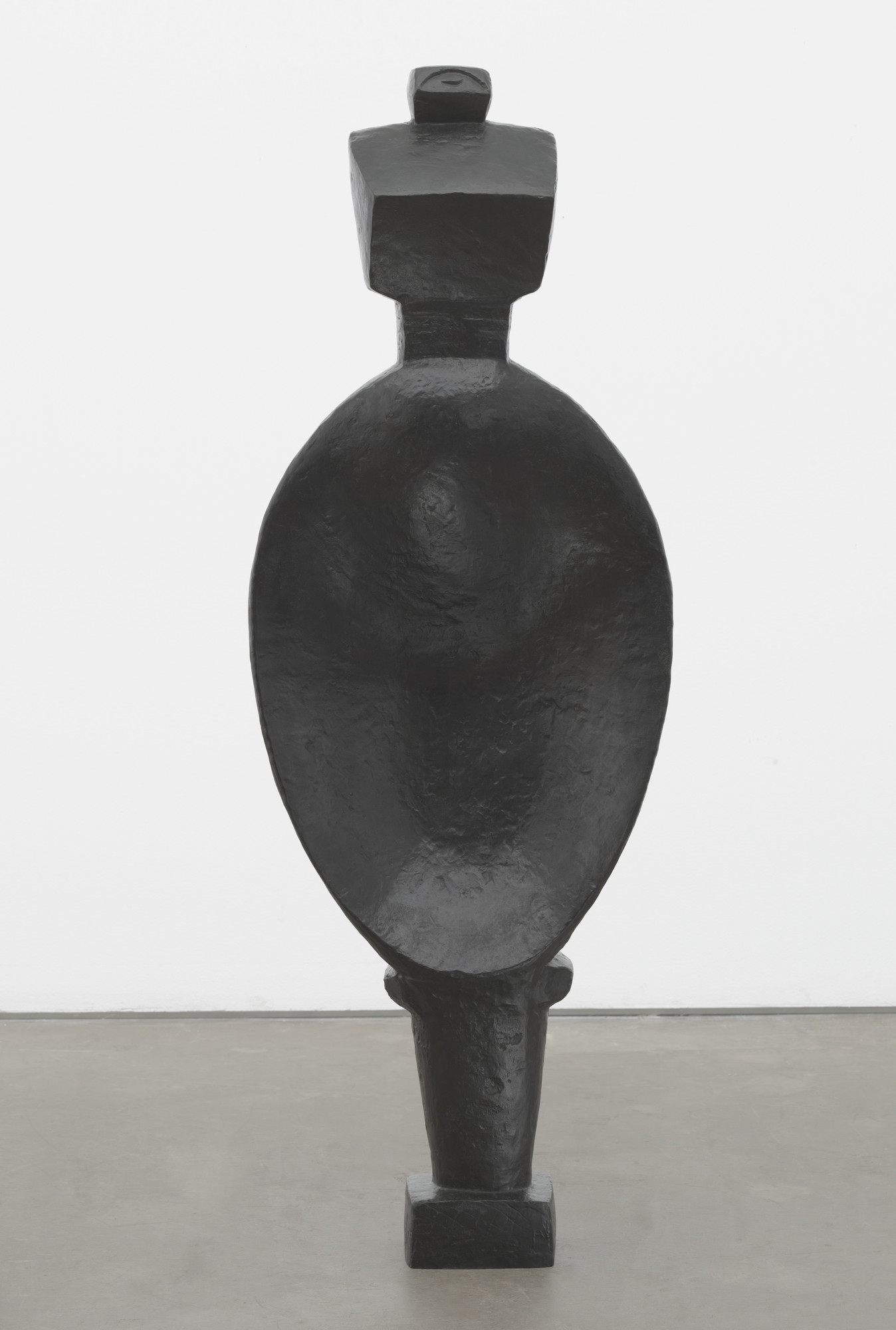
Spoon Woman evokes the figure of a woman through geometric shapes that suggest the head, shoulder, chest, and a wide spherical area that looks like a belly. It's a sculpture that is inspired by the ceremonial ladle that belongs to the Dan people of Liberia and Côte d'Ivoire.
Modern artists were attracted to the physical form of African objects, but also the way in which African art was able to distill reality and the vastness of the world in very simple geometric forms. But what they always talk about is the spirit that moved those objects. The object in itself isn't necessarily inanimate. The way in which it functions—it's very much alive ceremonially, and I think he was also interested in the aliveness of that object.
We recognize that in that moment of great cultural influence of African art, which Présence Africaine wanted to reassert, that people brought different understandings to the engagement with African art. For a Black artist, who claims an ancestral connection to the object, the reading of that spirit will be different from a European artist, like Giacometti.