Curator, Smooth Nzewi: Hector Hyppolite is a self-taught artist of Haitian origin. He started off making shoes and painting houses before he took up visual art. He joined the Centre d'Art, which was sort of a cooperative center in Port-au-Prince. It was there that he intersected with the folks who were all part of Présence Africaine.
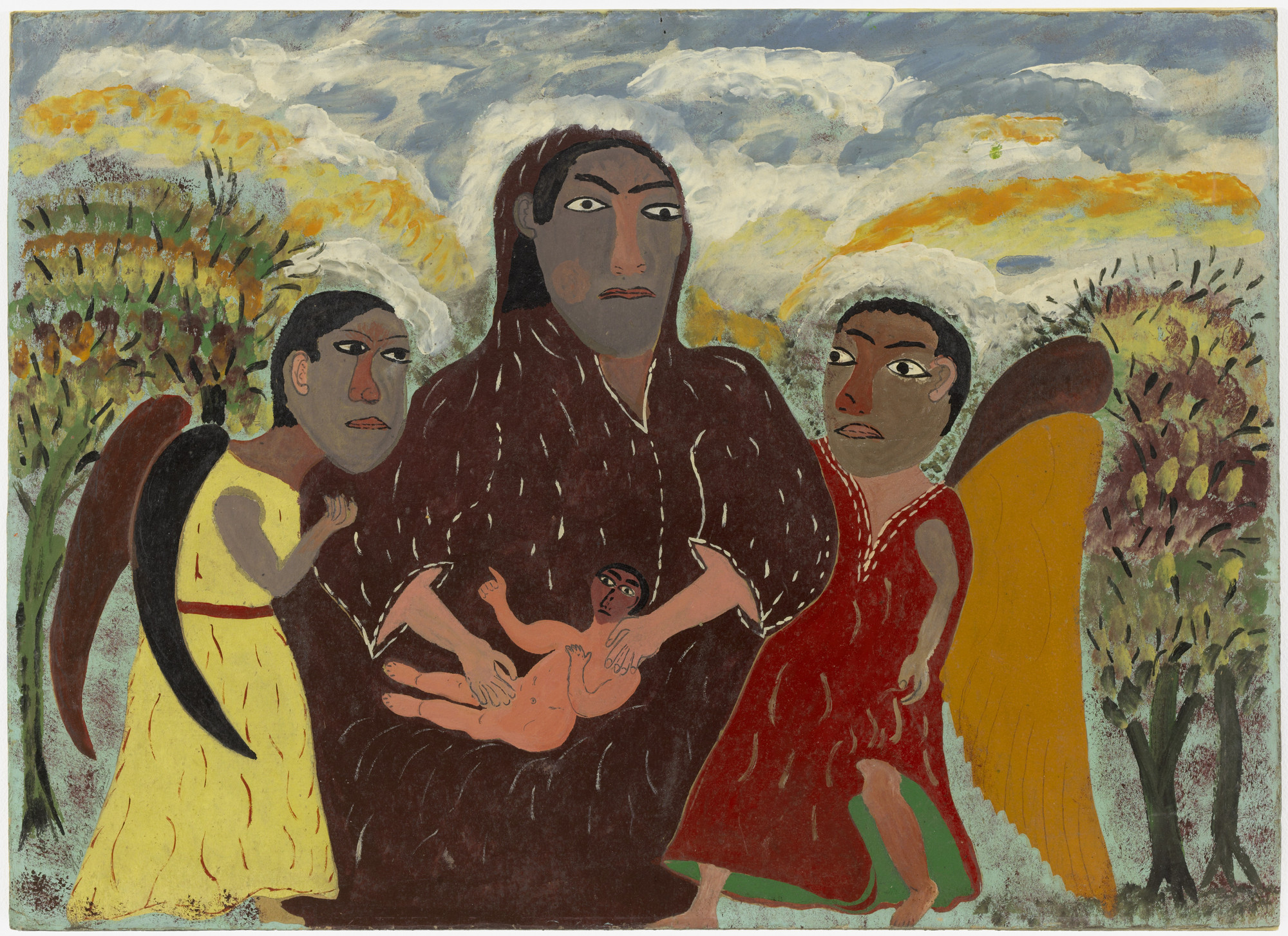
Congo Queen features a central figure of a woman with a baby. She looks quite monumental. She has a mask-like face, and she's flanked on two sides by angels. Haitian religious practice brings together Vodou, which is from West Africa, and Roman Catholicism, which is a reflection of the French origins of Haiti. Those two things create this incredible visual imagery that makes Haitian art stand out. Hector Hyppolite was one of the very first artists to create that distinctive Haitian imagery in modern art.
For a lot of people, they've described the work as an image of the Black Madonna. One could also argue that the Congo Queen being referenced here might be the historical Queen Nzinga of Angola, part of the historical Congo Kingdom. She is often seen as this figure of resistance. That sense of liberation and revolution that transformed the Black world started with the Haitian Revolution, and so that sense of Africa is very much part of the Haitian identity and consciousness.