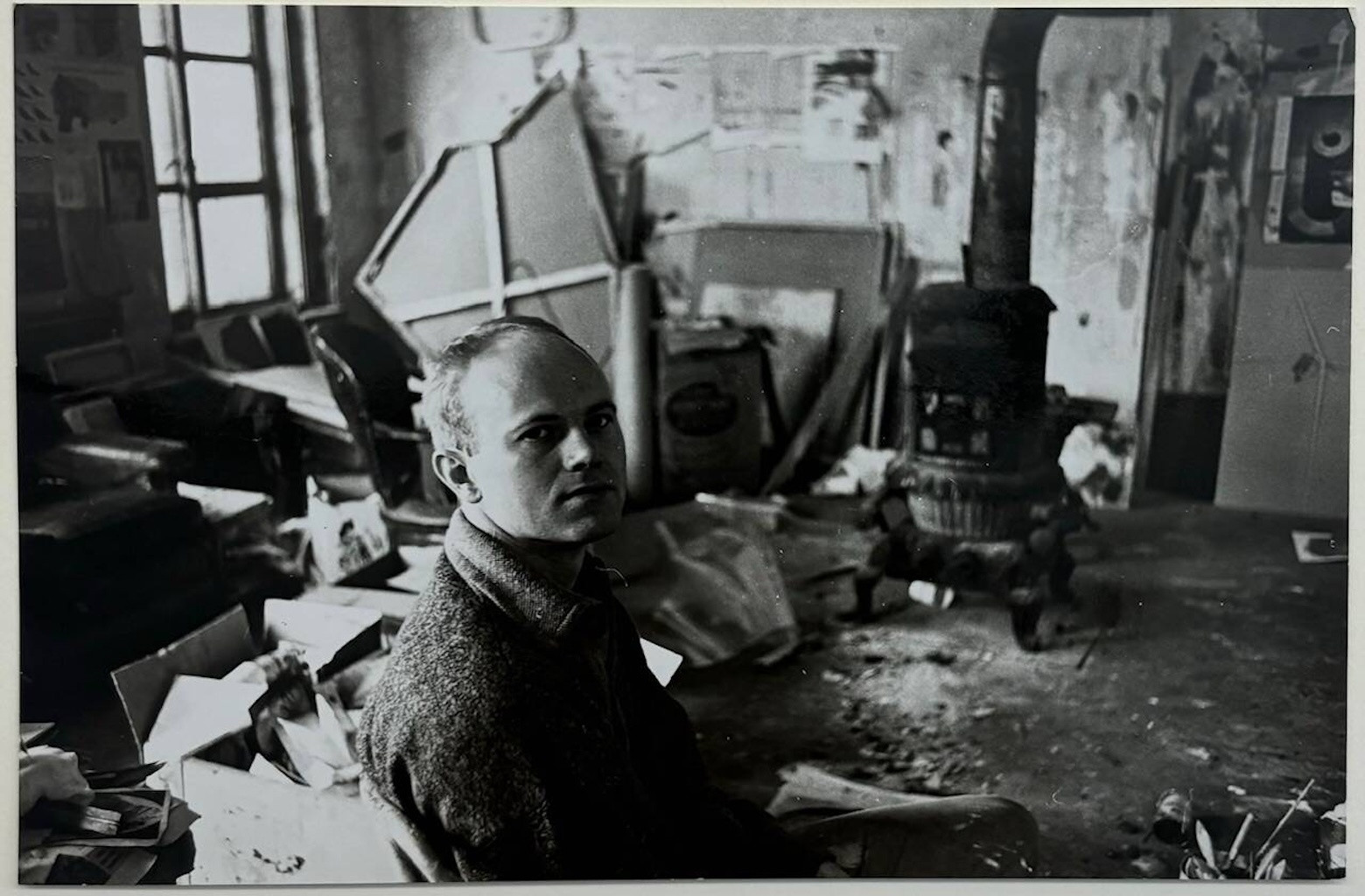
Artist, James Rosenquist: I used to go walk on the waterfront, all the way up from 57th Street down to the Battery and up the other side, looking for the perfect place to live.
I found a beautiful loft—John Street, I think it was. It had been a printer’s studio with old skylights. Forty bucks a month at Coenties Slip. It’s right there in the harbor. The air is fresh. It's like being in a resort.
I moved in there and I didn't know what to do. And I used to watch Wall Streeters come and go to work. I thought, boy, I'm living in luxury because I don’t have to go to work every day. I just do whatever I want to do. I’m on unemployment! So I started trying to figure out what I want to do.
When I was starting out at that period, I was doing my own abstract painting. But I didn’t want to ever exhibit anything unless I was looked totally different than anybody else. I was thinking: how could I introduce imagery back into non-objective painting?
I was painting outdoor pictures of neutral things: cigarettes, whiskey, anything, which meant totally nothing to me except color and form. See, I’ve continued painting about nothing. And I’m still doing that. Paintings about nothing, coming towards nothing.
Archival audio from: Oral history interview with James Rosenquist, 2013 March 28. Archives of American Art, Smithsonian Institution.