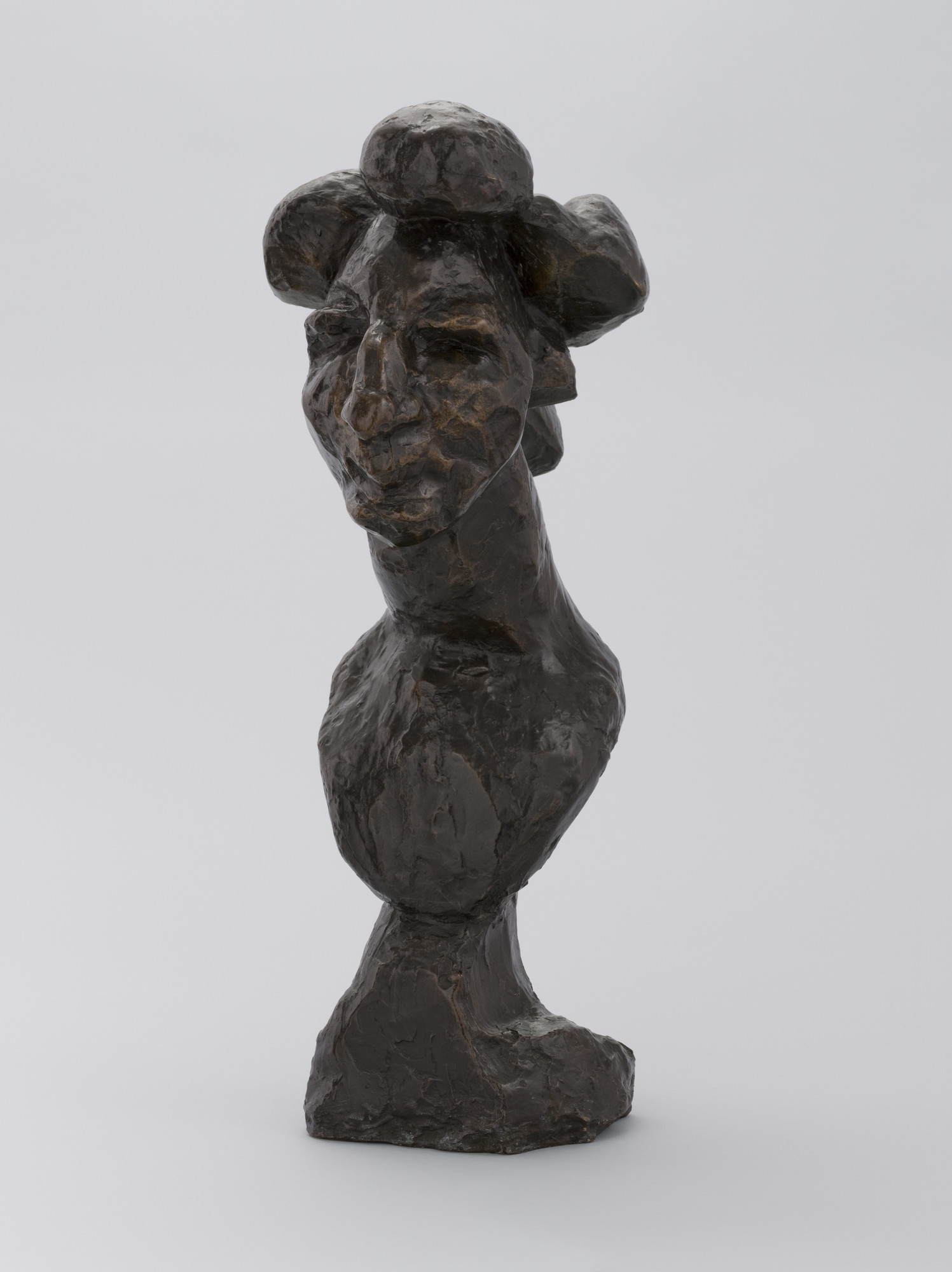
Curator, Ann Temkin: Matisse was a Capricorn, so he was an analyst. He proceeded in a very rigorous way from one thing to the next. What's so wonderful in his sculpture series of Jeanettes is that he almost lays that out for you.
I'm Ann Temkin and I'm the Chief Curator of Painting and Sculpture here at MoMA.
The Jeannette sculptures—and there are actually five Jeannette heads—have a name that link them to a specific person: Jeanne Vadrin. She was an acquaintance who lived by Matisse.
He does Jeanette I looking very much like the woman he's portraying. But once you're past Jeannette I, it's very difficult to recognize Jeannette as this young woman, because Matisse became so experimental. And then step by step, you see how he's letting the sculpture take charge and the shapes he's making with the sculpture become more interesting to him than the model he's working with.
When you look at Jeannette IV, you can see the way her face is lengthened, her nose becomes long and pronounced. Her hairdo has turned into these independent clumps. Her neck and her chest make a kind of zigzag.
The scale shifts from the importance of what the model looks like to the importance of what the sculpture looks like. And what he's interested in is making a sculpture that's extremely forceful in its formal adventure. But it's not something that he just picks out of the sky. Whenever he's making more experimental work, it's almost like a scientist who's doing experiments on the data he's gathered from the works he made before.