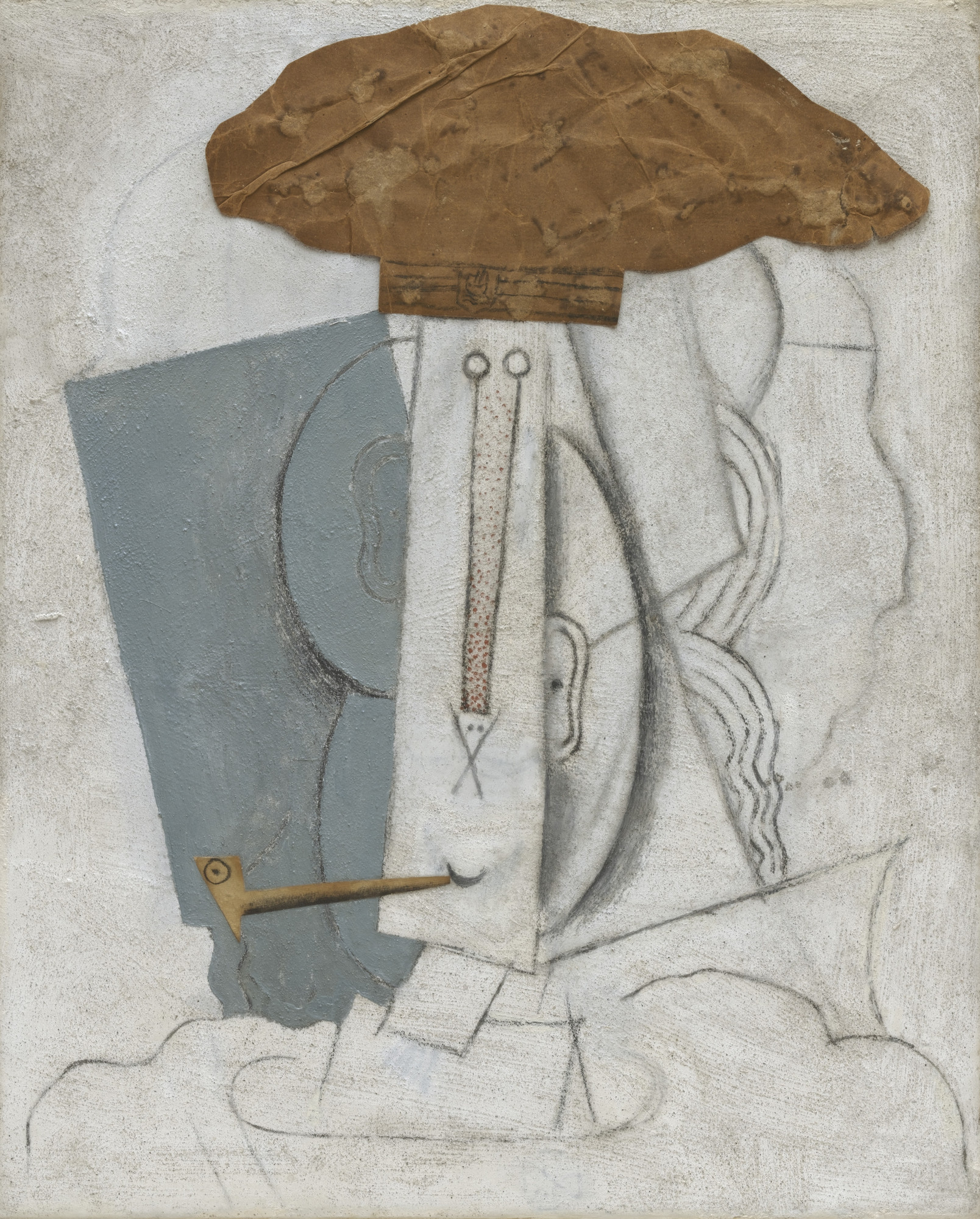
Narrator: Student with a Pipe is an intriguing mix of painting, drawing, and collage. As well as a good example of Picasso's experimentation with mixing particulate matter into paint. Conservator, Scott Gerson.
Conservator, Scott Gerson: It almost looks like graffiti in a way. It's like drawing on a wall and that's partially because of the texture. The ground is a gesso layer that has been roughly applied to the surface of the canvas. Picasso's added a gritty material, and that's what gives the painted surface this very textural, rocky surface. He has drawn with charcoal, and he's really dug into the textured paint, carving into the surface.
And then there's the gray paint, which has a very shiny surface. And so it sets up this duality between matte and glossy. And the final additions are the collage elements, and that includes the hat, which is made from a very heavyweight industrial paper, probably something that he found that had been discarded, already stained, crumpled.
It's experimentation as play, really. He's working with a lot of readily available materials, and I think that allowed him to be incredibly creative.